.png) 6 hours ago
5
6 hours ago
5
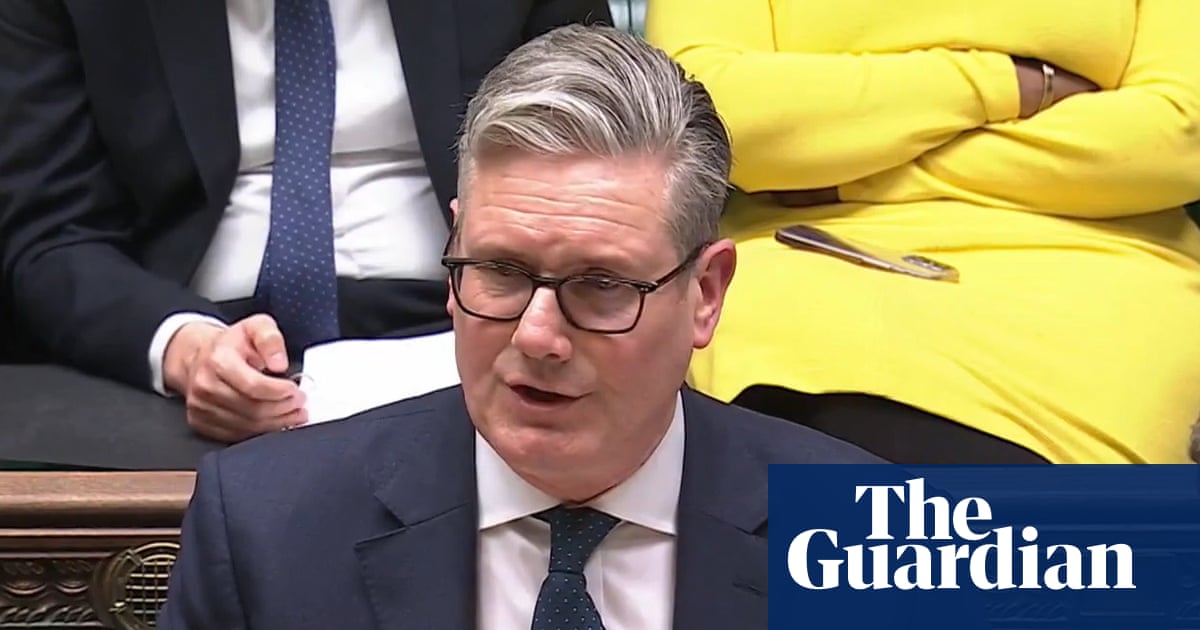
Keir Starmer has stepped down and Andy Burnham is, in all likelihood, about to walk through the door of No 10. I have had the rare privilege of working closely with both men. For five years I served as a chief prosecutor while Keir Starmer was director of public prosecutions (DPP). And for much of Burnham’s time as mayor of Greater Manchester, I worked with him on violent crime, working-class representation and community cohesion.
I have watched both lead, up close and under real pressure. And as the country changes hands, I keep returning to the single quality that separates them – because it happens to be the quality Britain needs most right now.
We are living through a trust recession. The 2026 Edelman Trust Barometer found that nearly seven in 10 people believe their leaders are misleading them, and the leaders who lost the most trust were national government figures.
Let me be clear about Starmer, because I admire him. He is forensic, principled and serious in a way our politics badly needs more of. As DPP he transformed the prosecution service, and I never once doubted his integrity or his sense of public duty. He will leave office a fundamentally decent man, which, in this era, is no small thing.
But connection did not come naturally to him, and I saw that up close. He led with argument and detail where the moment often cried out for warmth. He could win the case and still lose the room. In the aftermath of our successful prosecution of the so-called Rochdale grooming gang, he tasked me with chairing a national panel to look again at cases that had previously been found wanting.
For the first time ever, we brought in outsiders to help us, including the leaders of the NSPCC, Barnardo’s and the children’s commissioner to challenge our thinking. At each meeting, Starmer would apply his huge legal knowledge while sometimes missing the human element that was needed at the time. Dozens of cases were re-examined and restarted, delivering justice to hundreds of victims, but many left meetings not knowing if he was with them or against them.
In calmer times, this rational, logical approach might not have been a fatal flaw, but in an age when the public has decided, by default, that it is being lied to, being able to build trust and connect is a vital skill. Starmer’s values and intentions were always the right ones. His struggle, in the end, was making people believe it.
Andy Burnham is the opposite. Working alongside him through some emotionally raw moments, I watched him do the thing that cannot be taught: he relates to people, instantly and without effort. He can sit with a grieving mother and a frustrated official in the same hour and make each of them feel that he is wholly on their side – because, in that moment, he is.
I first met him in 2017, on the BBC Question Time panel a couple of days after the terrorist murders at the Manchester Arena. He had only been mayor for a few days, but I saw him engage with all communities with an authenticity the moment needed. He had spent the day before the panel meeting those who had survived and some of the families of those who hadn’t. It would have been easy to let anger overwhelm him, but instead he presented himself as a compassionate soul who felt the hurt we all felt, while recognising that this was a time to bring everyone together, not further divide them.
They didn’t crown him “king of the north” for his policy papers; they did it because people felt he heard them. But the natural gift that wins power is not the same as the discipline that rebuilds a nation’s trust – and No 10 is where warmth turns cold, swallowed by the bubble, the handlers and the daily war for survival. This is the test he now faces.
If politics is going to reconnect with people, it starts with something far simpler than a new slogan. It starts with regaining the trust of the public by first, telling the truth. Anyone can be honest when the facts are convenient. What restores credibility is saying the difficult thing before circumstances force it into the open. But honesty without accountability is just another performance. Leadership means owning failures as openly as successes.
after newsletter promotion
It also means resisting another danger that comes with power: distance. Staying connected means making a conscious effort to remain in the rooms where life is actually lived, listening not only to supporters but to critics as well. People also need to see that commitments are followed by action, that words are matched by evidence.
Finally, leadership means refusing to feed the algorithms that dominate modern politics and reward outrage, conflict and contempt, because those emotions keep people engaged. The temptation to exploit that system is obvious, particularly when opponents are doing exactly that. But politicians with integrity understand that winning attention is not the same as serving the public. They choose to lower the temperature rather than raise it.
In the future, the prime ministers we will remember from this anxious decade won’t be the ones who shouted loudest, they’ll be ones people still trust and believe in. Having watched both men closely, I think Burnham might just be one of them.
-
Nazir Afzal is a former chief crown prosecutor for north-west England