.png) 2 months ago
36
2 months ago
36
Consumers across the UK are bracing for the war in the Middle East to deliver a sharp rise in home energy bills from this summer.
The looming energy cost crisis has prompted a record number of households to investigate green home upgrades to try to keep bills down, including heat pumps, solar panels and electric vehicles.
However, it is the falling cost of home batteries that is expected to be key to unlocking the greatest possible cost savings from these green investments.
“For the right home, [home batteries] can cut bills, increase flexibility and make everyday energy use smarter and more resilient,” according to Tom Pakenham, a director at Hive, a subsidiary of British Gas owner Centrica.
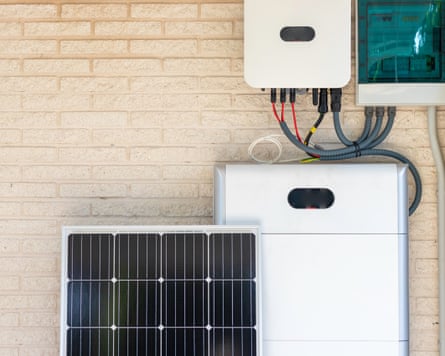
The promise of greater control over energy costs has piqued the interest of consumers as typical dual fuel bills are forecast to climb to almost £2,000 a year under the next government price cap taking effect from July.
This is the second time in four years that households have braced for the impact of volatile fossil fuel markets on their personal finances.
Rebecca Dibb-Simkin, the chief product officer at Octopus Energy, says the falling cost of home batteries could prove to be a “gamechanger” in 2026 by allowing customers to “fill up when electricity is cheap, and power your home when it’s expensive”.
“Battery prices have dropped by 90% since 2010 and continue to get cheaper every year. This is only the beginning of what this technology can do for families and businesses across Britain,” she adds.
Who would benefit most from getting a home battery?
The more electricity a household uses, the greater the potential savings from using a home battery. This means households with a home car charger or electric heat pump stand to be some of the biggest beneficiaries of Britain’s home battery boom – but all consumers could benefit from home batteries relative to their usual bills, according to innovation charity Nesta.
Batteries are particularly useful to homes which generate their own electricity. Most rooftop solar installations now include a battery to help make the best use of the solar power they generate.
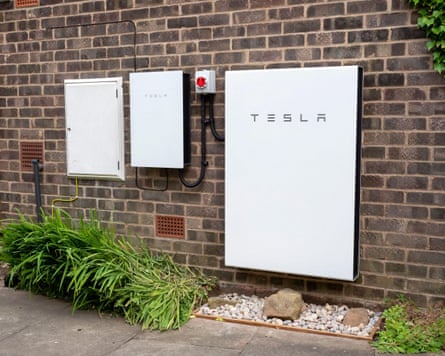
A home with rooftop solar panels could charge its battery through the day, making cheap electricity available in the evenings when power demand typically reaches a peak. Once the household has gone to bed, the battery can recharge using cheap overnight power, ready to provide lower-cost electricity again in the morning.
The catch? Home batteries can help most households use electricity more efficiently, provided they are not on a conventional single-rate energy tariff which prevents them from using the daily fluctuations of electricity costs to their benefit. But if a bill payer has a smart meter, or is willing to install one, they would be able to access a growing number of “smart tariffs” that offer variable electricity rates during the day.
Andrew Sissons, a director at Nesta, says that to benefit, consumers will need to be prepared to manage their home energy usage – for example, by using an app to help them make the most of how and when they use their battery.
How much does a home battery cost?
The cost of a home battery will depend on its capacity: the larger the battery, the more it normally costs.
On average over the last year, installing one cost about £5,500 for a 4kWh battery, according to the MCS, the standards body for installers.
However, costs are falling, so cheaper deals are likely to be available.
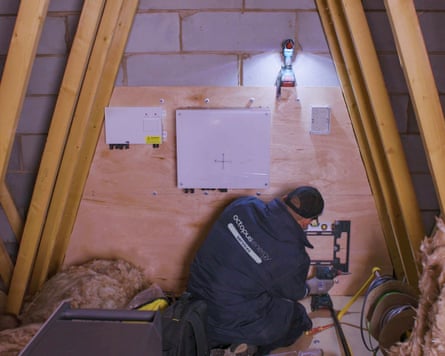
For example, the UK’s biggest energy supplier, Octopus Energy, charges £3,447 to install its smallest battery: a 5kWh model which can power a typical British home for around six to eight hours. Octopus also offers a 13.5kWh battery for £7,499 which stores enough energy to power a typical household for up to two days.
Increasingly, households are installing home batteries as part of a package deal including rooftop solar panels.
British Gas, the UK’s second largest supplier, offers customers an eight-panel rooftop solar system for £5,610 and a 5.32kWh battery for £2,495 through its sister company, Hive Solar. The company offers financing with no upfront cost and monthly repayments starting from £69 a month.
So how much could I save?
In some scenarios, households could save up to 87% on their electricity bills, according to British Gas.
A typical home in Milton Keynes with a 5kWh battery and a 4 kWh solar system installed on a south-facing roof could earn £300 a year by selling unused electricity back to the grid at a rate of 15.1p per kWh under the dedicated export tariff. Assuming the household has a medium level of electricity demand, it could also save a further £458.45 a year by avoiding higher costs at peak times. The almost £760 saving, on a medium electricity bill of £875.15, was calculated before the surge in market prices this year.
The payback period of investing in a battery system varies widely depending on how much electricity you use, and whether or not you generate solar power, too. A solar and battery system can pay back its cost in nine to 13 years, according to the Energy Saving Trust, depending on where you live and how much time you spend at home.
Do I have space for a home battery?
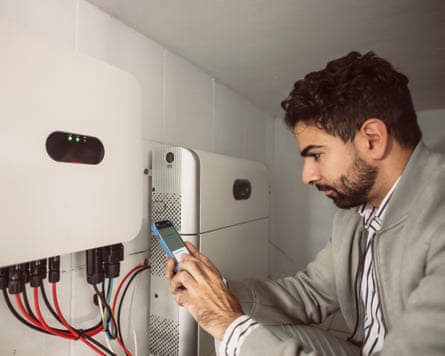
Probably. Home batteries can vary in size depending on their capacity. Smaller models, which might be around the size of a slim carry‑on suitcase, can be mounted flat against the wall.
A reasonably large battery of between 6kWh and 8kWh will typically be about 1 metre tall, about 60cm to 70cm wide and 20 to 25cm deep – like a taller, less deep washing machine.
And how safe are they to have in your house?
Home batteries are generally very safe. Unlike the batteries in phones and laptops, which can overheat easily, home batteries are made using lithium iron phosphate, which is specifically designed to be stable – even if damaged. Proper installation is crucial, though.
“When installed correctly, home battery systems are considered safe, and thousands are already in use across the UK,” according to Brian Horne from the Energy Saving Trust.
He adds: “Always get professional advice before installing a home battery, and use a trusted installer.”
What’s on the horizon for the UK’s home battery market?
In the future, even more households will be able to take advantage of power storage. New innovations on the horizon include “plug-in” batteries that connect directly into the power mains. This eliminates the need for installation and makes battery storage accessible to those in rented homes.
These 1kWh to 2kWh batteries are smaller than their full-scale alternatives and in the future could be paired with plug-in solar panels, which have recently won the backing of the government and could be on the market later this year.
Electric vehicles could soon power homes, too. Already, ‘vehicle to grid’ tariffs allow electric car owners to charge up when electricity is cheap and sell power back to the grid when prices are high. But ‘vehicle to home’ charging, which is now being trialled in the UK, could mean that electric vehicles are able to use “bidirectional” charging to supply homes when needed.
‘Some days we use no grid power’: how one family cut bills

“We’ll have had a couple of days this week when we’ve used no energy from the grid at all,” says Amy Isted, who lives on a smallholding in Horsham, West Sussex, with her husband Andy and two children.
The family is reaping the benefits after swapping their old heating oil tank for an eco-friendly energy set-up that encompasses a heat pump, solar panels, a home battery and an electric car charger.
When they moved into the near-derelict farmworker’s house a decade ago, they inherited a “knackered old heating oil system”, says Isted. “We knew it was going to die on us, but more than anything I really wanted to get us off oil.”
But before you spend any money, it is essential to have a clear plan, she advises. Among the resources she used was Expertible – a site that connects owners of older properties with vetted specialists.
Coming up with a retrofit plan for the 16th century cottage was not straightforward, and the first step was to insulate the property, as stopping the heat loss enabled the family to track their energy use.
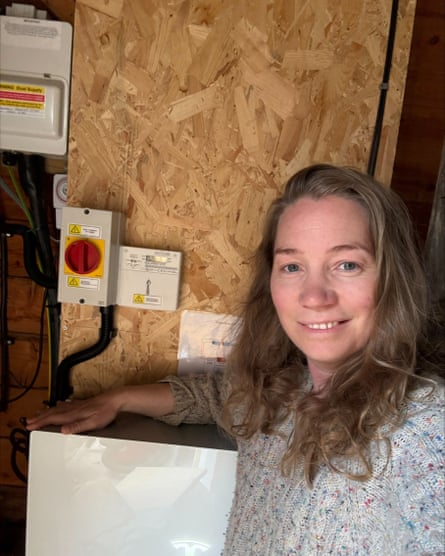
Armed with this information, they opted for a Vaillant Arotherm 5kW heat pump and hot water cylinder, a 1.76kWp photovoltaic solar system and a Tesla Powerwall 3 home battery.
“We used a local, family-owned company called Sussex Solar,” Isted says.
The new set-up obviously came at a price. “We were eligible for the boiler upgrade scheme, which gave us a £7,500 grant towards the £12,500 cost of the heat pump,” she adds. “We used our savings to pay for the rest, which came to about £14,000, including roughly £6,000 for the Tesla battery. Doing all of them at once unlocks an unbelievable amount of synergy.”
After the kit was installed last summer, the couple swapped their 30p/kWh energy tariff for a cheaper electric vehicle deal. The Octopus EV tariff offers a discounted rate of about 5p/kWh in the early hours, and the family capitalise on this to charge their battery and car.
“We used to spend about £2,000 a year on oil alone,” says Isted. “Now our electricity bill covers everything. This January it was £207 all-in for our power, heating, hot water and car charging. The previous January it was £163 just for power.
“I like that we don’t consume any electricity from the grid at peak times any more. Last week, when I could see how the solar panels were working and how charged up the batteries were… That was a good feeling.”
The house “feels different”, too, says Isted, who has been inspired to become a retrofit consultant. “It is comfortable all the time.” During a recent power cut, they were able to carry on as normal by switching to their battery.
Even her seven- and nine-year-old daughters are on board. “They know that the way to our heart and more pocket money is to understand the right time to use appliances like the washing machine and dishwasher.”
Zoe Wood