.png) 5 hours ago
7
5 hours ago
7
Fast-moving wildfires have burned two First Nations communities in Canada to the ground, as members said they were left to self-evacuate without government help or emergency alerts.
Thirteen communities in Ontario province have been ordered to evacuate because of wildfires, most of them First Nations. The Ontario premier, Doug Ford, told reporters on Monday that close to 2,000 people had been evacuated so far to cities including Toronto and Niagara Falls.
There are nearly 1,000 wildfires burning across Canada, with about 200 in Ontario. The prime minister, Mark Carney, said heatwaves and dry weather had combined to create “one of the most intense wildfire seasons in Canadian history”.
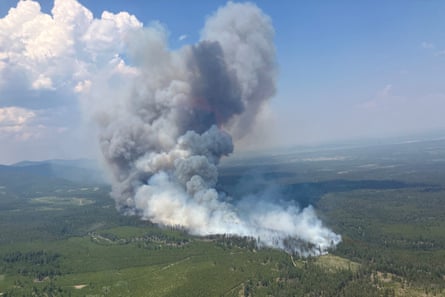
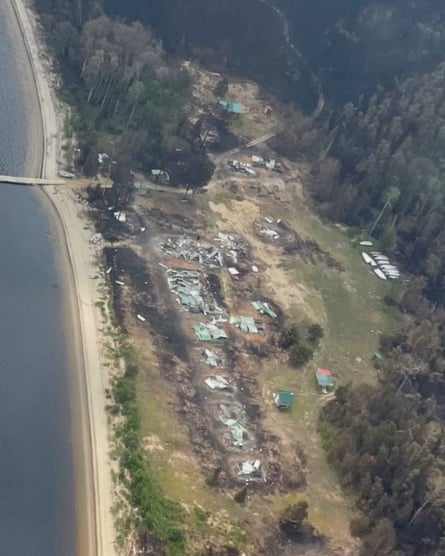
Namaygoosisagagun First Nation, located north of Thunder Bay in north-western Ontario, was engulfed by fire on 15 June. About two dozen people quickly boarded boats packed with their possessions and raced across the nearby lake.
“If this community waited for a mandatory evacuation process, we’d be doing a recovery mission for the bodies of children, of elders, of men and women,” said Linda Debassige, grand council chief of the Anishinabek Nation, which represents 39 Ontario First Nations.
All members safely escaped but the community’s buildings and other infrastructure were completely destroyed. The Namaygoosisagagun people evacuated to Thunder Bay, where the Anishinabek Nation has been providing assistance.
Debassige said that Namaygoosisagagun’s chief, Helen Paavola, had made inquiries to the federal government in the days leading up to the fire, but the community had been assured there was no imminent threat.
Ford travelled to Thunder Bay over the weekend and said the province was willing to spend whatever was necessary to fight the fires.
However, First Nations leaders, including from the Anishinabek Nation, accused the premier of being unclear about what support the province was providing and, and of disorganisation in coordinating with First Nations.
The CBC has reported that although Ontario spent $271m on emergency firefighting in 2025-26, it plans to spend only $150m in 2026-27.
The Ontario government did not respond to requests for comment.
First Nations communities are acutely vulnerable to wildfire danger in Canada, with 80% of Indigenous communities located in areas more susceptible to fires, according to a 2019 study from the Journal of Disaster Risk Reduction. The Namaygoosisagagun First Nation faces an additional challenge in that, although it is recognised as a nation by many other First Nations, it is still in the process of being officially recognised by the federal government, making it more difficult to gain emergency funding.
Debassige said Canada’s federal government had agreed to provide the funding for now but that the Anishinabek Nation had had to step in and offer financial support because of delays on the government side.
The Whitewater Lake First Nation, about 250km north of Thunder Bay, was also destroyed by the recent wildfires. Though the community is made up of mostly seasonal residences with no full-time residents, First Nations leaders say the community’s infrastructure is now gone.
Nicole Redvers, an associate professor at Western University in London, Ontario, said there was a disproportionate wildfire impact on Indigenous communities due to proximity to traditional territories that livelihoods are based around, which include forests.
That vulnerability, alongside Canada’s lack of planning around community resilience on climate change, made for scenarios like what the Namaygoosisagagun had to contend with, said Redvers.
“A community had to evacuate themselves without any warning,” she said. “If we don’t have the preparedness capacity within Canada to ensure that all communities have climate adaption plans in place … we’re definitely not well placed to have resilience within our communities going forward.”