.png) 3 months ago
65
3 months ago
65
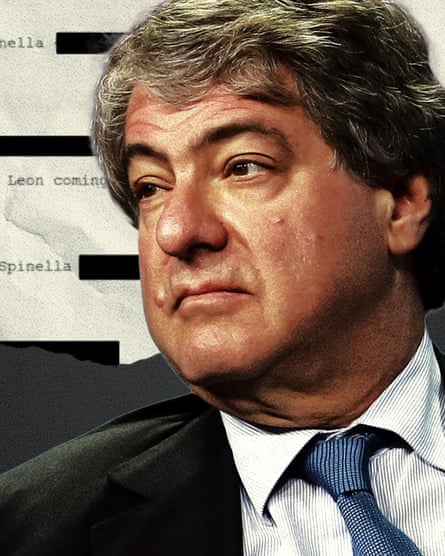
Lawyers for Leon Black, the billionaire investor who has been accused in a civil lawsuit of raping a teenage girl inside Jeffrey Epstein’s New York townhouse in 2002, reached out to a powerful federal judge in 2024 to raise doubts about the alleged victim’s claims, a Guardian investigation has found.
The move set off a months-long court proceeding, which was conducted outside public view and led the US district judge Jed Rakoff to reverse a $2.5m award that had been granted to the alleged victim in a separate Epstein-related class action lawsuit, according to court records. She was later given a much smaller settlement in the class action case.
Jane Doe, as she is known in court filings, has claimed she was trafficked by Epstein and raped by Black when she was a teenager more than two decades ago.
The Guardian’s investigation is revealing new details about the private communications in Black’s legal campaign, which undermined Doe in her civil lawsuit against the Wall Street billionaire.
In a recent court order, Doe faced a significant setback when Jessica Clarke – the federal judge presiding over her civil lawsuit against Black – sanctioned Doe and her former lawyer for “serious, sanctionable misconduct in this case”. Judge Clarke said Doe’s former lawyer had “repeatedly lied to the court and opposing counsel”, and directed her client to destroy a social media account. Doe was sanctioned for having “falsified” some sonogram images that appeared in personal journals, which were submitted to the court as evidence of her abuse by Epstein.
However, it was not a complete victory for Black, as the judge also ruled that the high-stakes lawsuit could proceed.
Black, the 74-year-old former Apollo Global Management CEO, paid Epstein $170m, according to an investigation by the Senate finance committee, which he says was for tax and estate planning. Black has denied allegations that he raped or ever met Doe, who is now 40 years old. He has never been charged with any crimes in connection to Epstein or otherwise.
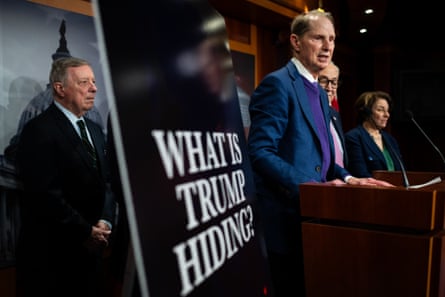
The Epstein scandal has prompted questions about why the accused sex trafficker’s elite circle of friends and associates has not faced greater scrutiny. That may change. Black is due to testify before the House oversight committee on 26 June, according to a person familiar with the matter, as part of the committee’s investigation into, among other things, Epstein’s sex-trafficking rings. He is also facing questions from the Democratic senator Ron Wyden, who claimed in a recent letter to Black that the Epstein files released by the Department of Justice “remove any lingering doubt” as to whether Black was “connected to women in Epstein’s network” and alleged that “powerful associates in the US and abroad were surveilling and paying off women on [Black’s] behalf”.
Black’s attorney, Susan Estrich, called Wyden’s assertions “outrageous and false” in an emailed statement, and characterized the senator’s comments as a “politically motivated attack”.
The Guardian’s investigation, based on access to extensive court records, many of which are still under seal but are due to be unsealed soon, reveals how Black and his legal team’s private pleas to a federal judge led to a legal battle involving extensive written submissions and multiple hearings in a case in which he was not a party.
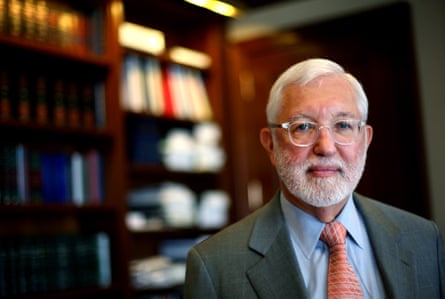
It included an extraordinary personal appeal from Black to Judge Rakoff, a well-known and respected jurist based in the southern district of New York. The written message, which was obtained by the Guardian, portrayed Black as a victim, invoking the death of Black’s father, disputing Doe’s credibility and citing the damage the allegations have done to Black’s reputation. It was submitted by the billionaire’s lawyers days before Rakoff denied the $2.5m award that Doe was due to receive in the Epstein-related class action lawsuit.
In another twist, Black’s legal effort was bolstered by a high-profile lawyer who is publicly heralded as an advocate for Epstein’s victims.
All these communications occurred outside public view.
In an exclusive statement to the Guardian in which Doe described her feelings about what has transpired, she said: “We are often taught that the justice system is there to protect victims and correct wrongs. My experience has shown me that it is far more complicated than that. Justice is not always blind. It is often shaped by power, access, and who is able to withstand the process. I am still here. And I am not done.”

Jane Doe takes Leon Black to court
In July 2023, Jane Doe alleged in a legal complaint filed against Leon Black in the southern district of New York that Jeffrey Epstein introduced her to Black at Epstein’s townhouse in late spring of 2002. She was 16 years old.
Black, who is worth an estimated $14bn, was the chair and chief executive officer of Apollo Global Management, a private equity firm he co-founded and led until he stepped down in March 2021, in the wake of revelations he had paid tens of millions of dollars to Epstein. Black has said the payments were for legitimate financial advice and that he was “completely unaware” of misconduct by Epstein, who in emails released earlier this year by the Department of Justice sometimes referred to Black as “Mr Big”.
Apollo announced in January 2021 that an internal review by the Dechert LLP law firm, which Apollo’s board commissioned to investigate Black’s “previous professional relationship” with Epstein, found Black’s payments to Epstein were for “bona fide” financial services. The report found there was “no evidence” that Black was involved in Epstein’s criminal activities. That review has since faced scrutiny, however, including by Senator Wyden, who claimed his staff uncovered evidence that money paid by Black to Epstein “was used to finance Epstein’s sex-trafficking operations”. Black’s lawyer called Wyden’s “attack” on the Dechert report “completely baseless”.
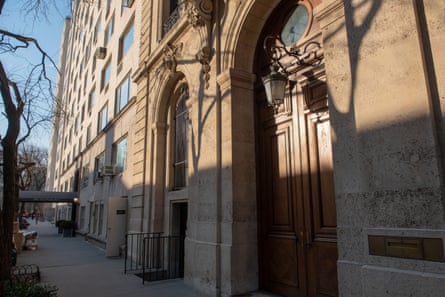
In her legal complaint, Doe alleged that Epstein told her that Black was his “special friend” and that because she was Epstein’s “special girl”, he had chosen her to give Black the same kind of “massage treatment” that she gave to him. Doe understood, according to her legal complaint, this meant that she was expected to strip naked and have sex. But when Doe and Black went up to a third-floor massage room, she alleged in her complaint, Black threw her down on the massage table and then abused her vaginally and anally with sex toys. He then bit her vagina, she alleged, causing bleeding and extreme pain. Reflexively, the complaint says, Doe kicked him. In response, the complaint alleges, he became enraged, then raped her.
Doe alleged in her complaint that the internal abrasions she suffered from the alleged attack that day continued to cause her pain more than 20 years later. The complaint describes Doe as having autism. While she has an above-average IQ, the complaint alleges, her neurodivergence makes her “extremely trusting”.
In a subsequent amended complaint filed by Doe’s then lawyer, Jeanne Christensen, claims about the alleged assault by Black remained substantially the same. Some key details about how Doe said she met Ghislaine Maxwell and was trafficked by both Maxwell and Epstein changed significantly, according to a later court order.
The Guardian has not independently verified any of Doe’s claims.
Black’s attorneys have said Doe’s allegations are “entirely fabricated”. Black’s lawyers have also previously called for Wigdor, the law firm that represented Doe until last year, to be legally sanctioned for relying on “false allegations and made-up stories” in other cases.
When Doe had filed the suit against Black, Wigdor had already filed two other lawsuits against Black on behalf of women who also alleged he raped them. One was a lawsuit by Guzel Ganieva, a Russian model and former mistress whose claim was dismissed because she had previously signed a non-disclosure agreement, for which she had been paid $9.5m by Black. The other lawsuit, filed by a woman named Cheri Pierson, who alleged that Black had raped her at Epstein’s townhouse, was “discontinued with prejudice and without costs to any party as against the other”. Black has said he never met Pierson. Black’s lawyers have said the allegations by both women had no merit.
Even as she pursued a civil lawsuit against Black, Doe was involved in another legal case in the southern district of New York – this one connected to the crimes Epstein was accused of before his 2019 suicide. In 2022, a class of Epstein victims sued JPMorgan Chase, alleging that the bank had violated anti-sex-trafficking laws because of its participation and “intentional involvement” in Epstein’s sex-trafficking operation. The victims were represented by Bradley Edwards, the Florida plaintiffs’ lawyer who has represented hundreds of Epstein victims and is famous for helping to expose the 2008 “sweetheart” non-prosecution agreement that shielded Epstein for years.
The JPMorgan class action lawsuit, which was overseen by Judge Rakoff, settled for $290m dollars in June 2023 without an admission of liability, though JPMorgan said it regretted its association with Epstein. It included a fund for Epstein abuse survivors, to compensate them for physical and emotional injuries. A claims administrator was appointed to oversee the fund.
Edwards’ firm, Edwards Henderson, together with co-counsel Boies Schiller, were paid $87m for their work representing Epstein victims in the JPMorgan class action lawsuit.
In late October 2023, Doe was interviewed by the claims administrator in the JPMorgan case. She later found out she was being allocated $2.5m.
It was a moment of elation for Doe, her adoptive mother told the Guardian, because it was the first time she felt that her trauma was being recognized.
Judge Rakoff approved the claims administrator’s proposed allocations on 5 January 2024, including the allocation for Doe. But he said he intended to exercise an “oversight role” to ensure the allocation of class funds was “fair and reasonable”. The oversight role would be ex parte, he said, meaning that each side of any conflict could make their case to the judge, without the other side being aware of it.
It was unusual for Rakoff. The judge, who has been called a “true judicial maverick”, has spoken publicly about the importance of transparency in the justice system. “Everything needs to be public,” the judge told the New York Times in 2009. “… The legitimacy of the courts comes from the fact that they reason openly, on the record, based on facts.”
In January 2024, within days of Doe finding out about her $2.5m allocation, her Wigdor lawyer, who was participating in a mediation with Black’s counsel involving another client’s case, disclosed that Doe had been allocated a major award in the JPMorgan settlement, according to a chronology of events described in a 2026 court order.
What happened next would later be characterized by Doe’s then lawyer as a violation of confidentiality. Black’s counsel, Susan Estrich, contacted Judge Rakoff on Black’s behalf.
In a 21 February 2024 private and undocketed letter to Rakoff, Estrich claimed that Doe was perpetrating “serious fraud” on the court and was not a real Epstein victim, according to a court order that subsequently described Estrich’s letter. According to someone familiar with the matter, Estrich – who was not representing a party in the JPMorgan case – acknowledged in the letter that reaching out to Judge Rakoff was “unorthodox”.
Estrich declined to comment on questions by the Guardian about this exchange.
In the letter, Estrich asked Rakoff to open an inquiry into Doe and the allocation, according to a person familiar with the matter, and said she had “reason to believe” that the court-appointed class counsel – Brad Edwards and other lawyers – “would have directly relevant information to bear on the issues”.
Estrich’s letter succeeded: Rakoff and Edwards, representing class counsel, agreed to take a “closer look” at Doe’s claim, court records show.
Legal experts consulted by the Guardian said an intervention, such as the one made by Estrich on Black’s behalf, raised questions, because such outside legal interventions in a proceeding are quite limited.
“Somebody who has an interest in a piece of litigation may not intervene in some other dispute of a party against whom he is opposed just because he would like to do them damage in that case. That’s not how the system works. You litigate your own cases,” said Sam Issacharoff, a professor of constitutional law at New York University, who is a leading scholar on class action lawsuits.
In theory, if a lawyer for a defendant who is accused of rape writes to a judge in a class action, in which that alleged victim has been given a claim, it could even be seen as a way of “harassing them and calling their testimony into disrepute”, he added.
“It’s not allowed if it’s malintentioned, and the line between what’s allowed and what’s malintentioned is a very difficult one.”
The Guardian reached out to Judge Rakoff for comment. His law clerk said in an emailed statement: “It is a matter of record that the great majority of Epstein-related proceedings before Judge Rakoff have been sealed at the express request of the various counsel for Epstein’s victims in order to protect the victims’ identifying information, and that all parties have at all times consented to this sealing. Beyond this, Judge Rakoff is prohibited by law from responding to your questions, as they relate, directly or indirectly, to an ongoing proceeding before Judge Clarke.”
A call from attorney Brad Edwards
On 2 August 2023, this reporter – preparing to publish an article in another publication – reached out to Leon Black’s spokesperson, Whit Clay, with a list of questions about financial and sexual allegations related to Black’s ties to Epstein. The email included one question about the lawsuit that Doe had filed against Black a week earlier.
Two days later, Black’s team emailed a response, including a statement from Estrich, Black’s lawyer, about Doe’s case, predicting it would be “promptly dismissed”.
Later that same morning, this reporter got an unexpected call on her mobile phone from a number she did not recognize. The caller introduced himself as Brad Edwards, class counsel in the Epstein victims’ lawsuit against JPMorgan, which had settled for $290m one month earlier. As class counsel, Edwards said he had been in touch with the entire class of victims and had access to hundreds of thousands of documents. When a particular case gets too much attention, he said, according to a contemporaneous record of the call, people would call up with stories about being victims of Epstein and he would have to sift through and figure out if they were true.
“Not one piece of [Doe’s] story could ever be corroborated and a lot of what she says just definitely could not have ever happened,” Edwards said. He said he knew Doe was alleging she had met Black through Epstein. “So, in order for the Leon part to be true, the trafficking to Jeffrey Epstein would have to be true,” Edwards said.
He said “the timeline” of Doe’s claims “can’t make sense for many reasons”, but when pressed for details he said he could not say more, because it could “expose other clients”. After making these comments, Edwards said he wanted his remarks to be “off the record”, meaning they should not be published.
But according to principles widely followed by journalists, a reporter and source must agree information is “off the record” before the information is shared, not after. This reporter had not agreed that comments Edwards made about Doe were “off the record”.
Edwards, it would later emerge, appeared to have had other dealings with Black’s lawyers months before that phone call. The New York Times reported in 2023 that Edwards, in his capacity as an attorney for Epstein victims, attended a multi-day mediation between Black’s counsel and lawyers representing the US Virgin Islands, which concluded with Black agreeing to pay a $62.5m settlement to the US Virgin Islands in January 2023 in order for Black to be “released from any potential claims” related to local authorities’ investigation of Epstein’s sex trafficking in the territory.
The New York Times noted at the time that the settlement – which had come to light in response to a public records request by the newspaper – showed the extent to which Black, once a Wall Street titan, had gone to limit scrutiny of his “decades-long social and business ties” to Epstein. Edwards declined to comment at the time and Black said the settlement was meant to resolve any potential claims that had arisen out of the “unintended consequences” of payments he had made to Epstein for “legitimate financial advisory services”.
‘I could not believe this was happening’
Six months after Edwards’ surprise call to this reporter, a court order in Doe’s lawsuit against Black would later show, Edwards and his colleague Brittany Henderson sent a sealed letter to Judge Rakoff as part of the inquiry that had been launched into Doe’s claims. The 26 February 2024 letter described Doe’s account as “inconsistent” and said there were doubts she was a “veritable victim of Epstein and his associates”.
Days later, on 1 March 2024, the then lawyer for Doe, Jeanne Christensen of Wigdor, sent her own letter to Judge Rakoff, criticizing the intervention by Black’s lawyers in the JPMorgan case and accusing “class counsel” – Edwards and Henderson – of acting improperly, according to a later court order describing the chronology of events.
Christensen also disclosed a new potential bombshell: Doe had kept journals from ages 16 to 19 that, the lawyer alleged, documented her abuse. The journals had been kept in a storage unit belonging to Doe’s adoptive family, she claimed.
The journals were school notebooks; there was one for each year from ages 16 to 19, beginning on her birthday, and each had a similar format. They had a scrapbook-like feel in that they contained magazine clippings and sonograms from her pregnancies, according to court filings. The text of her journals was written in gel pen in a simple two-line zigzag code meant to disguise a first-hand account of the violence allegedly perpetrated on her by Black, Epstein, Maxwell and others, according to court records.
One entry states: “ … Mr Black is so important for some reason over my health. There is going to be hell to pay. I ruined their trip and I am dramatic when that fat fuck bit me! He threw me on the floor and blood all over Jeffreys carpet and I am the issue?”
Another entry contains a typed copy of Sylvia Plath’s poem Stopped Dead. Several lines are underlined, including “fatso, millionaire”. The name Leon Black is handwritten next to the title, arranged in a coded pattern.
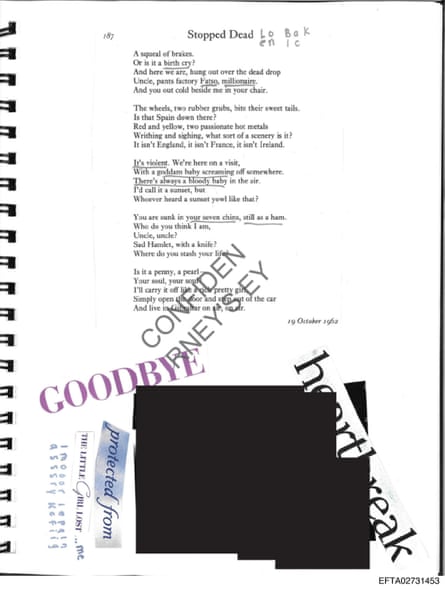
Excerpts of the journals are included in Doe’s amended lawsuit and were released by the Department of Justice as part of the Epstein files earlier this year.
In a statement to the Guardian, Black’s lawyer said the Guardian was ignoring the “outlandish nature” of claims in Doe’s journals, such as “that she had been trafficked by Epstein to 50 different men”, including powerful politicians.
On 15 March 2024, less than a month after Rakoff received Estrich’s ex parte letter, he convened the first hearing in the Jane Doe inquiry. At the hearing, for which Rakoff sealed the courtroom, Doe was put on the stand and cross-examined by Edwards.
“I can’t discuss the substance of what she was asked,” said Doe’s adoptive mother, who was present at the 15 March hearing and was speaking publicly about it for the first time. But Edwards’ questioning, she told the Guardian, “was surreal. I could not believe this was happening.”
“He questioned my daughter in a way that was aggressive and invasive. I was shocked by his tone, especially because he was there as class counsel, which meant that he should have been safeguarding her as a claimant rather than subjecting her to a hostile interrogation like you’d expect in a criminal proceeding,” she said.
Edwards did not respond to the Guardian’s questions about his cross-examination of Doe.
Black’s lawyers were barred from attending the hearing, despite their objections.
A court order filed publicly in April 2026 by Judge Clarke, who is presiding over Doe’s case against Black, disclosed some details about the private proceedings. It described Doe’s 15 March testimony before Rakoff as being “at times, far-fetched”. Among her claims, Doe had described how she had been the victim of an “impregnation game”, and forced to carry out pregnancies from men who sexually abused her. In a court order, Doe is described as having testified that Epstein fathered four of her five children, though Doe’s lawyer later said in court that Doe was only sharing what Epstein “told her, not a representation of the truth”.
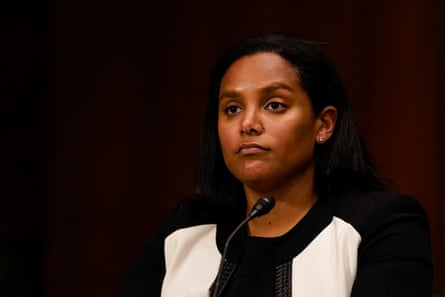
A 2019 article by the New York Times described how Epstein told scientists and businessmen “about his ambitions to use his New Mexico ranch as a base where women would be inseminated with his sperm and would give birth to his babies”.
Judge Rakoff, the court order said, considered Doe’s journals “to be central” in determining Doe’s credibility. Rakoff appointed an expert to assess the ink dating on Doe’s journals. The results were inconclusive.
Rakoff convened another hearing on 8 July, this time by Zoom, without either Doe’s lawyer or Edwards present. These conditions had been agreed to by both parties, the judge presiding over Doe’s lawsuit against Black later wrote in a court order.
Among other topics Rakoff asked Doe about was her relationship with Maxwell, and the frequency with which she was allegedly trafficked to Epstein while she was in high school.
“Just so the claimant understands,” Rakoff said, according to an excerpt from the hearing’s transcript, which is cited in a separate legal order, “all of us, I feel, have a great deal of sympathy for you. You’ve had a very harsh life and our hearts go out to you.”
The Doe inquiry culminated on 19 July 2024 with an extraordinary letter to Judge Rakoff from both Estrich and fellow Black attorney Michael Carlinsky, who is co-managing partner of the law firm Quinn Emanuel. The letter, which was obtained by the Guardian, contained within it a personal, emotional appeal from Black to Rakoff. Black’s lawyers stated in the letter that they were aware that Rakoff intended to issue his ruling in the Doe matter by 31 July.
Estrich and Carlinsky said they had learned from a colleague at the Paul, Weiss law firm, which has also represented Black, that Rakoff had “raised the question” about whether Black might reach a settlement with Doe.
It is not clear to which Paul, Weiss colleague the lawyers were referring. Brad Karp, the one-time chair of Paul, Weiss, was a known associate of Judge Rakoff. The two reportedly had dinner on a somewhat regular basis, according to a 2017 book.
Karp resigned from the chairmanship of Paul, Weiss in February, in the wake of revelations of his personal dealings with Epstein. Karp did not respond to the Guardian’s request for comment.
Black had no interest in settling with Doe, the two lawyers, Estrich and Carlinsky, wrote. They then shared an impassioned appeal from Black that they said the financier had asked them to convey to the judge. Both lawyers declined to comment on the 19 July letter.
“The idea of settling with Jane Doe, Douglas Wigdor and the Wigdor firm is repellent to every core value I hold dear,” Black stated. “From childhood, my father, a former rabbi, taught me the importance of Shem Tov [Hebrew for ‘A Good Name’],” he wrote. Doe’s lawyers at the Wigdor firm, Black said, had “disregarded the truth and behaved in what I believe to be profoundly unethical ways”.
“Not since my father’s death 49 years ago have I felt such pain and seen such hurt inflicted on those I love … I cannot settle with Jane Doe and the Wigdor firm, not only because of the damage their lies have caused, but more importantly, because I don’t know how I could look my children and grandchildren in the eyes and teach them the importance of Shem Tov.”
Invoking his father’s death in a letter to Rakoff was a striking choice. Black’s father, Eli Black, had been a socially prominent New Yorker and the CEO of a global company, the Chiquita banana importer United Brands. But on 3 February 1975, Eli Black killed himself by jumping out of the window of his 44th-floor office in the Pan Am Building on Park Avenue. After his death, it was revealed that he had authorized a $2.5m bribe to the president of Honduras in a bid to get lower export taxes on bananas. When United Brands was ultimately charged with criminal conspiracy on account of the scheme, Eli Black was, according to the New York Times, posthumously named as a co‐conspirator.

While Black did not share any details of his father’s death and its aftermath in his appeal to Rakoff, he did not need to; the rising star federal prosecutor who charged United Brands was none other than a young Jed Rakoff.
Judge Rakoff declined to comment on questions about the personal message.
As with other documents he received during the Doe inquiry, Rakoff did not enter the letter containing Black’s personal appeal into the JPMorgan class action’s publicly accessible docket.
Lawyers and legal experts the Guardian spoke to said they found Rakoff’s decision to make his oversight role ex parte to be unusual.
One thing that sets class action cases apart from other cases is the “level of transparency” required, said Chris Seeger, a class action lawyer who was co-lead counsel on a class action lawsuit against the NFL. “Everything you do is out in the open, that’s the whole idea … No side deals. No secrets,” Seeger said.
Rakoff ruled to rescind Doe’s $2.5m JPMorgan allocation in its entirety on 31 July 2024, less than two weeks after receiving Black’s personal appeal. He also withdrew Doe from the US Virgin Islands (USVI) Mental Health Fund for Epstein survivors, a class of which she was now officially no longer a member.
For Doe, it was a crushing blow, her adoptive mother told the Guardian.
As Doe would recount nearly one year later in a sealed court declaration in her claim against Black, Black’s letter to Rakoff “was accepted without notice to me and was apparently considered prior to a final ruling, despite raising emotionally laden arguments about [Black’s] character and suffering. Meanwhile, I was never permitted to submit a narrative, impact statement, or rebuttal.”
She also had “serious concerns about inappropriate influence and access”, saying she had “no equivalent means” of communicating with the court. “That Defendant’s team had such access underscores the systemic imbalance that plagued these proceedings,” she wrote.
Judge Rakoff declined to comment.
The sealed declaration, which was seen by the Guardian, also hit back against some of the claims Doe said were made by Brad Edwards. Doe claimed, for example, that Edwards had asserted that no other victims had recognized Doe, even though – Doe claimed – he had only consulted two individuals. Doe said Edwards had also dismissed “physical evidence” that supported her “connection to Epstein”, including photographs from Martha’s Vineyard, by stating Epstein had not been to Martha’s Vineyard. In fact, Doe said, there is evidence Epstein spent time on the island, which has subsequently been reported by ITV News and the New York Times.
Edwards did not respond to the Guardian’s questions about Doe’s claims.
Doe pushed back, too, against claims that have been submitted to the court about her by an investigator working for Black’s legal team, such as the claim that she had a “personality disorder”, not autism, and that her biological family said that Doe had a “history of making up alternate realities”. Doe’s own records, a person familiar with the matter said, show she was legally adopted as an adult in the state of Virginia for “good cause”. Medical documentation, which the source said was submitted to the court, confirmed her autism diagnosis and post-traumatic stress disorder stemming from long-term sexual abuse. The medical record also states Doe has no history of personality disorder or psychosis, the source said.
Doe was urged by her attorneys to appeal Rakoff’s decision to rescind her $2.5m award, according to a sealed declaration she later filed.
But on 21 August 2024, just three weeks after Rakoff rescinded Doe’s allocation, Rakoff signed off on a stipulation – between Doe and the JPMorgan settlement fund for Epstein survivors – granting Doe a $200,000 settlement, according to a court filing seen by the Guardian. This made her eligible – once again – to participate in the USVI Mental Health Fund.
Judge Rakoff did not respond to the Guardian’s questions about the August 2024 settlement stipulation.
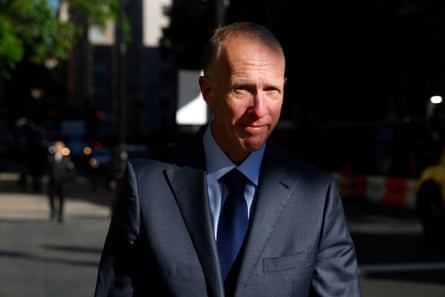
Last month, on 23 April, Judge Clarke, who is presiding over Doe’s lawsuit against Black, issued a 76-page ruling in response to Black’s motion for the case against him to be dismissed. Doe’s former lawyer, Jeanne Christensen of Wigdor, and Doe had “engaged in serious, sanctionable misconduct”, Clarke found. Christensen had “lied repeatedly to the court and to opposing counsel” about what was happening in the JPMorgan Doe inquiry and had also “directed” Doe to “destroy a relevant social media account” that Doe had used to “communicate publicly about her experiences as a purported Epstein victim”. Clarke also wrote that Doe had “falsified” three sonogram images, out of a total of 11, that had been included in Doe’s journals.
Wigdor withdrew as counsel for Doe days after disavowing three of the sonograms. Doe is now representing herself in the proceeding.
Estrich, Black’s attorney, said in a statement to the Guardian: “The only thing that matters is that a federal judge found as a matter of fact that Jeanne Christensen, the Wigdor law firm and Jane Doe lied … They are being punished by the federal court. Nothing they say has any credibility. They are liars and should be completely ignored.”
While the order was widely seen in press reports as a serious rebuke of Doe and her legal team, Judge Clarke said the misconduct “need not doom” Doe’s case. The case will proceed.
Christensen, the attorney at Wigdor, did not respond to the Guardian’s questions. Douglas Wigdor, the law firm’s founding partner, said in a press statement in response to the order: “While we are upset about the sanction, we are pleased that our former client will get her day in court.”
In a letter submitted to Judge Clarke this week that referenced the sanctions, lawyers for Wigdor and Christensen asked for permission to file under seal a motion for reconsideration. Wigdor also recently filed a separate lawsuit against Black, claiming he has deployed “multiple frivolous and malicious lawsuits” as retaliation for representing accusers. His lawyers rejected the claims.
In her statement to the Guardian, Doe said she began her case as an effort to seek accountability, but she believes her lawsuit has “become something much broader”.
“It has become about what happens when a system meant to provide justice instead becomes another source of harm. I have faced retaliation, misrepresentations, public scrutiny, and repeated efforts to undermine my credibility. I have been left to navigate this process alone, with limited time, limited resources, and overwhelming personal cost,” she wrote. “There were moments when I did not know if I could continue. But I made a promise to myself that I would not stop.”