.png) 1 month ago
47
1 month ago
47
A senior BBC executive has defended BBC Arabic as a lone voice in the region covering the “Israeli perspective”, as she warned its critics that it pursued stories ignored by the Gulf’s state-owned media.
The corporation’s Arabic service has come under sustained criticism in recent years, for its selection of coverage and for featuring some guests that had expressed antisemitic views on social media. There have even been calls for the service to be closed down.
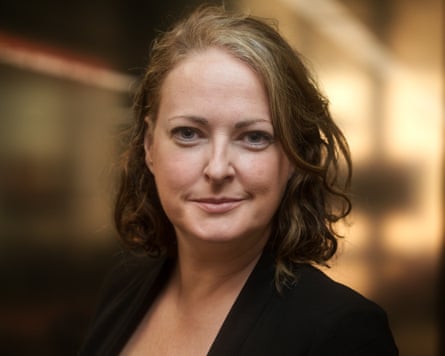
In an interview with the Guardian, Fiona Crack, the director of the BBC World Service, said the corporation had apologised for the service’s mistakes and acted to fix them.
However, she also cautioned BBC Arabic’s critics that without it, the Arab world would lose one of the only independent and impartial outlets reaching nearly 40 million people in the region each week. “What would it be without BBC Arabic? For example, in the Gaza war we wouldn’t have heard Israeli perspective, Israeli experience,” she said. “We wouldn’t have heard the kind of internal Israeli political arguments.
“That wouldn’t have necessarily been in the Arab-speaking world without BBC Arabic, because they do the same kind of news with the same kind of outlook as all BBC News.
“[The criticism from the UK] is a disconnect. Of course, because they are bringing the Israeli perspective and opinion to the airwaves in Arabic, unlike everybody else, they are attacked within their markets for being pro-Israeli – very vociferously sometimes. That is difficult, particularly if you’re living in those environments.”
Crack also said that early in the conflict between the US, Israel and Iran, the service reported serious incidents in the region that were ignored by other media. “There was the big oil refinery fire in Saudi Arabia, there were jets that were brought down,” she said. “BBC Arabic were reporting on that because they had double sourced it, because we had done the journalism.
“The other big channels in Arabic weren’t because, of course, they’re primarily owned by Gulf states and there was a reticence. It just underlined to me that the same drive that we have here, we have around the world.”
Crack said many of the countries in BBC Arabic’s region feature low down in media freedom rankings compiled by Reporters Without Borders. Among 180 countries, Syria is 177th, Afghanistan 175th, Egypt 170th, the UAE 164th and Saudi Arabia 162nd.
Crack’s defence of the service comes after an 18-month period in which the BBC had been overhauling the editorial oversight of BBC Arabic. It followed criticism in the UK about its output and story selection compared with the BBC’s main output, as well as its selection of contributors.
Many of the criticisms were repeated in a memo sent to the BBC’s board last year by Michael Prescott, a former independent external adviser to its editorial guidelines and standards committee.
The memo referred to a contributor who had previously stated online that Jews should be burned “as Hitler did”. The BBC has previously said he should not have been featured in the way he was.
Another featured contributor had described Jews online as “devils”. The BBC said last May that the person had been barred from being a contributor in future.
Crack said many of the criticisms in the Prescott report were already being dealt with, including through deeper checks on contributors and oversight by a new editorial quality and standards executive, who is an Arabic speaker.
“There have been mistakes,” she said. “Where there have been mistakes, we have said there have been mistakes, and we have apologised for them, and we’ve looked at our systems to strengthen them.”
“Public service media across the world is under threat,” Crack said. “We should be very careful [when] attacking it. It’s worth just thinking about how unique BBC Arabic is in that region and the scale of what they’re trying to do.”