.png) 1 day ago
7
1 day ago
7
Born in Indianapolis in 1982, actor and musician Adam Lambert rose to fame in 2009 as runner-up on the eighth season of American Idol. His second album, Trespassing, made history as the first No 1 on the Billboard 200 by an openly gay male artist. He went on to front Queen + Adam Lambert from 2012, made his Broadway debut in 2024 as the Emcee in Cabaret at the Kit Kat Club, and starred as Judas in Jesus Christ Superstar at the Hollywood Bowl in 2025. His sixth solo album, Adam, is out now. He performs at London’s Roundhouse on 21 July.
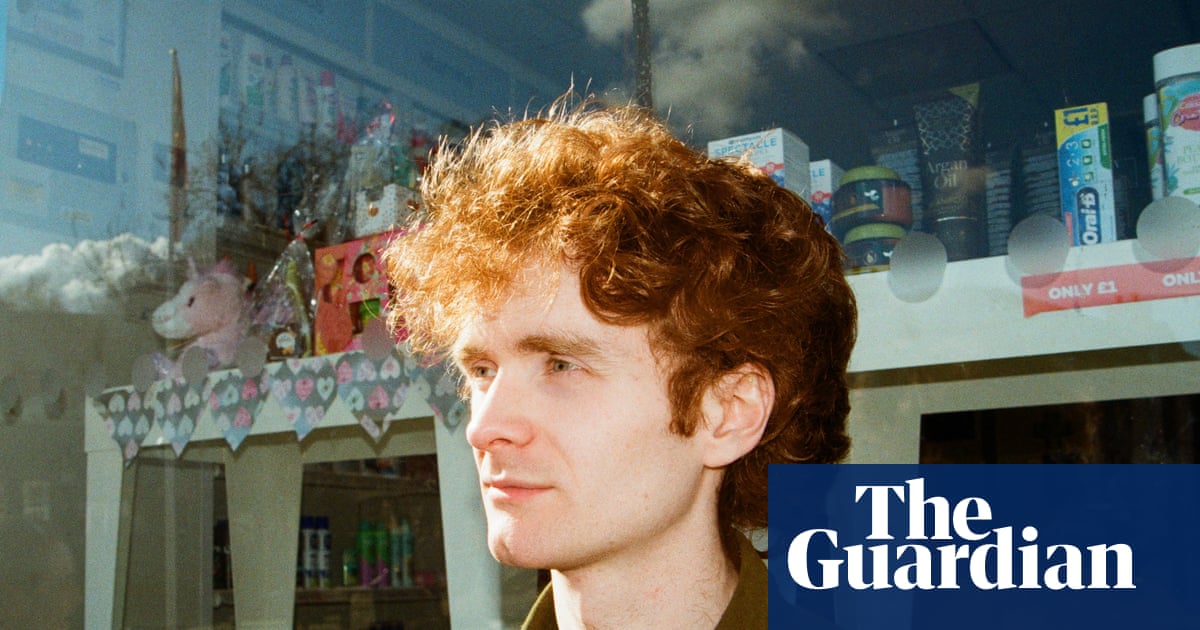
This was my first professional headshot. When I was 12 I would spend a lot of time driving from San Diego to Los Angeles for auditions with my mum and my brother, who also wanted to act. That guy in the plaid shirt never booked a single job. My brother did, though. He was a far cuter, more photogenic kid than I was.
At this age, I was talkative and friendly. I tended to connect better with adults than children, and I was really enthusiastic about the arts – obsessed with theatre and show business. After school, I would fanatically watch videos on MTV; the fresh wave of alternative music in the 90s was like a jolt of lightning. There were dark, edgy artists, and their visuals gave me a funny feeling that I was also fascinated by, such as the video for Closer by Nine Inch Nails or anything by Daft Punk, the Chemical Brothers or Massive Attack.
My self-belief was pretty stable, but that started to dismantle when puberty came along. As well as the weird new hormones, middle school introduced social expectations that I hadn’t considered before. There was this sudden segregation of tribes: boys and girls stopped hanging out, and I was suddenly conscious of my identity. Was I cool or not cool? Was I a skater or a surfer? I wasn’t anything, and I didn’t like that it was so rigid. As for my sexuality, I didn’t even know what that meant yet. I was too busy trying to blend in.
I didn’t get into any high-end musical theatre schools as my grades weren’t quite competitive enough. Being in a classroom wasn’t for me, and I hadn’t put enough effort into the exams. Instead, I worked in theatre during the summer, and became a singer on a cruise ship when I was 19. Then came Wicked. In 2005, I got on the first national tour of the production, but left after six months as I wanted to be a rock star. When Wicked came back with a permanent production in Los Angeles, I joined again.
My fantasy, or maybe delusion, that I could be a real artist was still humming in the background, so when the American Idol auditions came up, I threw myself in. My memories of that moment in front of the judges was that I was nervous; it was the last year that I could get in as I was at the age cut-off point, and I had to quit my job on Wicked to get through to the TV auditions. A lot was at stake. I sang Bohemian Rhapsody, and my hair was jet black with a side parting – very 00s Myspace. It was a huge risk, but thank God it panned out.
Each week, I was excited to show everyone what I could do, how much I loved to sing, but it was terrifying knowing that there were millions of people watching and that I was about to be analysed and critiqued online. The intensity gave me a lot of adrenaline – I would turn up on stage as if I was shot out of a cannon. But afterwards I was going on message boards and comment sections. I couldn’t pull myself away from it, the good and the bad comments. There were plenty of both. The ritual became masochistic.
I had a lot of impostor syndrome at the start of my solo career. I was always worried and asking: is this opportunity going to be snatched away from me at any second? Am I going to be like the other people who have competed on these TV shows – is this just a flash in the pan?
Then, the day before my first solo single came out, I performed at the American Music Awards. I was happy with what we had done, but afterwards I found myself at the centre of a cultural debate, as the performance featured a kiss with another man. The controversy was a total double standard, and I wanted to stick up for myself and say how stupid it was, and that I had done nothing wrong. But behind the scenes, the label freaked out. They felt it was a little too premature for me to be embroiled in something like that. A bunch of people got cold feet on me; a lot of radio stations and people in the business thought I was too risky to back. Especially coming off of a show like Idol, which is so family friendly. The message was that what I had done was too edgy and distasteful. It didn’t hit me right away what an impact it would have on my career. It was a crazy moment, one that should have been fun and exciting.
after newsletter promotion
The first time I met Queen was on American Idol. I had joined Brian May and Roger Taylor on stage for the finale to perform We Are the Champions, and off stage our rapport felt natural. When the dust had settled from my first solo album, there was an opportunity to perform with them at the European Music Awards. I was excited, but also aware that people were going to be protective of Queen and their memory of Freddie. Despite my apprehensiveness, it was an opportunity I couldn’t pass up. When I look back on some of those early performances, I was definitely working overtime trying to prove myself – singing every note possible in every song, and overcompensating vocally. Just like when I was on American Idol, I would search the internet afterwards to find out what people were saying. Some thought what we were doing was cool and others considered it sacrilege. Even though it hurt, it kept me humble and made me want to get better so the Queen audience would accept me.
Music is an amazing medicine, both as a listener and a creator. Being able to get my feelings out is therapeutic, especially when you know that it’s going to connect with other people. Most recently I wrote about a breakup I went through. We were in a five-year relationship, and a week after it ended I was in a writing session. It was very raw, but having that space to express myself was so important. I am not an outwardly emotional person, I’m more of a heady kind of guy, always thinking rather than expressing.
I’m in my 40s now, and feel more calm. For most of my career I have been so wrapped up in my own worth – my confidence depended on the reception to the work I was doing. The commercial success of a piece of music doesn’t control my self-esteem as much as it used to. I’ve been around for long enough to have proven myself as a performer, and I am starting to care less about what people think. In a lot of ways, this part of my life feels like I am returning back to that kid in the photo – tapping into the pure joy of creativity, where there’s no filter, no inner voice trying to sabotage me.