.png) 6 hours ago
9
6 hours ago
9
Miniature human organs and other tissues are to be grown from NHS patients’ cells in a drive to improve medicine testing and reduce the number of animals used in drug development.
Scientists will use the clumps of tissue to learn how diseases vary between patients, helping them identify which treatments are best for different people based on the particular pathology underlying their condition.
The move marks a shift away from the traditional use of animals as models for human disease, towards what researchers believe will be more accurate and reliable tests based directly on human tissues.
“It’s going to have a major impact on the numbers of animals used and the way we develop new drugs in the future,” said Matthias Zilbauer, a clinical professor of paediatric gastroenterology at the Cambridge Stem Cell Institute. “We’re not saying there won’t be any animal use in the near or foreseeable future, because there are still certain issues that cannot be tested in these new models, but the reduction is very real.”
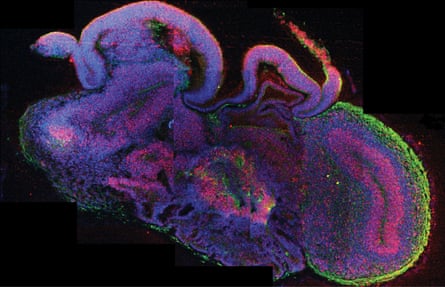
Researchers have been growing tiny clumps of human organs, known as organoids, for more than a decade. Tests show that pieces smaller than a millimetre can mirror key features of full-scale organs and tissues, including how they falter with disease and respond to drugs.
Armed with organoids grown from diseased human tissues, scientists can investigate whether new drug candidates reverse pathological changes in all or a subset of patients, and quickly identify ineffective drugs early in the process.
Historically, more than 90% of drugs that clear animal testing go on to fail in human trials, raising questions about the value of the tests. US and European medicines regulators now encourage other approaches if available.
“A lot of human diseases either do not occur in animals or occur in a different way because they’re not human,” said Zilbauer. “We want tests and models that can tell us which treatments work, and in what patients, and a mouse cannot tell us that.”
The new work will be run from a research hub in Cambridge, funded with £20m from the Medical Research Council. Researchers there will work with scientists more widely to create a library of standardised, validated organoids. These will be made available to academics and the pharmaceutical industry to help them bring new drugs to the clinic.
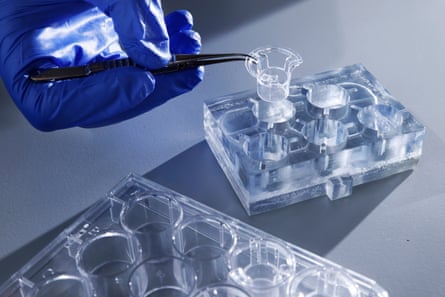
The move is part of a plan drawn up by Keir Starmer’s government to fast-track the reduction of animals in research. The strategy relies on “new approach methodologies” (Nams), such as organoids, organ-on-a-chip systems and artificial intelligence, to process data and model biological processes.
after newsletter promotion
Last year, there were 2.54m animal testing procedures in Britain, down 3.8% on 2024. More than 90% of the procedures used mice, rats, fish and birds but 1% used specially protected species such as cats, dogs, horses and monkeys.
While scientists will grow a full range of organoids from beating clumps of heart tissue to electrically active brain cells, Zilbauer’s team is starting with organoids for inflammatory bowel diseases such as ulcerative colitis and Crohn’s disease. Others will focus on growing tumours to improve cancer treatments, and brain organoids to understand neurological conditions.
A further £2m has been awarded by Innovate UK for nine projects that aim to reduce the number of animals such as dogs and monkeys used in safety tests.
One company, VivoSphere, is growing heart cells in tiny gel spheres for heart safety tests. Traditionally, such tests can involve 50 to 100 animals, such as guinea pigs, rabbits and dogs. Yuan Tian, VivoSphere’s chief technology officer, said its approach was to detect toxicity earlier so harmful drugs did not reach the animal testing stage. “If something is going to fail, there’s a lower risk for the animals and also for the patients,” he said.
Dr Juliet Dukes, of the charity Replacing Animals in Research, said: “One of the huge advantages of organoids, organs-on-a-chip and other in vitro microphysiological systems is that, unlike animal models, they have real potential to deliver the promise of truly personalised medicine for individual patients. It is all very exciting.”