.png) 6 hours ago
5
6 hours ago
5
How good are you at judging a sun salutation or scorpion pose? I ask because yoga is under consideration as a sport at the next Commonwealth Games in India. Less surprisingly, so is kabaddi. But if Amdavad 2030 really wants to find experts in landing seemingly impossible manoeuvres, or holding their breath in tricky situations, they should take the next flight to Scotland.
Let us be frank. Glasgow 2026 has saved the Commonwealth Games, at least for now. After Victoria pulled out in 2023, the event was in limbo. Some feared it would never find a way out. Then Glasgow stepped in, less a knight in shining armour, more one that was a little dented and rusty, to put on an event from scratch in barely 20 months.
It didn’t help that the BBC did not televise it, but that is not the Commonwealth Games’ fault. Several sources say the BBC offered a derisory sum, which left organisers with little option but to go with Warner Brothers Discovery. For many, it was out of sight, out of mind. But those in Glasgow will testify that these were a fun Games, full of heart and surprise.
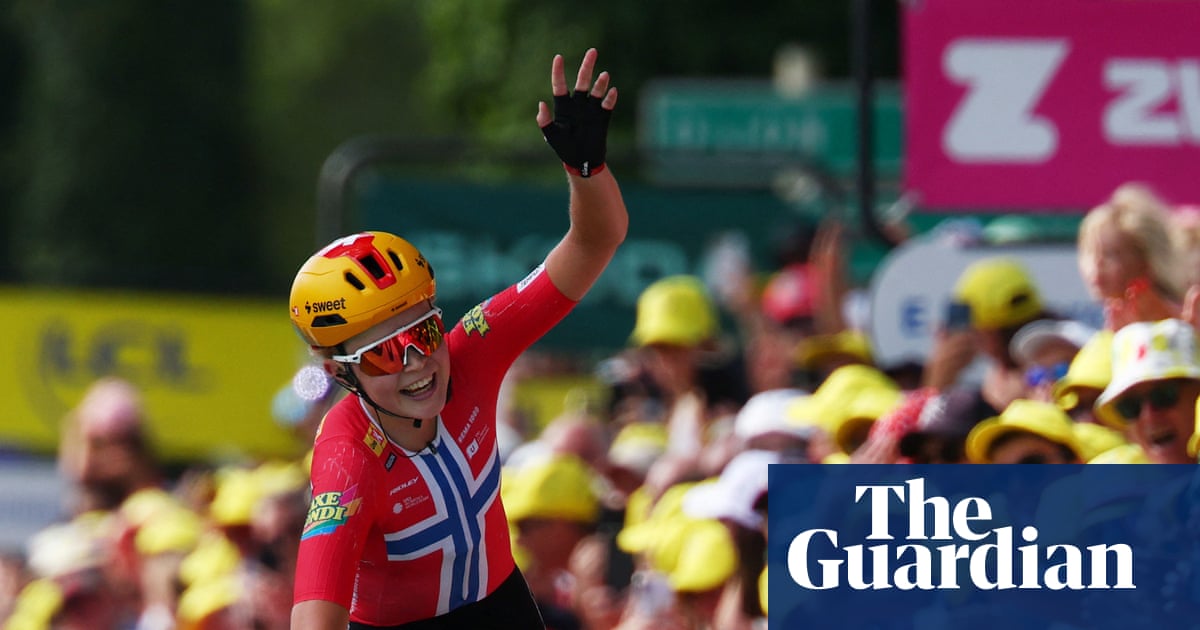
There were fears few fans would show up. In the end 434,000 of the 500,000 tickets were sold, putting the Games at 87% capacity. There were great stories too, Josh Kerr’s raw power in the mile and Emily Campbell throwing the weight of a couple of beer kegs above her head like they were beer cans.
It was so busy I never got the chance to write up one of my favourite interviews, with the Commonwealth medal record holder Chad le Clos. At one point we asked after his father, Bert, who became famous at London 2012 for his celebrations, his beard and his larger-than-life chats with Clare Balding, but has had cancer since.
“He’s lost about 40kg,” Le Clos said. “He was 138kg. He weighs 99kg now. You won’t recognise him because he walks every day. But he still says: ‘This is my boy. He’s won 18,19, 20, 21 medals. And he’s going to break the world record now.’ But people are like, ‘No, you’re not him. He’s the big old man, the Cookie Monster from the telly.’”
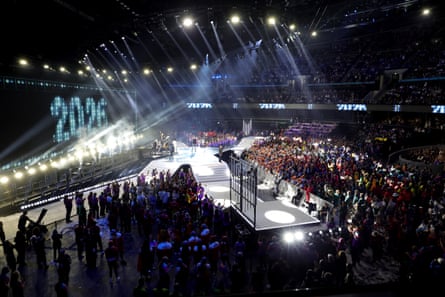
Even at the end, Glasgow was flying by the seat of its pants. Usually, the closing ceremony is practised on stage until everything is honed to perfection. This one had to be rehearsed at a compound at the back of the Hydro, because the netball was on, before Simple Minds closed the show with Alive and Kicking.
The Games is still that, all right. But for how much longer? We can all agree India will be spectacular. The opening ceremony is expected to be staged at the Narendra Modi Stadium, which seats 132,000. Many facilities are also already in place. India wants to stage the 2036 Olympic Games. It will not skimp on the trimmings.
Katie Sadleir, the chief executive of Commonwealth Sport, says Amdavad will stage between 15 and 17 sports – up from Glasgow’s 10 – from three buckets: core, optional and traditional.
The 10 core sports include athletics, swimming, gymnastics, boxing, netball and bowls. The five optional sports will be drawn from a list that contains cricket, triathlon and hockey. India can pick two traditional sports, which is where kabaddi and yoga may come in.
However, Sadleir cautions that the traditional sports have to be played around the Commonwealth, have a recognised international federation and be World Anti-Doping Agency compliant.
That explains why she is more positive about kabaddi’s chances. Even if the possibility of yoga brings up the intriguing prospect of someone being asked for a sample while in a lotus position.
But the trickier question for the Commonwealth Games is: what happens after 2030. Talk to me like a simpleton, I told Sadleir. Durban pulled out in 2017 as the 2022 host as the finances didn’t stack up and while Birmingham stepped in it lost a fortune. Glasgow was cheaper, but it was funded by the AUS$380m fine paid by Victoria when it withdrew. So can the Games really survive?
after newsletter promotion
Sadleir started with an anecdote about a recent sports conference where she was sat near the IOC president, Kirsty Coventry, and someone from the Brisbane 2032 Olympics. “I went right after Brisbane said they were going to raise $5.2bn. And I said, have I ever got a story to tell? We’ve gone from an £800m event to a £160m event because we’ve listened and we’ve learned.
“The only way we can continue is by resetting, reimagining, and making the Games affordable. Glasgow is a proof of concept with that in terms of cost and using existing facilities.”
But addressing the problem is one thing. Making enough to keep the Games going, quite another. While many remain sceptical, Sadleir is admirably indefatigable and optimistic.
She points out that Glasgow raised £30m in sponsorship and commercial revenue in a short space of time. She also promises to look at ways to attract more big names, including using the Commonwealths as a qualifier for world championships. Certainly something needs to be done. If Keely Hodgkinson, Summer McIntosh and Julien Alfred don’t want to show up, then why should the rest of us?
Finally, Sadleir says five countries are interested in 2034, including New Zealand and Nigeria, and to avoid another situation like Durban and Victoria, governments will have to be a bid underwriter in future.
The proof, of course, will be in the pudding. Abuja in eight years’ time anyone?