.png) 1 month ago
29
1 month ago
29
As I write this, there are at least five days to April Fools’ Day. Yet the news that Stephen Colbert, the American late night host, is about to write a new Lord of the Rings movie based at least in part on some (more) bits of the JRR Tolkien tome that didn’t make it into Peter Jackson’s Oscar-winning trilogy certainly feels like a prank.
We already knew we are about to get an entire film, directed by and starring Andy Serkis, titled Lord of the Rings: The Hunt for Gollum, and based on a sequence that was told in brief flashback during 2001’s The Fellowship of the Ring. It’s due out next year. And there were rumours that more movies would be coming. The Scouring of the Shire, perhaps, based on the bit at the end of The Lord of the Rings when the hobbits go home and discover Saruman has set himself up as King of the Hobbits? Something centred on long forgotten segments of The Silmarillion or The Book of Lost Tales that have somehow not been covered by Amazon’s megabudget Rings of Power TV show? Perhaps an action adventure based on Farmer Giles of Ham?
But no, it turns out that the next movie to be announced, Lord of the Rings: Shadow of the Past, will riff on those elements of chapters three to eight of the seminal high fantasy novel that did not make it into Jackson’s films. Which is to say, pretty much all of them.
If you’ve ever read Tolkien’s trilogy, you will probably remember these pages for provoking a creeping worry that if the rest of the 1,000-page plus story didn’t escalate fairly rapidly beyond tales of Farmer Maggot’s mushrooms, Tom bloody Bombadil and some slightly scary trees, it was all going to be something of a letdown. It does get much better, albeit in Tolkien’s own sweet time. But there is a reason Jackson bypassed most of the above for a streamlined Nazgûl pursuit in which the hobbits fast-forward straight to the village of Bree.
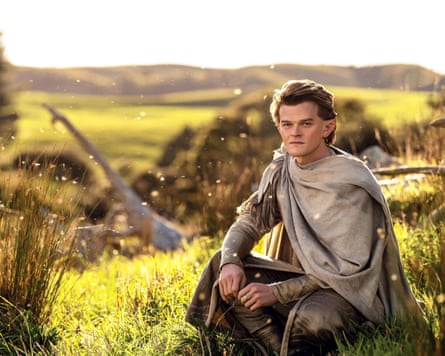
On film, the Lord of the Rings gained a sense of urgency around its key narrative, yet lost the sense that Middle-earth is full of older, stranger things than Sauron, like Old Man Willow of the Old Forest, and the terrifying Barrow-wights. The whole thing became easier to follow, but less rich and verdant.
There is no suggestion that Shadow of the Past will try to retrospectively adapt these Tolkien chapters, but reports do suggest the film will take them as inspiration. Colbert’s script is said to follow Sam, Merry, and Pippin as they set out to retrace the first steps of their original adventure, with Sam’s daughter, Elanor discovering “a long-buried secret that explains why the War of the Ring was very nearly lost before it even began”.
If chapters three to eight truly are the source of this mystery, we have to assume that Tom Bombadil will be at the heart of it – because really, who else is there? Tolkien aficionados have long lamented the loss of the enigmatic sprite from official film adaptations, and while his appearance in Amazon’s The Lord of the Rings: The Rings of Power (which adapts stories from much earlier in the Middle-earth timeline) ended up being a little divisive, there are few real alternatives. It’s hard to imagine Farmer Maggot’s prized fungi being at the centre of a Sauron-based conspiracy, while the odd band of passing elves – Gildor Inglorion, anyone? – offering cryptic advice before immediately disappearing again doesn’t exactly scream “lost masterplan” either.
The problem is that either the film-makers explain Bombadil, thereby ruining all the mystery, or they don’t, making a very expensive shrug of a film. Middle-earth’s oldest oddity is, to all intents and purposes, immortal, so will certainly be around to witness the next generation of hobbits. And yet it’s hard to imagine him being the source of anything to do with the original Lord of the Rings quest. He is immune to stakes, indifferent to the plot and impossible to think of in terms of character development. Unless the secret of the new film is that he has been quietly sitting on the most important piece of backstory in Middle-earth while choosing never to mention it, it’s going to feel pretty weird if the guy who can pick up the One Ring and forget about it five minutes later is at the centre of some retrospective, plot-critical revelation.
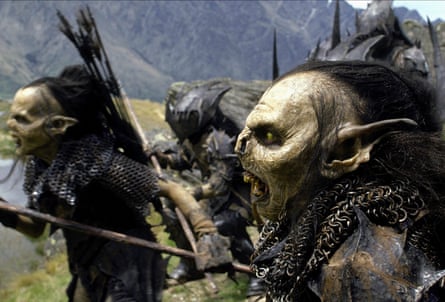
Deadline reports that chapter eight, Fogs on the Barrow-downs, will be the main focus, so perhaps Bombadil’s job will be to rescue a bunch of hobbits all over again, just as he did in the original book.
The irony is that Tolkien adored loose ends, songs, digressions – the sense that Middle-earth extended beyond the plot. Yet it’s impossible to imagine him planning for his work to be endlessly audited for content, the best part of a century later. This is after all a man who invented whole languages and developed an entire pantheon of gods, demigods and ancient spirits, just to give his world the impression it might carry on existing quite happily if nobody paid it any attention ever again.
Jackson trimmed all that for cinema. Now Hollywood is circling back to monetise all the bits it originally considered disposable – and didn’t even make it into the extended editions. The texture has become the text, the appendices are the main event, and this entire glorious high fantasy world feels as though it’s being hollowed out to make it all feel a bit bigger in the name of mammon.
At which point, somewhere deep in the Old Forest, Tom Bombadil will no doubt continue to skip about, entirely unchanged, calling for Goldberry while blissfully unaware that he may have finally become the most important character in Middle-earth. And, in the process, quite possibly the least interesting.