.png) 2 months ago
67
2 months ago
67
On Tuesday, Texas held its Democratic and Republican primaries ahead of the upcoming November midterms. Democratic voters chose between Jasmine Crockett, the anti-Trump firebrand congresswoman, and James Talarico, the populist state representative, in an election that attracted national attention. Crockett conceded the race and endorsed Talarico on Wednesday, but only after claiming late on election night that she wasn’t ready to concede because of a voting issue in Dallas.
“We don’t have any of the results because there was a lot of confusion today,” Crockett told supporters at her election-night party: “We were able to keep the polls open, but I can tell you now that people have been disenfranchised.” Crockett received 45.6% of the vote, compared to Talarico’s 53.1%.
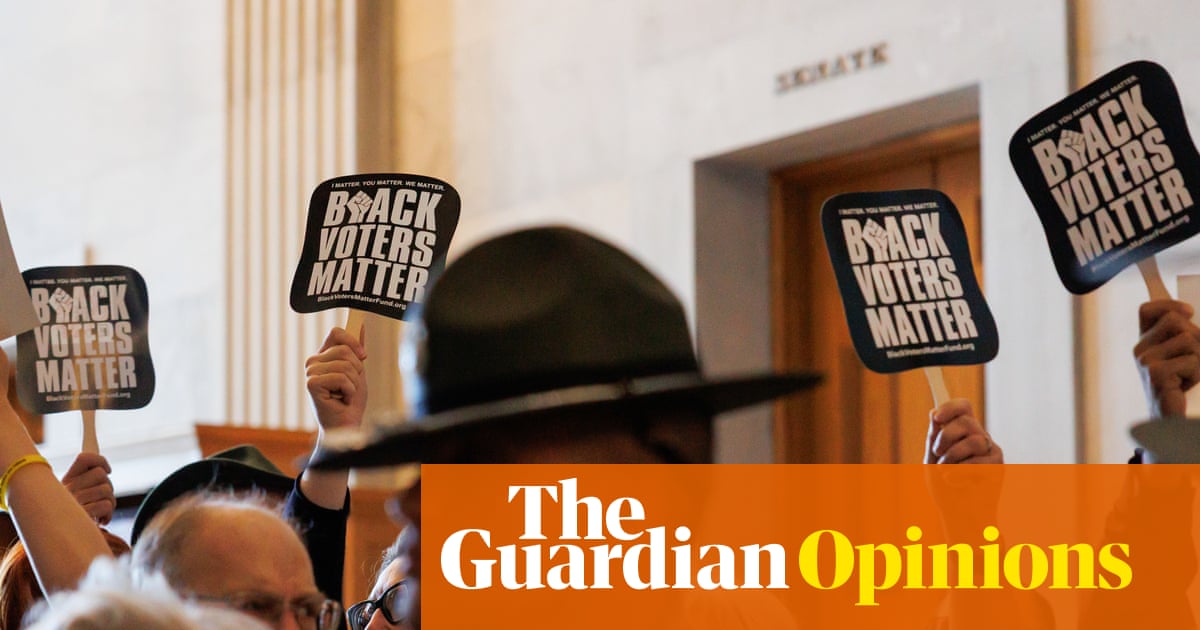
Voters in Dallas and Williamson counties faced challenges due to a change in voting location. Voting rights advocates say that the difficulties in voting amount to voter suppression – and they raise concerns about how smoothly the November midterms will go. (Republican candidates, Texas attorney general Ken Paxton, and the incumbent senator John Cornyn will face-off in a run-off on 26 May.)
Denisse Molina, who worked as a poll monitor with the Texas Civil Rights Project in Williamson county, said that she saw several voters go into one precinct only to be routed elsewhere. In one large voting site, Democratic and Republican voters were lost as to where they were supposed to go because of a lack of adequate signage.
At another site, a leasing office at an apartment complex, Molina said there were only three voting machines available despite people from 13 precincts being routed to that location. About 200 people waited in line for hours – so long that voters began to leave.
“I had never experienced voter suppression like that,” Molina said. The difficulties Molina witnessed were not isolated. Across Dallas and Williamson counties, voters described classic suppression tactics: long lines, extended wait times and confusion about voting location.
The confusion came after a rule change for primary voting. For the first time in years, the Dallas and Williamson county Republican parties refused to agree to a joint primary election, meaning that Democratic and Republican voters would not vote at a centralized site, as they had done in previous elections.
“Both Dallas and Williamson county voters have grown accustomed to countywide voting, including on election day,” Crockett said in a statement on Tuesday. “This effort to suppress the vote, to confuse and inconvenience voters is having its intended effect as people are being turned away from the polls.”
Eventually Texas’s supreme court stepped in – further muddying the waters. The state’s highest court ordered that Dallas county separate any votes cast by voters who were not in line by 7pm.
“It does set a precedent that Republicans can continue to do this and get away with it,” Kendall Scudder, chair of the Texas Democratic party said. “But the truth is this didn’t happen overnight. This has been legal policy that Republicans have been pushing for years to culminate to a point that administering an election becomes unfunctional. ”
And while the chaos stemmed from a change unique to Texas, voting advocates fear it may have implications for November’s midterm elections.
“What happened in Texas is a warning to the entire nation. Voters who showed up, stood in line, and did everything right were turned away because partisan officials chose conspiracy theories over countywide voting systems that worked without problems for years,” Derrick Johnson, NAACP President and CEO, said in a statement. “This is not just a Texas problem. It is a blueprint for voter suppression being tested in real time.”
‘If your vote weren’t so powerful, they wouldn’t be trying to take it away’
Though voters across races were affected by the change and subsequent chaos, people of color and working-class voters were particularly affected.
Amber Mills, issue advocacy director of Move Texas, said that young, working-class and people of color are more likely to vote on election day, as opposed to early voting. Crockett mobilized Black voters in Dallas county, while Talarico, to whom she conceded the race on Wednesday, mobilized Latino and white voters in Williamson county. Mills said it was “very telling that these two counties were potentially targeted in some sort of way”.
“When we look at this in a pattern of the state’s ongoing attempt, whether it be local elections or whether it be state leaders or local Republican parties making decisions, that ultimately causes this mass confusion and ultimate suppression, we see that as part of this larger pattern,” Mills said. “We saw that with the redistricting of them intentionally gerrymandering our communities, especially in areas like Dallas.”
While voter suppression efforts aren’t new, Mills said: “They’re getting more targeted at the local level. Seeing this happen in both counties in such a critical election, a primary one with breaking record turnout of young voters, of voters of color, this type of use of power can ultimately discourage participation in future elections.”
Scudder remains hopeful that the trials people experienced while voting will motivate them. He hopes that the difficulties people, especially those voting for the first time, faced to vote underscores for them “how crucial their vote is. If your vote weren’t so powerful, they wouldn’t be trying to take it away from you,” he said. “And nothing scares the establishment more than people who have typically not participated in the electoral process suddenly showing up.”