.png) 1 month ago
53
1 month ago
53
It’s just after midday, on a chilly, wind-whipped Friday in central Manchester, and an ever-growing crowd of people in puffer jackets is spilling out from a Chinatown service alley. A few yards away, there’s another huddle of bundled-up figures, dipping into capacious paper bags to set up an improvised picnic on the junction boxes outside a corner pub. Fistfuls of crinkle-cut chips are snaffled, cans of pop are sipped, and, despite the pervading scent of bin juice and fried chicken, enormous, truncheon-sized sandwiches are unwrapped and messily dispatched.
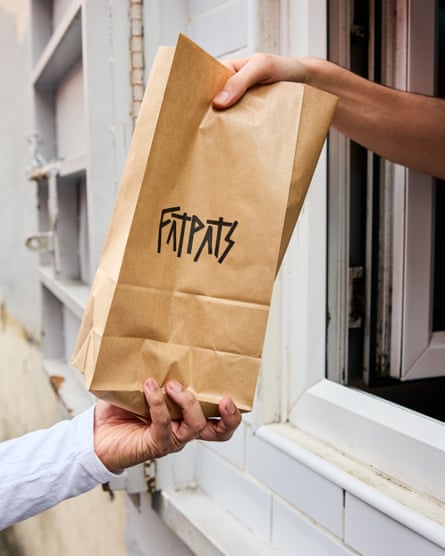
It looks a little like a staged re-enactment of Covid-era dining practices. Or, perhaps, a group of heavily refreshed, pub-crawling stags, fuelling up with all the restraint and decorum of town-centre pigeons. But if you are even slightly familiar with Manchester and its recent food scene, then you will know that this is a regular sight at Fat Pat’s: a takeaway operation run out of a literal hole-in-the-wall that has turned word-of-mouth, social media virality and a studiedly underground brand identity into one of the city’s biggest success stories.
Pretty much from the moment its North American-inspired sandwiches arrived – Philly cheesesteaks, hot honey-fried chicken subs and more, primed with vivid housemade condiments and tightly packed into yielding semolina milk rolls that are baked fresh every day at 3am – Fat Pat’s has attracted lovestruck media notices (“I found Manchester’s best sandwich down a very dodgy looking backstreet,” trilled the Manchester Evening News in 2022) and a steady stream of ring light-clutching vloggers queueing up to pronounce on whether it is worth the hype. Late last year, increased demand precipitated the launch of two more delivery-focused dark kitchens in outer Manchester, plus a London branch. In just three years, Fat Pat’s has taken once-obscure sandwich specialities from America’s deep south and industrial north – hoagies, muffulettas, po boys – and turned them into a burgeoning British fast-food empire.
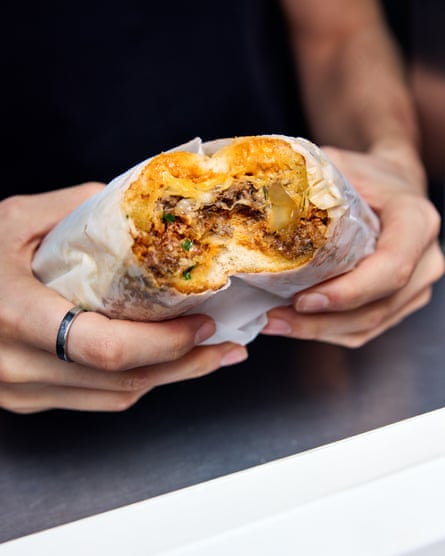
And they are not the only Manchester business to have recently mined a rich seam of highly specific, hyper-regional culinary Americana. At Nell’s, in five locations across Chorlton and Manchester, it is sturdy, audibly crunchy pizzas influenced by New York slice shop culture. Bada Bing, in the Northern Quarter, deals in Italian-American, deli counter subs, inspired by the south Jersey cold cuts made famous on The Sopranos. Newcomer dark kitchen Brodega, meanwhile, specialises in a faithful, fully loaded reproduction of the Manhattan-born, pulverised beef and hero roll concoction known as a chopped cheese. Yes, TikTok-age mania for cultish American fast food and general deli sandwich-fetishisation is not limited to the north-west (see Dom’s Subs and Tommy’s Sandwiches in London, plus Silver’s Deli, across the Pennines in Leeds), but it seems to have taken a particularly intense, urgent and influential hold in Manchester. “I think people from Manchester have got a similar attitude to New Yorkers,” says Sam Gormally, co-founder of Bada Bing. “We’re really friendly but also a bit rough around the edges. The burger trend, pizzas; we’re authentic people and it’s quite authentic food.” From the Northern Quarter’s ersatz brownstones to Salford’s mini Manhattan of gleaming hi-rises, glimpsed through a haze of rain, England’s economically buoyant northern powerhouse could almost be an unlikely gastronomic protectorate; the United States of Mancunia. And so it is worth asking: why here, and why now?
Well, for one thing, statistics indicate that Manchester is outpacing London in terms of hospitality spending (last year, data from Square showed that 59% of Mancunians had increased their annual spend on eating out compared with 44% of Londoners). Beyond other factors – TikTok virality, the ever-growing halal-friendly dining category that has undoubtedly boosted Brodega and Fat Pat’s – what’s happening in Manchester reflects a sustained, recessionary power shift away from expensive, challenging gastronomic genres towards the sort of affordable, specialised indulgence that America excels at. “Lots of really good restaurants are struggling to get people through the door and asking us how we’re doing,” says Gormally. “I never want to rub it in their faces, but we’re alright. We get a lot of middle-aged men coming in, treating themselves to a £12 sandwich and not necessarily telling their wives.”
Of course, one of the more obvious contributing factors to the trend is the pandemic – and the lasting, reverberative effect it has had on the hospitality industry. That was certainly the case for Fat Pat’s founder Aanish Chauhan. A Manchester-raised chef (trained by his Kashmiri heritage, Curry Mile veteran father and Michelin-anointed Manchester House founder Aiden Byrne), he had not long returned from a period living in Montreal when Covid took hold. “I had no money, so I thought, what can I do with £2,000?” he says, describing the first Fat Pat’s pop-ups he put together with a micro-budget, a portable mini kitchen and bread baked in a friend’s rented restaurant oven.
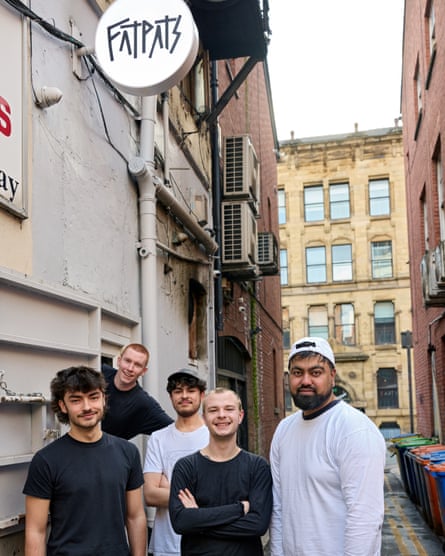
Next came the 2022 launch of that Chinatown hatch window (“The only place me and my dad could afford,” Chauhan admits), a venture which felicitously emerged into a post-lockdown atmosphere where comforting, takeaway-only indulgence was king and long queues for hyped, limited-run items had become the norm. Similarly, Gormally – who has the likes of Hawksmoor and Climat on his CV – initially launched his business as a DIY affair, partly inspired by a pandemic-era Sopranos binge (Bada Bing is named after the strip-club hangout in the seminal mob drama), and located in any kitchen that would have them. “For our first six months we had a window out of this crazy rough pub,” he says. “The owner was smoking inside while we were making [sandwiches] so we were always a bit like: ‘Can you please get away from the bread?’”
Equally significant was TikTok’s post-pandemic popularity and the fact that, from birria tacos to smash burgers, it enabled the rapid dissemination of the same culinary ideas. In a sense, these new concepts are a response to that viral homogeneity. “One of our mottoes was ‘not another smash burger,’” notes Mutjaba Kaushal, a qualified pharmacist who co-founded the NYC-inspired Brodega alongside some uni friends last summer. “My explanation for all this is that there were already a lot of smash burger places popping up all over the country and this is just things between bread, right?” adds Chauhan. Supercharged by short form video content, Manchester’s new wave Americana is perhaps best viewed as an attempt to bring a previously successful approach to a different, much-abused fast food category; to do to the menu at Subway what ‘better burger’ brands like MeatLiquor and Almost Famous had once done for the repertoire of McDonald’s and Burger King.
Yet internet content has been critical to these new businesses in another, perhaps more surprising way. Though Kaushal and his friends visited real Harlem bodegas to research chopped cheese sandwiches (“Honestly, we were studying that man behind his grill,” he chuckles), one striking aspect of this new scene is that many of the chefs at its centre haven’t actually tried authentic, US-based versions of the dishes they are studiously apeing. Gormally has only been to New York once, when he was 18; Chauhan bluntly notes that “obviously the po boy and Philly cheesesteak are rip-off sandwiches, but I’ve never actually eaten either of them”. Kyle McKeown – of McKeown’s Slices, a fittingly gritty pizzeria, that has been drawing crowds to a former Levenshulme taxi office since last spring – admits that he taught himself to make New York-style pizza armed with nothing but YouTube tutorials, online recipes and a vague sense of the flop-free, extra crispy bake revered by influential pizza reviewer Dave Portnoy. “I guess it’s crazy that I’ve never actually been [to New York] and what I was looking for I’ve never actually tasted,” he says. “It was more the feel, the passion and the look of it.”
Both Gormally and McKeown express a desire to make research trips to the US soon, but the fact they have been able to create such winning facsimiles of the real thing (as someone who has eaten New York pizza slices and fully loaded hoagies in their proper geographical context, I can confirm both McKeown’s and Bada Bing’s offerings hold up) speaks to the potency and dominance of US food traditions. Moreover, this feels like a fitting moment for a version of American dining that is more about nostalgia and idealism than the hard edges of lived reality. A so-called “Trump slump” has affected overseas travel to the US, with visits from western Europe down by 4% annually in December according to the US National Travel and Tourism Office. So it holds that a space like Bada Bing’s central Manchester sandwich bar – a fantastical, dine-in whirl of merch displays and Italian-American ephemera – might have a particular appeal at a time when Pond-hopping gastro-tourism isn’t a given. As Gormally says: “We take a lot of influence from America but we just try to take the best bits. It’s going a bit mad [there now] so this is probably a safer environment to have a bit of Americana.”
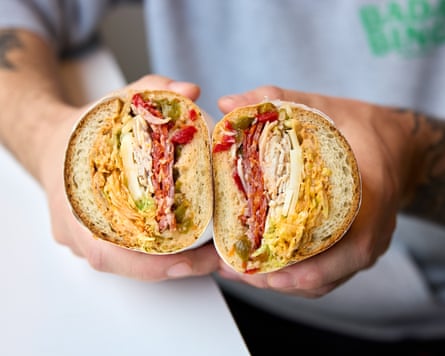
So what does the future hold for this curious localised trend? And how does this current crop of businesses avoid the market saturation and general malaise that has befallen, say, the smash burger spot? Well, the immediate plan for many of these chef-founders is some form of expansion. Gormally and the Bada Bing team are “in talks for a second location… more towards the town hall side of town where everyone works”; Chauhan is poised to roll the dice on Fat Pat’s established takeaway model with a proper restaurant in London. And, when it came to their proprietary methods and recipes, all the chef-owners I spoke to were going to extreme lengths to keep their secrets … well, secret. Kaushal imports Brodega’s spices under a different, anonymised name; Gormally and his partner Josh Urpi are precious about the specifics of how they make their signature hoagie rolls, in partnership with local bakery Half Dozen Other; and Chauhan is an absolutist when it comes to sharing recipes. “There’s only three people that know the entire recipes for the business and one of those is my dad,” he says. “I’m not gatekeeping but, at the end of the day, that’s what’s paying the bills. And so, if I jeopardise that, I jeopardise the business.” Gormally too has an understanding of Bada Bing’s potential as a business and the sense that restaurateurs like him have stumbled on a global, borderless language of fast food that an entire generation speaks. “I actually saw one of our t-shirts in Bologna,” he says, with a disbelieving laugh. “I just had to be like, ‘Sorry, can I just have a picture with you because this is crazy.”
Fundamentally, it may just be that Manchester’s cavalcade of US-inspired hoagies, po’ boys and pizzas are just the current manifestation of a broader tendency. “From my experience, the people I serve don’t really associate it with America any more; they just associate it with junk,” says Chauhan. “It’s like taking drugs. People look forward to it at the end of the week or at the end of the day. Or they come to have a Fat Pat’s after they’ve been on a diet for three months. It’s morphed into something else and people keep coming back for that hit.” As long as there is demand, expect to keep seeing different versions of the same, star-spangled supply.