.png) 2 months ago
56
2 months ago
56
In the shadow of Antwerp’s main arena, close to the city’s docklands, runs the Groot Schijn River. It was here that the body of Rita Roberts was discovered in June 1992, floating against the grate of a water treatment plant.
She appeared to have been murdered, but Belgian police were unable to identify her. A tattoo of a black rose with green leaves and initials on her left arm was their only clue.
Without knowing her name, police struggled for leads on who could have killed Roberts. Her case remained in limbo for almost three decades until police in the Netherlands realised that a large number of their own cold cases were also unidentified women, such as Roberts, who had been murdered or died in suspicious circumstances.
They suspected many were probably foreign nationals and perhaps victims of human trafficking, or with family in other countries who did not know they were missing – and that making progress with their investigations would require a cross-border approach.
Dutch police contacted neighbouring Belgian and German forces and eventually Interpol about the possibility of an international appeal for information on the cases.
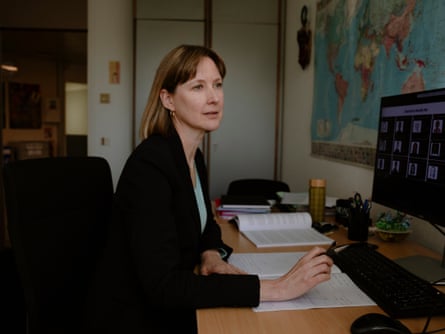
It was this that brought Roberts’ and other unidentified death cases to the desk of Susan Hitchin, from the forensics team at Interpol’s headquarters in the French city of Lyon. In 2023, in an effort to locate family members and kickstart stalled investigations, Interpol launched Operation Identify Me and began publishing the details of dozens of women from across Europe who had been murdered or died in suspicious circumstances.
Hitchin remembers the day that the message from Roberts’ family in the UK came through to her team. They had recognised her distinctive tattoo in news reports about the appeal.
“It’s one of those [messages] that sends a shiver down your spine, because you can see it’s credible information – not just people trying to be helpful,” she says. “You sit up and take notice.”

Investigators have not yet managed to solve how Roberts was killed, but her family, who had lost touch before she died, finally have an answer to what happened to her after she moved to Antwerp aged 31.
Roberts’ case highlights the crisis of unidentified deaths across the world, with thousands of bodies discovered just in Europe every year. The lack of identity makes investigating suspected murder cases more difficult.
It is unknown how many unidentified women are suspected to have been murdered – global figures on femicides are not falling – but Hitchin says the 47 cases Interpol has been given by national police forces are the tip of the iceberg. She laments that more countries have not yet re-opened their cold cases with unidentified women.
“When we hear from Rita Roberts’ family what it means to people, knowing that someone’s looking for their loved one, it brings back the frustrations about why more countries aren’t participating and why this [data sharing] isn’t systematic,” Hitchin says.
“It’s incredibly frustrating. We still have situations where a body is found over a border and the two countries don’t share that data so the person goes unidentified.”
In the case of Angelique Hendrix, a woman reported missing in 1990, it took 34 years for her remains to be identified. Her skull had been found in 1991, just 6 miles (10km) away from her home in the Netherlands but across a river and the Belgian border.
Her parents died without knowing what had happened to their daughter, because the law at that point did not permit Belgium to share DNA data and allow a match with Interpol’s missing persons register.
As more people relocate across borders, Hitchin says we need systems to share data on missing persons. “We can raise awareness and reach out through law enforcement channels, but ultimately it’s down to the countries to have those policies in place,” she says.
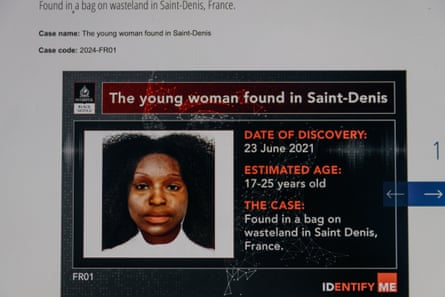
The women most vulnerable to dying in anonymity tend to be migrants and those detached from their families or society. One of the most recent cases on Interpol’s Operation Identify Me appeal list is a woman referred to as FR01.
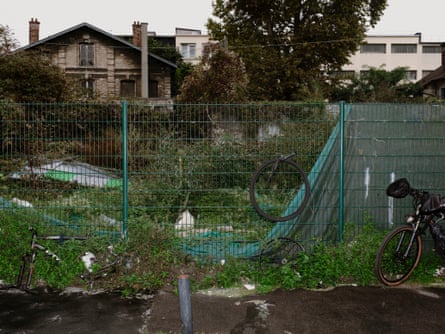
Her skull and the bones of her left leg were found in a rubbish bag on vacant land in the northern Paris suburb of Saint-Denis in June 2021. Bone analysis found she was of African descent and about 20 years old.
French police believe she was murdered, but have had no missing persons reports or other means of identifying her.
Although they are not certain she was a migrant, they hope the international appeal, which includes an image of a forensic facial reconstruction, will help someone recognise and identify her.
“Someone who has friends and family will inevitably be reported missing,” says Raphaël Prieur, head of the Paris criminal investigation department.
“We don’t like to generalise, but these cases tend to be people who are socially excluded, poorly integrated, and who lived in isolation. That’s why it’s even more important to take care of them.”
For Hitchin, it is this fear of victims being forgotten and left unknown in death that drives her. “Sadly, this [the killing of women by men] is not going away, but what we can do is send out a message to society that we do care, that all lives are valuable and we will do what we can to acknowledge these women, even if they have become marginalised and fallen through the cracks in society.
“We want to at least be able to give them their names back,” she adds. “We want to give them back that dignity, even in death.”