.png) 2 hours ago
5
2 hours ago
5
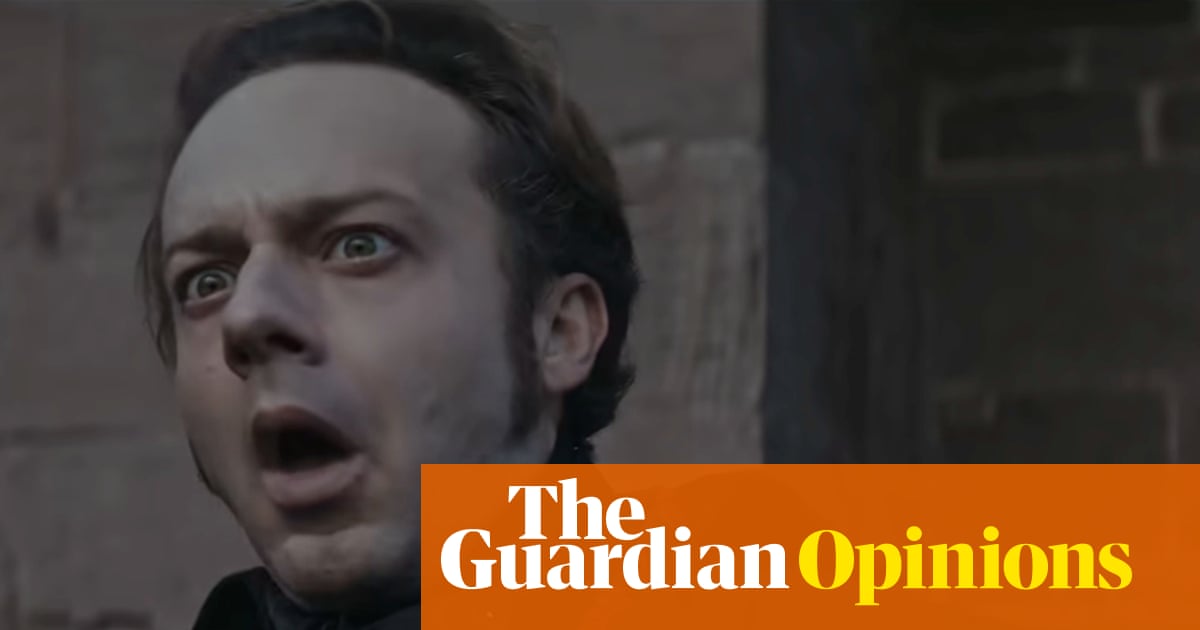
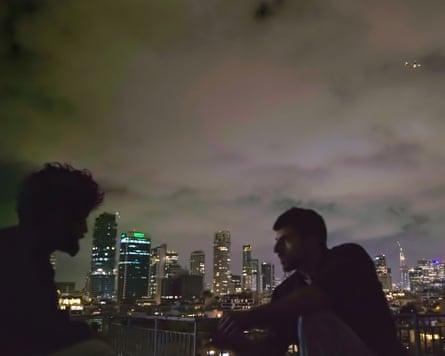
The lights go down, and for a moment I forget I’m watching a screen. It fills with a rooftop in Tel Aviv at night, black and grey. The camera pans down. Through windows, we see people watching screens of their own – couples holding each other close, following the news, eating food. They appear absorbed in their own worlds, and why wouldn’t they be?
That’s the thing I can’t get past as a Palestinian journalist from Gaza, watching this apparent tranquillity: this must be it – this must be what safety actually looks like. Just an evening uninterrupted, with no military aircraft flying overhead or drones buzzing incessantly. Meanwhile, men and women on the rooftop above them calmly talk about how they decided how many Palestinian civilians would die on any given night.
These are the soldiers, mostly intelligence officers, who helped Israel carry out its destruction of Gaza. Their testimonies form the basis of NAZA, a documentary whose title comes from an Israeli military acronym used to indicate how many civilians are likely to die in an airstrike on the territory.
What surprised me in the film wasn’t the massive scale of the killing, or even the coldness of it, but the proficiency of the soldiers who coolly described destroying people’s lives as if they were discussing a routine errand. One described the work simply as a “mission”, while another compared it to a “video game”.
One soldier described knowing exactly what some of the people were doing in the moments before he killed them. He recalled hearing a man talking to his wife in bed. A baby crying. The sound of the TV. Despite taking all that humanity in, he quickly gave permission to drop the bomb.
The soldier explained how he would then go out with friends in the evening, and come back the next morning to do it all over again. For these Israeli soldiers, killing Palestinians was simply a task that could be paused and repeated.
There was no hesitation in their voices, no sense that they were describing something that should be difficult to say aloud. They spoke with the ease of people who had learned how to do this, how to talk about it and how to carry on afterward – as one of them put it, with “zero” consideration for the lives they annihilated.
NAZA makes visible the targeting systems and planning decisions that precede a strike. But this is only part of the story.
Some of the perpetrators were on the ground in Gaza, where the same violence became much more immediate as they moved through Palestinian neighbourhoods, entering homes, setting them on fire and enforcing “kill zones”.
Yet for every act shown on film, there are many others that were never recorded and so will never be reckoned with – the constant surveillance, the restrictions on movement, the displacement of entire populations. NAZA opens a small window into the machinery of killing in Gaza, but it is something much larger than any film can capture.
Throughout the screening, I could not stop myself from putting names back into the places where the film placed numbers. When one soldier described how Israeli forces massacred Palestinians at aid distribution sites, I thought of my cousin, 35-year-old Raed Majed Mushtaha, killed in the “Flour Massacre” in early 2024 as he searched for food for his family. I remembered my friend Youssef Maher Dawas, killed in the first week of the genocide, whose body was later found beneath rubble.
Other soldiers described how the army authorised the killing of 20 civilians in pursuit of a single junior target, and as many as 500 in pursuit of a senior target. These targets, however, had predominantly been “incriminated” by an AI system that, the soldiers admit, was known to err in about 15% of cases – yet they killed them anyway, along with their whole families.
I felt stuck on that. I thought about my uncle, Hisham Zafer Mushtaha, his wife, Hanan, their sons, Basel and Mohammed, and their four grandchildren, Raged, Hisham, Lana and Abdrahman, aged between three and 12 years old. I imagined them being killed because an AI algorithm assumed there might be a target there.
For the soldiers, these moments are merely part of a daily “mission”. But Raed, Youssef, Hisham, Hanan, Basel, Mohammed, Raged, Hisham, Lana and Abdrahman were people I knew and loved, whose calls I waited for, whose absence will for ever be felt.
For so long, I had asked how these people I knew were killed. Watching the film, my mind kept returning to the opposite question: how did I survive? I had spent so much of my life in Gaza thinking that, because I did not belong to any faction, I would be safe. I believed that if Israel was justifying its killings to the world by portraying those it killed as military targets, then I would make it out alive, because I was not one of them.
But the difference between me and the people I’ve lost may have been nothing more than what an AI algorithm flagged, and what someone decided, through a screen in Tel Aviv, would be an acceptable amount of NAZA. I realised, perhaps for the first time, that there was no precaution that I could have taken that would have guaranteed my survival. The fact that I did survive was completely random. And when I think about that, my heart sinks.
What I want, watching this, is not catharsis. I have had enough of that. I want to attach names to the soldiers themselves – the ones who said it was “fun” to destroy Gaza, who viewed Palestinians in Gaza as mere data points. This is the only way that the “systematic” nature of Israel’s killing machine stops functioning as a shield, one that allows those responsible to feel as if they were mere cogs.
When the film ended, I called my family in Gaza, as I do every night. I have rung them often to tell them where to move and which road to avoid, hoping to keep them safe amid the ongoing senseless destruction. But having watched the film, I kept thinking about surveillance and systems that track their movements and could turn them into targets.
But sitting there after the film, a new thought took over: what if the soldiers watching them know more about where my family are than I do? What if they can see what I cannot? My family might be sitting together, drinking tea, laughing at something one of my brothers said, while, somewhere far away, those same moments could already be data on a screen.
And as I spoke to them that night, for a moment I forgot everything I had seen in the film. I did not hear coordinates, or surveillance, or AI. I heard my family. A familiar voice. A breath. And I understood, in that moment, what these systems can never account for: that each person on the screen is an entire world unto themselves.
After its screening at the Venice film festival, the film received a 25-minute standing ovation – an indictment, I couldn’t help thinking, of a western media that spent three years treating Palestinian journalists as unreliable narrators of our own deaths. A room rose to its feet, but that has not stopped the machine: the bombing hasn’t stopped, the machine on screen is still running even as the credits roll.
I’m glad the testimony exists; glad it’s believed now. But belief this late, costing us this much, is not safety. My people do not feel safer because a film about their killers received applause in a theatre they will never sit in.
Mahmoud Mushtaha is a Palestinian journalist from Gaza, and the author of Sobrevivir al genocidio en Gaza (Surviving the Genocide in Gaza). This article is based on a piece first published in +972 Magazine
-
Do you have an opinion on the issues raised in this article? If you would like to submit a response of up to 300 words by email to be considered for publication in our letters section, please click here.