.png) 2 hours ago
5
2 hours ago
5
Not our war, not our problem.
For weeks now, that has been Europe’s increasingly confident position on the conflict in Iran: that it didn’t ask for this ill-judged fight, can hardly be expected to join in when it has no idea what war crimes Donald Trump might be contemplating next, and certainly isn’t obliged to extricate him from his own wilfully deep hole. For Keir Starmer in particular, staying out of the war and letting slip his exasperation has been that rarest of prizes: a chance to do what the Labour party desperately wants to do, but which also happens to be both the right thing and the popular one. However, the trouble with “not our war, not our problem” is that, as of this weekend, only half of it remains true.
It’s still not our war: Downing Street has ruled out sending warships to join Trump’s new naval blockade of Iran, which aims to play the Iranians at their own game by preventing them shipping their own oil out to market unless they also allow free passage through the strait of Hormuz to everyone else. But the president’s decision once again to escalate rather than negotiate when thwarted turns this into everyone’s problem, whether we like it or not.
With oil prices rising and stocks falling as soon as markets reopened after the weekend, Monday’s long-planned IMF meeting in Washington had morphed into a crisis summit before Rachel Reeves even got off the plane. With hopes fading of an early end to this conflict, global growth forecasts are already being gloomily revised down in expectation of a prolonged energy shock, regardless of the possibility of Trump changing his mind at any moment. This downgrade would bring potentially apocalyptic consequences for the poorest countries (where the United Nations warns of “development in reverse”) and the threat of political instability in richer ones. Living standards were supposed to rise this year in Britain, offering relief to people feeling the pinch. But now the Resolution Foundation thinktank reckons they’ll probably fall for typical households, with only the poorest people likely to be shielded from rising gas bills this time. Small businesses are already hurting, with the RAC Foundation warning that “white-van man is bleeding cash” given many small traders’ vans run on diesel. And if goods don’t start flowing normally through the Gulf soon, the spectre looms not just of cancelled holiday flights or even petrol rationing, but of shortages of some medicines, fertilisers and helium – used in everything from hospital MRI scanners to the production of semiconductor chips. The US may have made its bed, but unfortunately we’re all lying in it.
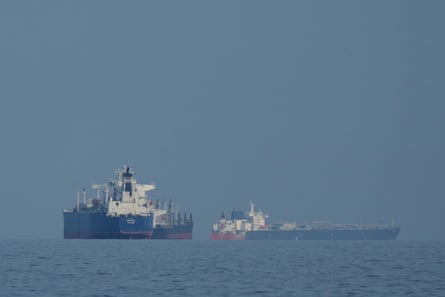
Meanwhile, Trump’s threats both to stop tankers reaching Iranian ports and seize any ship paying Iran a toll for safe passage, risks the war spiralling. What happens if that puts the US into conflict with countries whose ships have enjoyed free passage through the strait of late, including China? It’s in everyone’s interests now to find an off-ramp that allows Trump to retreat without losing face.
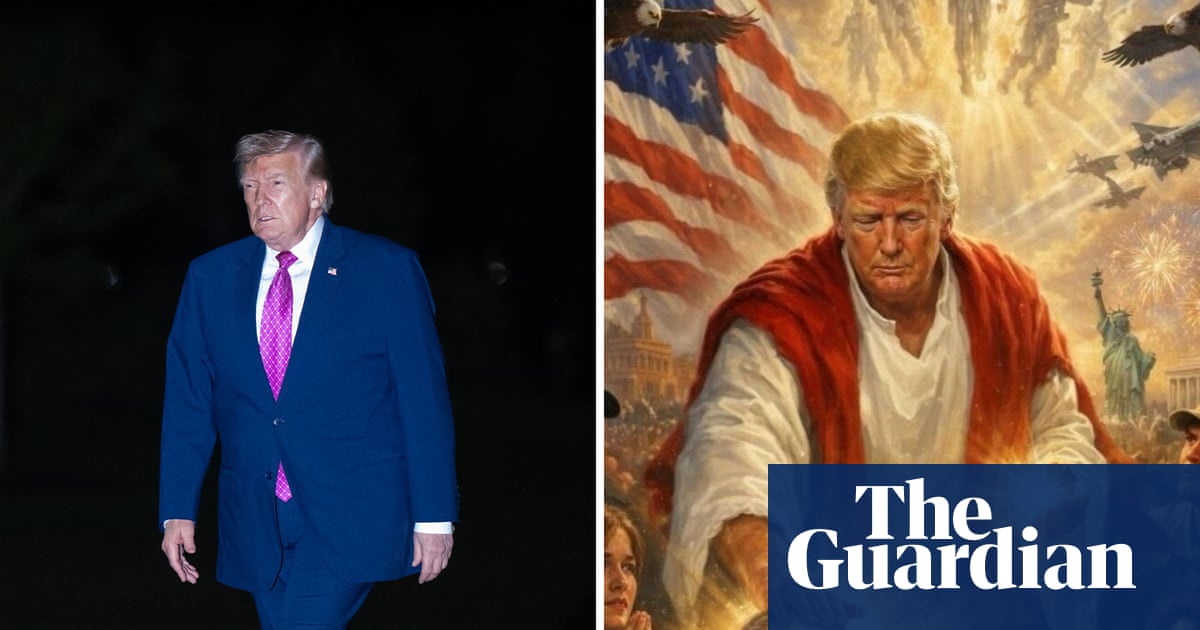
Two things have become clear in the week since the president threatened to destroy Iranian civilisation, only to back down rapidly: first, that he wants out of this war, and second, that he can’t work out how to get there. Who could have guessed that it wouldn’t be possible to conclude a complex nuclear deal with one of the world’s most intransigent regimes in under 24 hours? Not this Oval Office, which has summarily dispensed with much of the diplomatic and military expertise previously available to it. Trump is now doing what he always does when rattled, and ramping up the aggression. But he is doing it from a place of political weakness.
At the weekend, the president was booed while attending a mixed martial arts contest in Miami with his family. Americans enraged by the price of eggs under Joe Biden didn’t vote Republican for gas at over $4 a gallon or coffins once again coming home from foreign wars. Maga world is visibly split, with vice-president JD Vance reportedly signalling that none of this was his idea. Meanwhile, Viktor Orbán’s defeat in Hungary sends the crystal-clear message back to Washington that populists don’t get any more of a free pass than conventional leaders if (as in Orbán’s case) they can’t make people better off. Trump isn’t winning this war either at home or abroad, which is why – and I’m as surprised as anyone to find myself typing this sentence – I think Boris Johnson might be on to something.
Yes, that Boris Johnson. No, this is not an April fool. Britain’s former prime minister, just back from the US, told the Italian newspaper La Repubblica at the weekend that Trump had made “a big mistake” and that it had been right for Britain not to join in bombing Iran, but that it was now in Europe’s naked self-interest to try to “help America get out of the mess” it had got itself into. The US’s former allies could, he argued, use their willingness to pitch in with reopening the strait as a bargaining chip to secure more American support for Ukraine, before Vladimir Putin seeks to take further advantage of this obviously painful divide within Nato. And if it’s unfair to expect smaller countries to bail a superpower out of its own stupidity – well, since when was life fair?
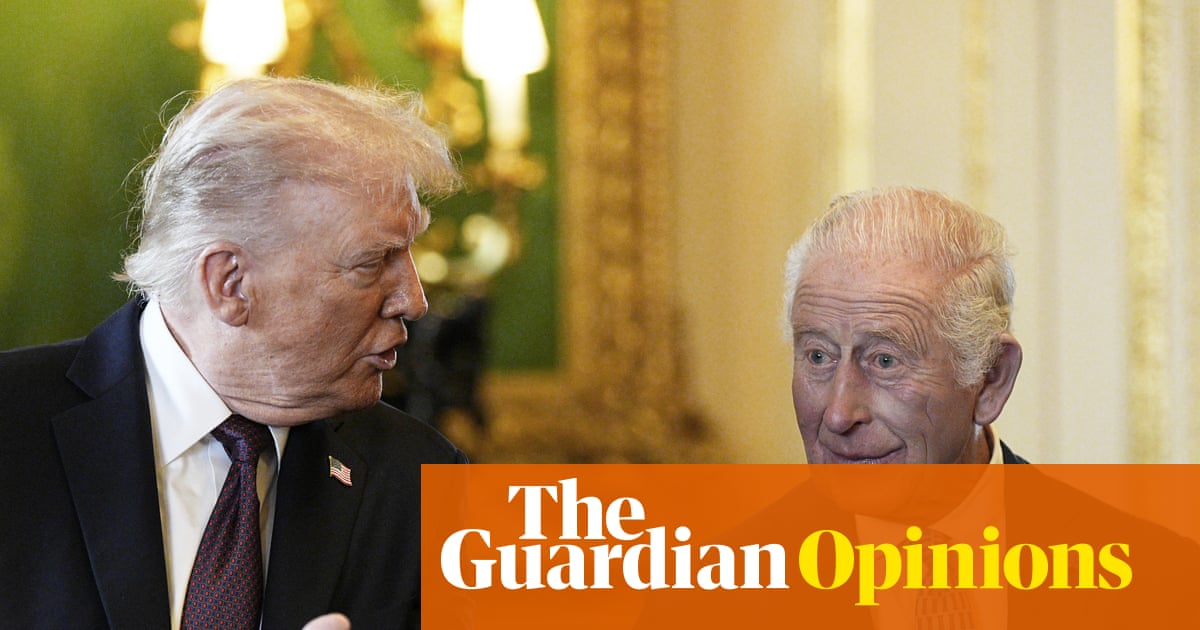
As Trump’s war aims are as unpredictable at sea as on the land, I don’t agree with Johnson that Britain should be risking the lives of its own troops in a naval offensive in the Gulf – though there’s nothing wrong with offering autonomous mine hunting capacity, as the defence secretary, John Healey, has from the start. The US doesn’t need Nato’s soldiers now so much as its diplomats, and its ideas for resolving a crisis with more than just brute force. Europe, meanwhile, needs to find both back channels into those parts of the US administration that quietly share its desire to end this conflict, plus emissaries who Trump respects – which means those who haven’t spent the last few weeks gleefully denouncing him in public. King Charles’s pending state visit may turn out to be better timed than anyone thinks.
Johnson is, however, right about one thing: if the US has lost the capacity to help itself, then it is no longer in our interests simply to let it stew. A wounded Trump is a dangerous Trump, prone to lashing out violently; a blocked strait, and the economic gridlock that follows, is a barrier to every ambition a Labour government has for this country and ultimately to its survival in office. For better or for worse, he is all our problem now.
-
Gaby Hinsliff is a Guardian columnist
-
Guardian Newsroom: Can Labour come back from the brink?
On Thursday 30 April, join Gaby Hinsliff, Zoe Williams, Polly Toynbee and Rafael Behr as they discuss how much of a threat Labour faces from the Green party and Reform UK – and whether Keir Starmer can survive as leader. Book tickets here -
Do you have an opinion on the issues raised in this article? If you would like to submit a response of up to 300 words by email to be considered for publication in our letters section, please click here.