.png) 5 hours ago
4
5 hours ago
4
Christmas Day in east London. Beatrice Asante empties a bag of potatoes into her kitchen sink and turns on the tap. Nothing. She turns it off and on again. Still nothing. What now?
Asante rushes out to the only shop that is open, the local Nisa convenience store. She buys several big plastic bottles of water. Enough, she thinks, to make dinner and to last until the taps start running again.
Seven months later and as parts of the country brace for a fifth heatwave, Asante still cannot rely on tap water. She is one of hundreds of householders in housing association flats on the Devons Road estate in Tower Hamlets who have been left for up to a year without a reliable supply. Only now, after months of delay, is the landlord mobilising to have the problem repaired.
It is difficult to understand just how much we rely on running water – until it is taken away. Residents of the nine blocks affected have been left unable to properly wash themselves, clean their homes or cook. For long stretches each day, they cannot even flush their toilets.

“You can’t put a price on it,” Asante says. “Water is essential. Even if you haven’t got food, [if] you can drink water or have a very nice bath, you are OK.”
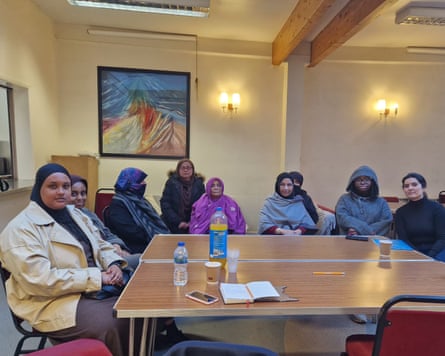
Rajia Begum and Jasmine Begum are two mothers living and raising their families in east London. Both have been without a reliable supply of water this year.
Like others with whom the Guardian spoke, they often only get running water in the middle of the night. “Everything [we] do is after 1 o’clock at night,” Rajia says. “We can’t sleep. [Instead] we do cooking, washing toilet, everything.”
In July, she went three days without any water at all. Her landlord, Poplar Harca, sent the family three five-litre bottles. But when one toilet flush requires five litres, 15 litres is insufficient to keep a household going. “We can’t clean,” she says. “It’s a messy house. Because without water how can it be possible?”
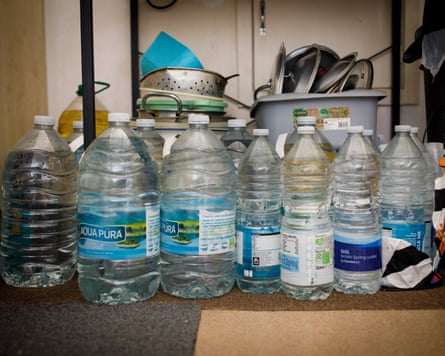
Trying to raise children without a reliable supply of water presents particular problems. Rajia says her two daughters refuse to use the toilet at home because it is unclear when it can be flushed. As a result, they have become unwell.
In this deprived part of east London, many residents of these estates are in poverty, or are affected by disability. For many, English is their second, or even third language. They are among the most marginalised people in the capital. But it seems remarkable that so many can have gone without water for so long without action being taken.
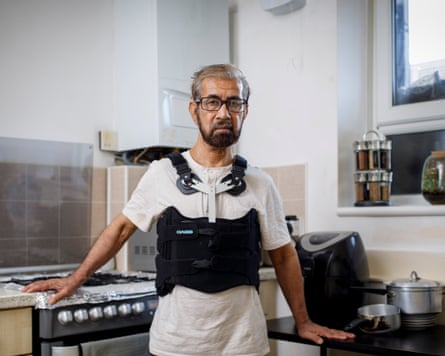
The first time Poplar Harca came to deliver water to Razna Begum’s home after she made a number of attempts to get through to their phone line, the landlord came to check her taps turned on. “We are not lying, what would we do for our taps to turn on? We’ve had no water for the last eight months,” she says.
The 64-year-old lives on the Devons estate with her youngest son, who has severe eczema, and her husband, Abdul Hai, who had a stroke in June and is now mostly bedbound.
Razna believes her husband can no longer use his right side because of the stress from being without water for more than eight months. His visiting carers have advised that he should stay hydrated in the current heatwave. “Sometimes I think my husband could have a heatstroke because there’s no water,” she says.
“We have emailed our Tower Hamlets mayor but no one has replied. They have stayed silent,” she adds. “This is a first-world country but there is no water.”
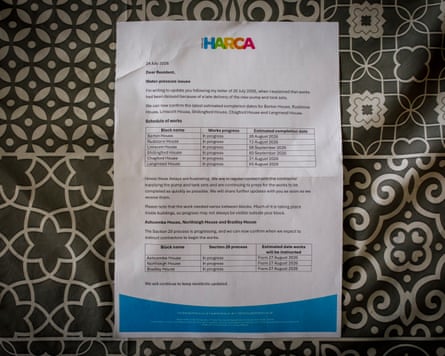
A Poplar Harca spokesperson said: “We recognise the disruption and frustration that intermittent low water pressure has caused residents, and we understand the impact this has had on day-to-day activities such as washing, cleaning and cooking. Residents continue to receive water, although pressure levels can fluctuate and, at times, may be insufficient for some households’ needs.
“As soon as we became aware of the issue in December, we worked with Thames Water to investigate the cause, who confirmed that pressure to the affected buildings remains above the minimum level required under Ofwat’s guaranteed standards scheme.”
The landlord said it did not need to pursue an emergency route to fit the pumps to fix the problem and therefore had to follow a statutory consultation process with leaseholders before major works could proceed.
“Our focus has been on maintaining support for affected residents – including supplying bottled water on request as quickly as possible, providing alternative washing facilities and offering additional assistance to residents with support needs – while progressing the permanent solution as quickly as the statutory process and technical works allow.”
A spokesperson for Tower Hamlets council said: “We recognise the significant disruption and inconvenience that water supply issues have caused for affected residents and understand the concerns that have been raised.
“Although the delivery and maintenance of water services within these buildings is a matter for the landlord, Poplar Harca, the council and the mayor’s office are working with them throughout to escalate residents’ concerns, seek updates on remedial works, and ensure appropriate support arrangements are in place, including provisions for vulnerable residents and access to bottled water where required.”