.png) 1 month ago
56
1 month ago
56
It is a sign of the times. This week it was revealed that hummus is joining the list of foods used to measure the cost of living in Britain as the ubiquity of the dip at mealtimes sees it billed as the “new ketchup”.
The decision to drop a pot of hummus in the inflation basket is a moment for the all-conquering chickpea dip, which arrived on supermarket shelves on the late 1980s. Since then Britons have gone from spending virtually nothing to £170m a year on the versatile stuff.
“What this shows us is that the UK diet is now global,” says Ramona Hazan, whose first name is emblazoned on pots of hummus stacked in supermarket fridges across the country. “There is a lot more Middle-Eastern food as mainstream and supermarket ranges are reflecting that.”
The success of Ramona’s says it all. Hazan started the company in the kitchen of her London flat in 2004 with a £25 Kenwood blender. The brand was recently valued at £24m and now produces 80-100 tonnes of hummus a week.
Asked whether the hummus had become, as one Times columnist put it, “officially middle-class ketchup”, Hazan says she “hopes so”, but adds: “I don’t think it’s only middle class. It is everywhere. It is a healthy alternative to a lot of things on the market.
“You used to take it to a party and dip your crisps in it, whereas now it is not just a dip. Use it instead of mayonnaise. It’s a sandwich filler. You see tons of posts on Instagram and TikTok showing what people are doing with it.”
The possibilities for hummus are it seems endless. Social media feeds are full of food influencers putting a dollop of it in “health bowls” alongside quinoa and avocado. Hazan adds that it can also be added to soups and mixed through pasta.
“Even if you’re eating it with crisps you’re eating something that’s full of chickpeas. You wouldn’t take a bowl of chickpeas and eat them. This is a way of eating more fibre and more pulses.”
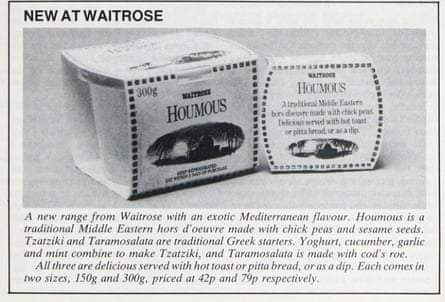
Waitrose was the first British supermarket to stock hummus, in 1987. The dips arrival merited an ad in the staff magazine that described its “exotic Mediterranean flavour” and tasted “delicious served with hot toast or pitta bread”.
There is no need for tasting notes now, says Jonny Forsyth, a senior analyst at the market research company Mintel. “Hummus has become a British staple, something people buy and consume almost as habitually as bread and milk.”
This reflects the broader rise in popularity of Middle Eastern cuisine, according to Forsyth, helped by the expansion of restaurants serving food from this region and the influence of street food and meze culture.
Chefs such as Yotam Ottolenghi, the cookbook writer Claudia Roden and the Lebanese chef and author Anissa Helou have done much to popularise Middle Eastern foods in recent years.
Ottolenghi says it is “great that people are eating so much hummus, even if it is served as a dip in a tub”. In the Middle East it is made freshly, mostly in dedicated restaurants, he says, and tastes “so much better. But if I had to choose a commercially made sandwich filler or sauce, I’d much rather have hummus than ketchup or even coleslaw.”
To any refuseniks left in Britain, the restaurateur and food writer says hummus “really is” delicious and nutritious: “Chickpeas, tahini, lemon juice, garlic – all wonderful ingredients that are really good for you.”
Other supermarkets followed Waitrose’s lead and now hummus is taken for granted in lunchtime meal deals, pack lunches and petrol stations. Some people might remember where they were during the 2017 hummus crisis when shelves were emptied after customers complained of a metallic taste.
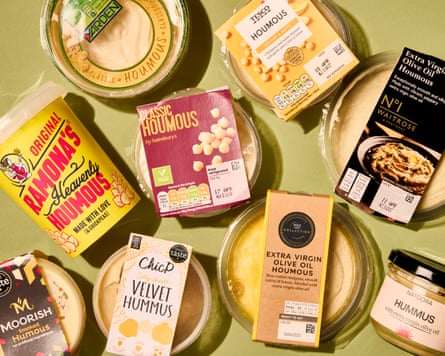
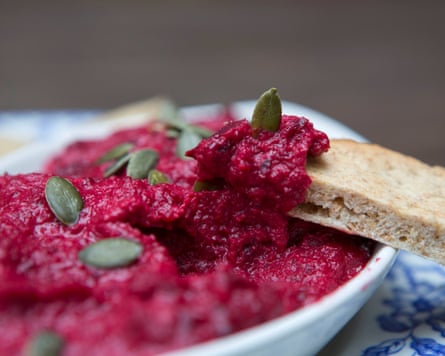
Fast-expanding supermarket ranges now include everything from reduced fat pastes to versions made with beetroot or jalapeno. Tesco, the UK’s biggest supermarket, sells hummus in 18 versions, from tiny snack pots to 500g tubs.
There is also a trend for gourmet versions featuring extra virgin olive or truffle oil that Waitrose is calling “maximalist hummus”.
The inflation basket is updated once a year by the Office for National Statistics (ONS) to reflect changing shopping habits and ensure the official yardstick of the cost of living is as accurate as possible. In another nod to lifestyle changes in the UK, this year will feature alcohol-free beer included for the first time.
Stephen Burgess, the ONS deputy director for prices, says the addition of hummus and 0% beer shows how consumer spending is being shaped by “healthier lifestyle choices”.
The Waitrose ad from 1987 notes that the 150g and 300g tubs of hummus cost 42p and 79p respectively. Now a 300g pot of its cheapest own-label hummus costs £1.85. In a sign that “middle-class ketchup” is in the veins of its affluent customer base, Waitrose added hummus to its no-frills “essential” range nearly a decade ago.
Lizzie Haywood, Waitrose’s trend innovation manager,says that over time hummus had gone from being an “exotic curiosity” to the “backbone of British snacking habits. It’s the dip that opened our minds to the versatility of the humble chickpea.”