.png) 6 hours ago
9
6 hours ago
9
For several years, Simon Jenkins has written articles on the Falkland Islands and his view that it is inevitable that one day the sovereignty of the islands will be transferred to Argentina. His latest article is no different (‘Las Malvinas son Argentinas’? Not quite – but the Falklands cannot remain British for ever, 16 July).
Jenkins’ arguments misrepresent our modern relationship with the UK – one that is based on self-determination, which is a fundamental right enjoyed by all people and enshrined in the UN charter. This has been the position of successive UK governments, including the present one, and enjoys strong cross-party support.
The Falkland Islands are British not because anyone in Whitehall says they are, but because that is the wish of the people who live on the islands, many of whom can trace their roots in the islands back 10 generations.
The islands are British for as long as Falkland Islanders wish, and in 2013, islanders made their position very clear when 99.8%, on a turnout of 92%, voted in favour of remaining a UK overseas territory.
If Jenkins were to visit the islands, he would see new houses, facilities and commercial premises being built. Critically, he would see a proud and confident people with their democratically elected government investing in the future – a growing population and a growing economy that is self-sufficient in all areas except defence, with resources being invested in protecting our unique environment.
To portray our relationship with the UK as one-sided and transactional could not be further from the truth. We enjoy a mutually beneficial relationship.
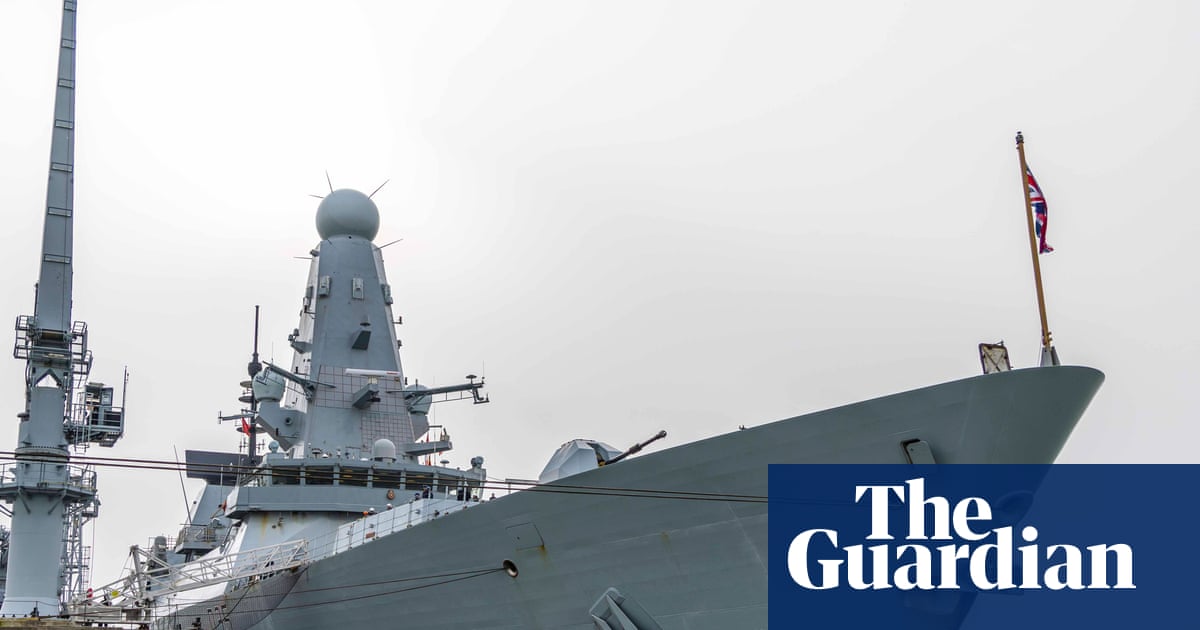
New economic developments in the Falklands are creating thousands of jobs and billions of pounds of investment in the UK, and the UK’s military presence in the islands is about far more than just defending the Falklands. It also provides a valuable training ground and protects wider UK interests in the region.
Jack Ford
Chair, Falkland Islands legislative assembly
As an Argentinian reader, having just finished Simon Jenkins’ piece, I welcome confirmation of something we already knew on this side of the Atlantic: there is good sense and goodwill on both sides of the ocean.
Mr Jenkins’ account of the 1970s leaseback talks is a useful reminder that real progress was made in a fruitful dialogue, before 1982 froze everything. Sadly, our own institutions allowed a dictator who had seized power by force to take a cause sacred to every Argentinian, regardless of age or politics, and sully it with a war that cost the blood of brave men from both our nations.
That freeze carries a cost that the UK rarely reckons with: it stops our two countries from building on the historic ties that bind us, alongside the differences that are just as historic. Consider the benefits we could reap together in investment, tourism, cultural exchange, scientific research, and food and energy security.
Argentina was, and is, home to Welsh, English, Scottish and Irish immigrant communities woven into our history. Indeed, there are more Argentinians of British descent on the mainland than there are people living in the Falklands-Malvinas. Our constitution guarantees the benefits of liberty “to all the men of the world who wish to dwell on Argentine soil”, and we are proud of that.
As Mr Jenkins rightly says: “Argentina’s claims are not going away.” Never. It is in our DNA.
Marcelo Alberto Albarenque
María Grande, Entre Ríos, Argentina
Thank goodness for a voice of reason. Of course, now that blood has been shed, it would be political suicide for any British politician even to hint at discussing sovereignty for a number of years yet. Both sides have been at fault with the islands, unscrupulously exploiting the issue to gain political capital. Until 1982, the islands and Patagonia were closely integrated. Of course Argentina was at fault for invading, but Britain’s vow to protect the islanders cost what it may stinks of self-righteousness: after all, it had considered ceding the islands prior to the invasion.
I have a foot in both camps – my wife is Argentinian – and I know that while the notion of Argentinian sovereignty is hammered home in the schools, the vast majority of the population couldn’t much care either way and would be happy to see this become a non-event, resolved in one way or another.
In Argentina, vox populi declares that the islands should be Argentinian, but that it is fully understandable the islanders should not wish to be governed in any way by whatever self-serving government head happens to be living in the Casa Rosada. They also suspect that the only reason Britain is being so stubborn over these faraway, windswept rocks is for money: there is oil there is fish.
Lucian Comoy
Sgonico, Trieste, Italy