.png) 2 months ago
56
2 months ago
56
A news report last week described how growing instability means millions of Britons are building up a stash of cash, tinned food and torches at home. I don’t know about you, but I’ve always thought there is no better litmus test of how things are going for a country than whether the populace is stockpiling emergency rations.
Watching Keir Starmer stubbornly cling on to his leadership as members of his cabinet and MPs move against him, it seems only a matter of time before the PM himself is prepping. With the end moving closer, you half expect Starmer to barricade himself in Downing Street with a jumbo pack of baked beans and a carton of cigarettes.
“I’m not going to shy away from the fact that I’ve got some doubters,” Starmer told reporters on Monday after what could be his 73rd major speech to “reset” his premiership in less than two years.
“Some” doubters. That seems a generous summary of events at this point. At time of writing, those doubting Starmer include his former deputy prime minister Angela Rayner, foreign secretary Yvette Cooper, home secretary Shabana Mahmood, four resigned ministerial aides, Scottish Labour leader Anas Sarwar, union bosses, peers, and what increasingly feels like most of the backbenchers who have access to an X account.
With king of the north Andy Burnham inconveniently stuck doing his existing job in Greater Manchester, some MPs on the left of the party are said to be urging Ed Miliband to consider a leadership bid. I empathise. If there was a magic lever that could transport a time traveller back to the spring of 2015, when voters were about to choose “stability” with David Cameron over “chaos” with Miliband, most of us would surely yank it. Then run around the streets grabbing passersby and breathlessly screaming, “BREXIT. BORIS. LIZ TRUSS AND A LETTUCE.”
And yet discussing whether we should replace the current Labour leader with a previous Labour leader painfully sums up the revolving door chaos that has defined British politics over the last decade – and the shallowness of what now, apparently, constitutes real change.
It’s why the push to topple Starmer feels at once both a necessary and pointless endeavour. His premiership has, by any definition, been a tragedy of missed opportunity, in which a landslide majority has been thrown away through successive scandals, a lurch to the right on immigration and benefits, and poor communication of actual good policy.
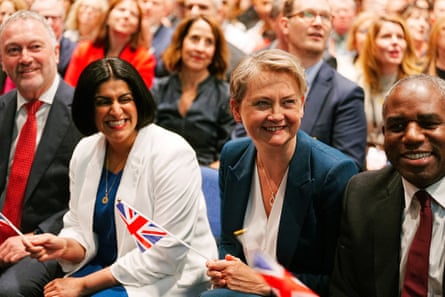
Starmer’s unpopularity is not exaggerated. The latest YouGov poll shows a mere 19% of the public have a positive opinion of him.
But framing Labour’s problems as easily solved by a change in leadership misses the point. The reason Starmer’s government has failed is not simply because of personnel issues, but because of a refusal to do what’s necessary to address the deep-seated issues facing the country. Namely, to use the tax system to redistribute shocking wealth inequality – and make the case for a humane response to pressing concerns such as growing ill health, the asylum seeker system and trans rights. Or to put it another way: unless Labour’s current flawed ideology (or lack of it) is addressed, swapping out the person in charge isn’t going to be much use.
That Starmer’s first response to the dire local election results was to bring in Gordon Brown and Harriet Harman is a neat enough display of this default setting for style over substance. Britain needs profound economic change and the person with power to do something about it is offering up a photo-op with an ex-prime minister. If Starmer is still in office next week, I imagine he’ll to do a press conference with a digital avatar of Clement Attlee. And that won’t help, either.
One thing is clear: no matter how it happens, or how long it takes, Starmer is on his way out. When Kemi Badenoch pities how badly your leadership is going, you know it’s over. But as the conversation turns to who will replace Starmer, there must be some frank questions. What does the candidate stand for? And what are they willing to do about it?
Labour’s narrow manifesto – and chancellor Rachel Reeves’ self-enforced fiscal rules – do not provide either the space or mandate for much. At the same time, the dominance of the rightwing press and easy ride given to Nigel Farage will only make things harder for any new leader, let alone one willing to challenge the status quo. But the alternative is undeniable: a Reform government, a bonfire of workers and disability rights, and politicians of such calibre they stoop to so-called jokes about melting down Nigerian people to fill in potholes.
If Starmer goes – and quickly – his replacement will have at most three years before the next general election to make the tangible changes voters are crying out for. The clock is ticking. In the meantime, prep: I’ll be filling my shed with tinned spam and AA batteries.
-
Francs Ryan is a Guardian columnist