.png) 3 months ago
79
3 months ago
79
The chief executive of South East Water has said he will forgo his bonus in an act of penitence for “unacceptable outages” that left thousands of customers in Kent and Sussex without water.
David Hinton told MPs on the environment, food and rural affairs select committee that he had decided not to accept an additional “performance payment” this year. Instead, he will receive only his £400,000 salary.
In a statement released after his appearance in parliament on Tuesday, Hinton apologised to customers, half of whom in one town were now stockpiling bottled water in anticipation of future incidents, MPs also heard.
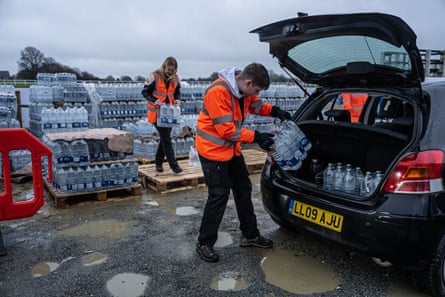
South East Water customers in Tunbridge Wells faced significant supply disruptions in November and December. In January, thousands more across Kent and Sussex suffered a further outage. They were left entirely without tap water, unable to shower, bathe or flush their toilets.
“We recognise the serious impact this has had on our customers and know that we fell short of what is expected of us,” Hinton said. “In recognition of this, I have made the decision not to accept any bonus for the 2025-2026 year.”
South East Water’s executives were more apologetic than in their last inquiry appearance in January. Then, Hinton gave the company an eight out of 10 rating for their operational response to the flooding in December. The second major incident was declared days later.
On Tuesday, Hinton agreed with the report of the Drinking Water Inspectorate (DWI) that said December’s outages had been foreseeable. Chris Train, the chair of South East Water, emphasised the company’s acceptance of its failings. “Failure is failure and we have failed,” he said.
Hinton also admitted he had not communicated quickly enough during the outages, telling MPs: “I got it wrong and that’s very much a lesson that we’ve learned into the playbook of how we handle future events.”
However, pushing back against the suggestion that they were one of the worst performers in the sector, Hinton characterised South East Water as a “good company with a really big interruptions problem”.
“The operation was a success, but the patient died,” quipped the inquiry chair, Alistair Carmichael, in response. Carmichael also pressed Train on why the board had awarded bonuses and increased bosses’ salaries despite years of failings at the firm.
In a tense exchange, MPs asked Train why there had not been a change in leadership after the winter outages and why the board was doubling down on their current executives, highlighting the major failings as well as criticism from the prime minister, its shareholders, customers and a whole range of public and private bodies.
The Conservative MP Charlie Dewhirst said he was “frankly flabbergasted that nobody is accountable for the mess that the company’s in”.
Train defended the board’s decisions on governance and leadership, saying: “We have looked as you would expect us to do at what the appropriate leadership of the organisation is going forward.
“The board has given its commitment and its backing to Dave [Hinton] and the executive team going forward as the right solution for delivering what is best for South East Water customers.”
Marcus Rink, the chief inspector for the DWI, said the company’s response to the water supply loss was “probably one of the worst that I’ve come across”.
“That concerns me greatly,” said Rink. “In a country where we have world-leading drinking water, it’s very important that people have confidence in what comes out of the tap.”
An as yet unpublished survey suggests that confidence has plummeted, with 54% of people affected by water outages in Tunbridge Wells now reporting that they were stockpiling bottled water, the committee heard.
Dr Mike Keil, the chief executive of the Consumer Council for Water, told MPs that the survey had also found nearly a fifth were now exclusively drinking bottled water. “There’s serious cultural issues here about engaging with your customers, treating them with respect,” said Keil. “We cannot afford to let this persist.”