
1. What was Doge? How Elon Musk tried to gamify government
Illustration: Anais Mims/Guardian Design
Elon Musk’s office featured a gaming rig complete with an oversized curved screen, and the Doge website had a leaderboard for tallying cuts in real time. But beneath the jokes and cosplay lay a serious conviction. If the state was just a database, then inefficiency came from bad data: undocumented foreigners, ghost employees, even “vampires” collecting social security. These were bugs in the codebase, irregularities to be traced, quarantined and purged. Musk had revamped and retrained Twitter into X. To him, the US state was just another system – a glitchy dataset to be scrubbed and optimised.
In this gripping Long Read, Ben Tarnoff and Quinn Slobodian told the story of how Musk and his team of teenage coders, steeped in gaming and rightwing culture wars, set out to defeat what they saw as the enemy of the US: its people.
2. The one thing everyone gets wrong about feminism
Illustration: Rude: thisisrude.com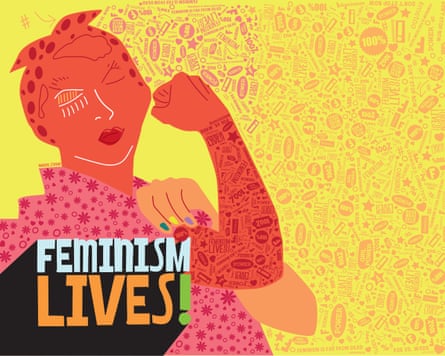
Things change. They change for the better because we make them change, or for the worse because we don’t show up or lose the battle. But if you forget the sheer profundity of the changes of the last several decades, you can mourn what the right is trying to do to pretty much everything from the climate to women’s rights without seeing that what they’re really trying to do is change things back, to return to their version of the good old days that for a lot of us were the bad old days.
In this searing essay, Rebecca Solnit looks at the phenomenon of people declaring the death of the women’s movement, pointing to the “failure” of #MeToo or the Epstein files. But, she wrote, we mustn’t ignore the vast progress made over the past few decades.
3. And the winner is ... all of us? How the Oscars have changed for the better
Photograph: Richard Harbaugh/The Academy/Shutterstock
The diversified Academy and a mutating industry have changed what many had come to expect from the stuffy, rule-following Oscars, wrote Benjamin Lee after big wins for big-budget hits Sinners, KPop Demon Hunters, Frankenstein and, of course, Paul Thomas Anderson’s best picture winner, One Battle After Another.
For more great reads from the Oscars click here.
4. Women are being abandoned by their partners on hiking trails. What’s behind ‘alpine divorce’?
Illustration: Kimberly Elliott/The Guardian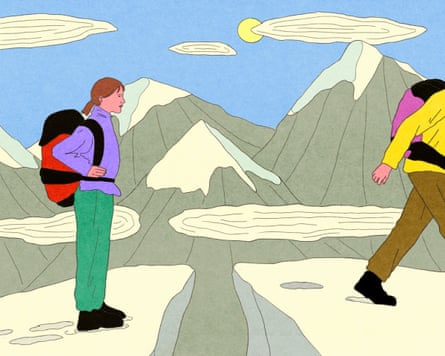
On social media, women describe alpine divorce as going on a hike, climb or other outdoor adventure with a male partner, only to be abandoned or left behind – perhaps he went too fast and neglected to wait, or a fight on the trail resulted in him storming off. Breakups have quickly followed. Alaina Demopoulos explored this curious phenomenon.
5. The secret lives of six body doubles: ‘They wanted Julia Roberts to have curvier legs’
Shelley Michelle (left) and Richard Gere’s body double, seen next to Richard Gere and Julia Roberts Composite: Courtesy of Shelley Michelle
From Michael B Jordan’s extraordinary performance as twins in Sinners to working with young kids in Harry Potter, body doubles are an essential part of film-making. Following Jordan’s best actor win at the Oscars, Lucy Knight spoke to his “twin” Percy Bell as well as those who have stood in as, for instance, Julia Roberts’s legs and Rachel Weisz’s hair.
6. My sisters and I had the same parents but were raised apart. It taught me there’s more to siblings than meets the eye
Catherine Carr (right) with her older sister Bex and younger sister CJ in the Netherlands. Photograph: Courtesy of Catherine Carr
After Catherine Carr’s parents split up, she and her older sister lived with their dad while her youngest sister stayed with their mum. It became an experiment in nature v nurture – and had a profound effect on their relationships.
Six great reads: Doge explained, ‘alpine divorce’ and the secret lives of body doubles
.png) 1 month ago
41
1 month ago
41
Related














West Ham United v Arsenal: Premier League – live
9 hours ago
9






Full nationalisation of British Steel expected in King’s spe...
10 hours ago
11

|

| |

|

| |

|

| |

|

|
|

|

|
Popular

Record number of offenders being recalled to prison in Engla...
3 months ago
547

‘This can’t be left to individual families’: how social medi...
3 months ago
527

Shareholders ‘extremely concerned’ as South East Water boss ...
3 months ago
498

‘Anti-racing’: Verstappen hits out at F1 rule changes as opi...
2 months ago
475

Top British and German military chiefs press ‘moral’ case fo...
2 months ago
464
Kidnapped: Elizabeth Smart review – her frankness about her ...
3 months ago
456

Nico Antic, 12, dies in hospital after being attacked by a s...
3 months ago
353

Red lentils, and lamb and barley: Ilhan Mohamed Abdi’s soup ...
2 months ago
348

‘Pushes the nostalgia buttons’: why Enchanted is my feelgood...
3 months ago
336

Snapchat blocks more than 400,000 Australian accounts but wa...
3 months ago
297

The rise of ‘unc’: is this gen Alpha’s way of saying ‘OK boo...
3 months ago
207

‘Reminded me of a cheese, onion and mayo sandwich’: the best...
2 months ago
198
Harry Styles: Aperture review – a joyous, quietly radical tr...
3 months ago
190

The Investigation of Lucy Letby review – this sensationalist...
3 months ago
167

Hugh Grant and Esther Ghey sign letter backing under-16s soc...
3 months ago
158

Reform’s Matt Goodwin is sure he’s the right man for Gorton ...
3 months ago
148

Savoury snacks to stave off the lure of the biscuit tin | Ki...
3 months ago
133

‘Wonderfully thick, creamy and clean-tasting’: the best supe...
3 months ago
132
Adelaide festival did not not dump Jewish columnist from 202...
3 months ago
130

The ‘grey divorce’ phenomenon doesn’t signal a retreat from ...
2 months ago
129
|
|
| |
|
|
| |
|
|
| |
|
|
|
|
|
|
|