.png) 2 months ago
56
2 months ago
56
Tuesday marks the publication of Kids, Wait Til You Hear This!, the enormously entertaining memoir by Liza Minnelli, and that title – gossipy, confiding and with no small measure of Broadway panache – sets the tone from the off.
As well as coming across as kind and politically aware, Minnelli is quite heroically unburdened by tact, and as she sketches her life from gilded Hollywood to scrappy New York and on through addiction, ill health and multiple marriages, everyone – most of all herself – is assessed with bracing honesty.
A jawdropping story about Lady Gaga patronising her at the Oscars has already been aired in a published extract, and it would be unfair on Minnelli to give away all of the other juicy moments in publication week, but there are so many such moments in the book that we couldn’t hope to summarise them all anyway. Without including choice anecdotes involving Princess Diana, Goldie Hawn, Charles Aznavour, Pet Shop Boys, Frank Sinatra, Halston, the pope and many more, here are just a handful of others.
Her love affair with Martin Scorsese was like a lasagna
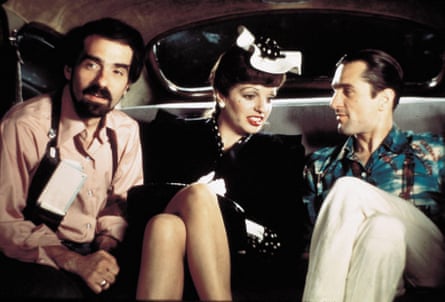
While working on 1977’s New York, New York, Minnelli cheated on her second husband with the film’s married director, Martin Scorsese (also finding time to cop off with Mikhail Baryshnikov on the side). “Our love affair had more layers than a lasagna,” she writes of Scorsese. “We were both Italian. Passionate. Intense. Committed to our craft. We both had volcanic tempers … He was a diabolically handsome man who shared my love for film.” Their cocaine-dusted romance continued after the film wrapped, and she picked him to direct her in the Broadway musical The Act, but ultimately “we needed a theatre director. Marty had to go, but unfortunately the only person who could fire him was yours truly … So I did what had to be done. It damn near killed me and broke my heart.” Their affair stumbled on, but not for long. “Years later, I saw Marty at the Oscars ceremony in 2014 and walked up to say hello. Unfortunately, he turned away from me. Very sad.” (The Guardian contacted Scorsese for comment via his press representatives, but did not receive a response.)
Peter Sellers dressed up like a Nazi
Peter Sellers came to watch a 1973 London performance by Minnelli. He went backstage, they drank champagne, and “our romance began that night in my dressing room,” she writes. “It was beautiful and unlike anything I’d ever experienced. Peter introduced me to a whole new world of passion and intensity between two people … Logic and caution flew out the window.”
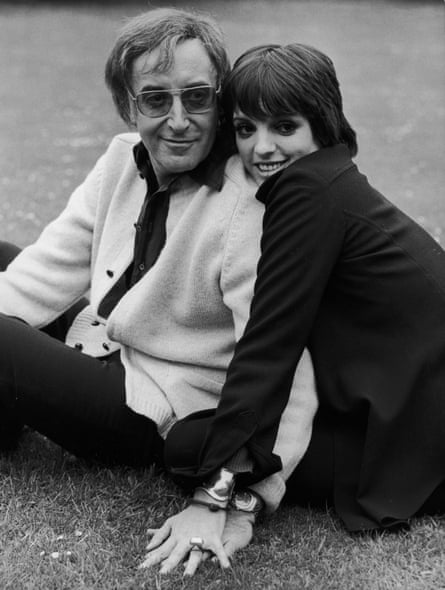
Not only was Sellers married and 20 years older than Minnelli, she was already engaged to someone else, not to mention still in a marriage to her first husband Peter Allen, though that had taken a knock after she found Allen in bed with another man. Sellers didn’t exactly provide equilibrium. After the extremely 1970s act of Minnelli consulting not one but two psychics for their views on the romance (“I got a second opinion”), Sellers finds out and is “infuriated – because I hadn’t contacted his personal psychic”.
She also jokingly ripped his toupee off which didn’t much help, but there’s no excuse for what Sellers is accused of doing next. “He would scold me, taunt me, bully me in the voices of many different characters. They weren’t fictitious or part of a script. They appeared to be coming from somewhere deep in him – and they weren’t pleasant to be around.”
It gets worse. The pair were friends with Joan Collins, “and she lived in Highgate, a very elegant neighbourhood in London, with a significant number of Jewish residents. One day he called her and said, ‘I’ve been locked up with Liza because we can’t go anywhere. I’m suffocating! I can’t get out and leave this place. Can I come over?’ Joan, who is still a good friend of mine, said sure, and Peter drove to her house wearing full Nazi regalia! When I heard this, I was infuriated, embarrassed, appalled, and really pissed off. Perhaps he thought it was a joke, but antisemitism is not funny. And I’ve never gotten over it. He was wearing the costume of a character in the film he was making. When he got out of the car, he shouted, ‘Sieg Heil! Sieg Heil!’ He stayed in character. Now, this is great if you’re directing him in a film. He’s a real pro. But who the hell was he to pull this crap in everyday life? What gave him the right to hurt people, to be so awful?”
She had to manage her own mother’s addiction
Minnelli’s relationship with Judy Garland was deep, loving and complex, with Minnelli aware that, from romance to money management to addiction, she often repeated behaviour set out by her mother. Her marriage to Allen even began to resemble one of her mother’s films: “It bothered us both as we began to feel – without speaking of it – like we were doing our own version of A Star Is Born.”
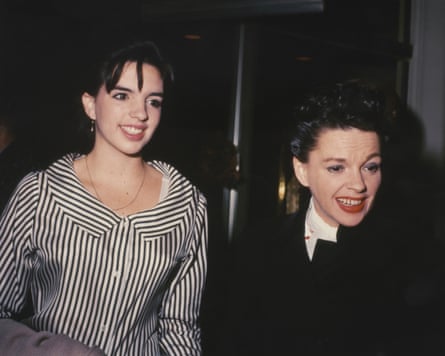
Minnelli writes of a devastating incident in childhood where she accidentally kicked Garland in the head, and her mother “screamed and screamed” at her. “I learned that if Mama got angry, she was the most terrifying person in my life. Today I have only one trigger for trauma. And that’s a horror of screaming voices.” And she had to manage Garland’s own addictions: she and a maid would “take the bottles of pills from Mama’s bedside, open them up, and put aspirin into them instead. She’d never know the difference. The trick was figuring out when and how often to do this. One of Mama’s doctors told me that if she took more than two sleeping pills a day, she might die. It was life and death, with no time to learn on the job ... At 13, I was my mother’s caretaker – a nurse, doctor, pharmacologist and psychiatrist rolled into one.”
Garland is presented as manipulative, at one point hiring Minnelli’s dancer boyfriend on her TV show so Minnelli has to join them both back in LA; and jealous, hissing “get her off my fucking stage!” at a joint headline gig. But Minnelli is full of love and admiration for her too, finding “incredible energy, flair, and confidence” in her work and saying: “Mama loved me passionately, and to this day I love her just as much.”
We’re also privy to Garland’s witty put-downs. Someone once called her a has-been, and she replied: “In order to be a has-been, you have to have been a been.” Minnelli adds: “And baby, from the time I was a teenager, I’ve always been a been.”
She didn’t get on with Gene Hackman
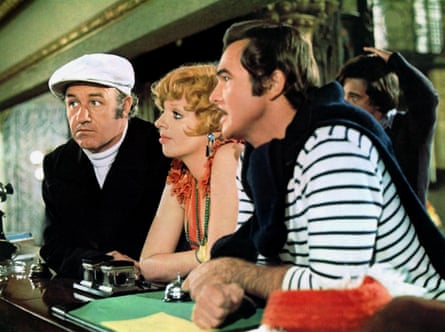
After winning an Oscar for Cabaret, Minnelli made a duff pick for her next film, Lucky Lady, “a bizarre story about a feisty, ambitious flapper, yours truly, and two con men who decide to launch a rum-running business at the height of Prohibition in the 1930s … The script screamed disaster from page one. So why did I choose it? Well, [director Stanley] Donen was very gifted, Burt Reynolds was sweet and popular, and I respected Gene Hackman’s work.” She and Hackman didn’t get on, though, and the next sentences come with a whiplash warning. “I think it’s fair to say that Gene was downright rude. Still, I felt sad for him when his wife died in 2025 of hantavirus and a combination of Alzheimer’s, heart disease, and starvation took his life.”
Elizabeth Taylor prepared her for rehab
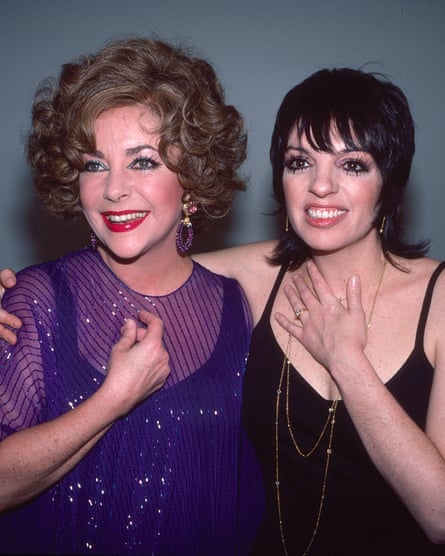
Minnelli writes very well about addiction’s cycle of reckoning and relapse, as she struggles with alcohol, cocaine, Valium, painkillers and more throughout her life. There’s a universality to her prose, though less relatable is how Elizabeth Taylor, who had recently gone through rehab at the Betty Ford Center, called up Minnelli to steel her for her first bout of treatment in 1984. “Elizabeth was the one who put the fear of God into me. She gave it to me bluntly over the phone: ‘This isn’t something your little sister is worried about. She’s doing the right thing. You are in danger. You could die if you don’t take care of this now.’”
Some years later, Minnelli ducks out from what she rightly suspects is another intervention regarding her substance misuse. “I got a stern tongue-lashing from Elizabeth,” she remembers. “I’ll never forget the urgency in her voice and her words: ‘Liza, this disease is going to kill you if you don’t do the right thing,’ she said. ‘You’ve got to go back to rehab. Now. We all love you. Please, no more lies. You’ve done it. I’ve done it. Look in the mirror and see what we all see. You look like hell, and you feel even worse. You’re not able to do this alone. None of us can.’”
David Gest gets both barrels
Minnelli writes numerous tender farewells to departed friends including her two late ex-husbands, and she also writes fondly about her surviving third husband Mark Gero and their marriage that gently drifts apart. But her fourth and final husband David Gest, who died in 2016, gets a very different treatment. “If I could wave a magic wand, I would have avoided this creep like salmonella. I’d have kicked his bony ass to the ground wearing stilettos – which is something he later accused me of doing. How absurd. Why on earth would I ruin a perfectly beautiful shoe?” This is all before she’s even named him.
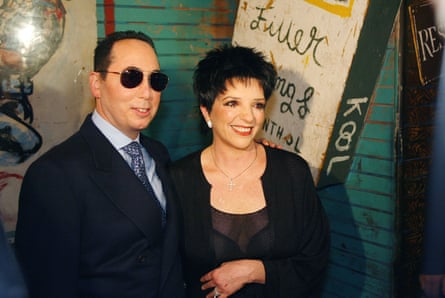
Having started the actual chapter about Gest, “I clearly wasn’t sober when I married this clown … a slight, pasty-faced jerk with weird hair who wore ridiculous sunglasses day and night,” she continues. “I felt no physical attraction to him. Zero. I wasn’t in love with him. But I convinced myself I could learn to love him, or at least love him through a lens of appreciation.” Despite acknowledging that she was lonely and persuaded by his promises of career resurrection, she seems bewildered at how this relationship ever happened. She accuses Gest of stealing her bowler hat from Cabaret – “To this day I don’t know what happened to my hat. What a monster!” – and attempting to do the same with her Warhols: “When Gest tried to sell them while I was out of town, he learned he had access only to copies. Loser!” He allegedly sends people to spy on her, and has the furniture in her apartment taken away and replaced. “It triggered behaviour in me that I’m still ashamed of. Soon we were fighting physically, like animals, shouting and screaming at each other. I throw a mean punch, baby.” They divorced in 2007.
She slept rough in Central Park …
Having moved to New York as a teenager, Minnelli lived in a “hotel for women” which she found oppressive. She eventually got thrown out for not paying her bills, “and slept for a few nights on a bench in Central Park. You know, the place you’re not supposed to go after dark? God smiled down on me, because no one attacked me, and I went about my business the next day.”
… and passed out on Lexington Avenue
In 2003, Minnelli was recently out of her latest visit to rehab, but had started drinking again. Walking around after an afternoon session in a Manhattan bar, “I couldn’t stay on my feet any longer. I collapsed, falling to the sidewalk, almost comatose. I lay on the ground for God knows how long. And the most horrific thing is that hundreds of people rushing down Lexington Avenue stepped over or around my body. What must they have thought? Did they see another homeless person, drunk and passed out on a busy sidewalk? Or did they take a closer look and see Liza Minnelli, dead to the world? I’ll never know for sure … I was more ashamed than I’d ever been in my life … I’m telling you this now because there are millions of people like me who struggle with the same risk of relapse that I’ve faced. Please, do not judge us.”
She helped to invent Michael Jackson’s moonwalk …
“You may be surprised to learn that I helped Michael develop his ‘moonwalk’ dance that became a global sensation.” Yes, Liza, we are. “Seriously. I’m not beating my own drum or trying to claim any credit for his artistic genius. Here’s how it happened: I had been performing in Brazil, and I saw dancers practising the exaggerated slide that became part of the moonwalk. I shared it with Michael, and he loved it. We’d always exchanged dance moves. Earlier, he gave me a trademark shuffle that I’ve incorporated into my performances.”
… and hip-hop
The mainstream music Minnelli seems most thrilled by is R&B and hip-hop. She repeatedly professes her awe of Beyoncé and recalls a cover Minnelli herself did of Mary J Blige’s Family Affair, “a powerful hip-hop banger. I crunked it up, baby!” She even suggests she influenced the latter genre with her Bob Fosse-directed concert film Liza With a Z. “Watch the sizzling choreography of I Gotcha from 1972, and you’ll see hip-hop on the horizon. A preview of things to come.”
She fell out with Stephen Sondheim
Minnelli alleges that after she got a single line wrong in a Stephen Sondheim song, Sondheim blocked the release of a 1979 live album containing a recording of the error. “Remember, I had paid for this recording out of my own pocket,” Minnelli writes. “I had no record label at the time. It was a onetime event, and it should have been a routine courtesy. One artist to another. Not a big deal. But Sondheim said no.” Later, she recorded Sondheim’s Losing My Mind in a new arrangement by Pet Shop Boys. “He didn’t particularly like it. He always wanted songs he wrote performed exactly as he wrote them.” But he didn’t have legal recourse to block it, “so Mr Sondheim couldn’t put me through hell this time. Years later, I’m still cashing royalty checks for Losing My Mind. And so is his estate.”
She did her own stunts on Arrested Development
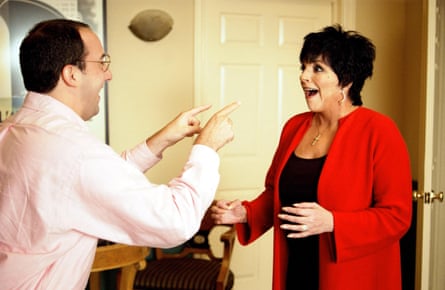
One of Minnelli’s great late-period triumphs is her role in the sitcom Arrested Development, playing family frenemy Lucille Austero, who frequently falls down due to vertigo. “I’d worked out with Luigi, my extraordinary dance instructor, to prepare for the show … Every fall I took on Arrested Development was performed by yours truly. Bottoms up!”
And at 80, she doesn’t want to stop dating
After four marriages, Minnelli professes herself to be done with matrimony, but as she turns 80 this week, she is inspirationally up for new romance. “I’m not out of the dating game. Ideally, I’d like to date an older elegant man who speaks beautifully and is filthy rich. Then I’d like to date a 40-year-old guy who is passionate about something. I don’t care what. Then I’d like to date an 18-year-old who I see twice a week and whose name I don’t know.”