.png) 3 months ago
51
3 months ago
51
‘An establishment whitewash … a blooming disgrace. And I promise you that our democracy is not in a healthy state.” Nigel Farage was furious. Not just because the Reform UK candidate, Matthew Goodwin, had lost to the Green party’s Hannah Spencer in the Gorton and Denton byelection, but because a month on, after an official investigation, Greater Manchester police concluded there was no evidence of “family voting”.
The term family voting – a form of electoral fraud that refers to family members conferring, colluding or directing each other in the voting booth – seemed to come out of nowhere the day after that byelection result, circulating rapidly through the British political conversation before disappearing again. It became a talking point because the election observer group Democracy Volunteers raised concerns, saying it saw it happening in 15 of the 22 polling stations it observed. In the end, the police said they found “no evidence of any intent to influence or refrain any person from voting”.
In the aftermath of the vote, much of the political right picked up the family voting thesis and ran with it. But what did they really think was going on? Was it Muslim men – the Gorton and Denton constituency is about 30% Muslim – forcing their wives to vote for Spencer, the charismatic Green candidate, because of the party’s focus on Gaza? Was it a sinister plot to direct votes away from Reform? Nobody seemed able to say. But the short-lived scandal only made sense because of a narrative that hangs in the air in modern Britain: that Muslims can’t be trusted with democracy.
For the past few months, I have been speaking to people in Manchester and Birmingham as part of a forthcoming documentary for the Guardian about British Muslim voters. One of my conclusions is that the rise of the Green party – which dramatically overtook Labour in a YouGov/Sky poll in March – and other independent candidates, such as those who beat Labour in the shock victories of the 2024 election, has nothing to do with family voting, Muslim sectarianism or clan politics. It is about the disintegration of Labour’s historical base as voters feel as though they are being taken for granted. Only, this time, it’s not the white working class taking its votes elsewhere, but the rest of the working class.
But, first, allow me a brief detour. I don’t want to create the impression that problematic electoral politics have never existed among Britain’s Muslim communities. As a British Pakistani, I am familiar with the clan-based biraderi politics that has occasionally reared its head in this country and was mentioned by some commentators in the aftermath of the Gorton and Denton vote. This regressive form of politics takes its name from the Persian word for “brotherhood” and is based around kinship and caste networks, which have deep roots in the Indian subcontinent. Biraderi began to make its mark on the UK in the 1970s as Pakistani migrants, mostly from rural farming communities in Azad Kashmir, arrived to fill labour shortages in the mills and factories of postwar England. As outsiders in a new and often unwelcoming land, longstanding kinship networks provided vital support on important matters, such as housing, employment and representation in local party politics.
But what began as a necessary tactic for marginalised groups to establish a place within previously impenetrable power structures began to have the opposite effect in the 90s and 2000s. Increasingly, local (usually Labour) candidates were selected not based on merit but on what village they were from in Pakistan and which family they belonged to. Talented women and young people who cared about their communities were overlooked. For white politicians, the clan leaders became de-facto community leaders. And if those politicians played their cards right, they too could benefit from a bloc vote through those same family networks.
But biraderi politics has nothing to do with the massive realignments happening in British politics at the moment. Take this conversation I had a day after the Manchester byelection. We sat down with a group of Asian women in Gorton and Denton who spoke about what was on their minds – it was the impact of overcrowded housing on their kids, and the stigma and shame they feel when queueing up at food banks. All of them believed their area had become worse and knew that life had become more expensive. Elsewhere, the themes that Muslim voters raised were universal: anger at the loss of community spaces, distrust of politicians, fury at being taken for granted. For many voters, the Greens – with its left-populist focus on redistributive economics – looked like the best alternative.
The real story here is that British Muslim voters, disproportionately working class and an integral part of Labour’s traditional heartlands, are deserting a party they once loyally backed in their droves. At the 2019 general election, an estimated 86% of British Muslim voters backed Labour. By contrast, a Survation poll conducted months before the 2024 general election suggested that figure had fallen sharply to 60%.
In that election, Labour’s vote share actually decreased by 6.8 percentage points in the most deprived parts of Britain. This included constituencies where independents beat Labour, such as Dewsbury and Batley, Blackburn and Birmingham Perry Barr, as well as former Labour strongholds that were transformed into marginals overnight, such as Bradford West, Rochdale and Birmingham Yardley.
But instead of engaging with voters in these areas, it has been far easier for politicians and pundits to portray them as a foreign, dangerous monolith driven solely by foreign policy concerns. My reporting also took me to Birmingham, where this false narrative was quickly disproven to me by the endless number of voters banging on about local issues. Parking, potholes, traffic, houses in multiple occupation, litter. That’s what I heard time and time again. And when locals vented to me about the visible decline of their areas, they pinned the blame on the Labour party, which has been in charge of Birmingham city council for 14 years.
Outside Labour and even the Greens, I saw young Muslims putting democracy in action. In the Nechells ward, one of the most deprived areas of Birmingham, I met 18-year-old independent candidate Mansuur Ahmed and his campaign team as they canvassed. He greeted residents with a beaming smile, promising to prioritise local issues and capitalising on their dissatisfaction with Birmingham city council. Between 2010 and 2023, Birmingham city council closed 42 youth centres as part of cost-cutting measures; it’s one of several local issues Ahmed has raised in his campaign, which has also made skilful use of TikTok.
Is all of this a threat to democracy – or just another manifestation of it? If politicians and pundits make an effort to actually listen to British Muslims instead of just speaking about them, they may find an answer.
-
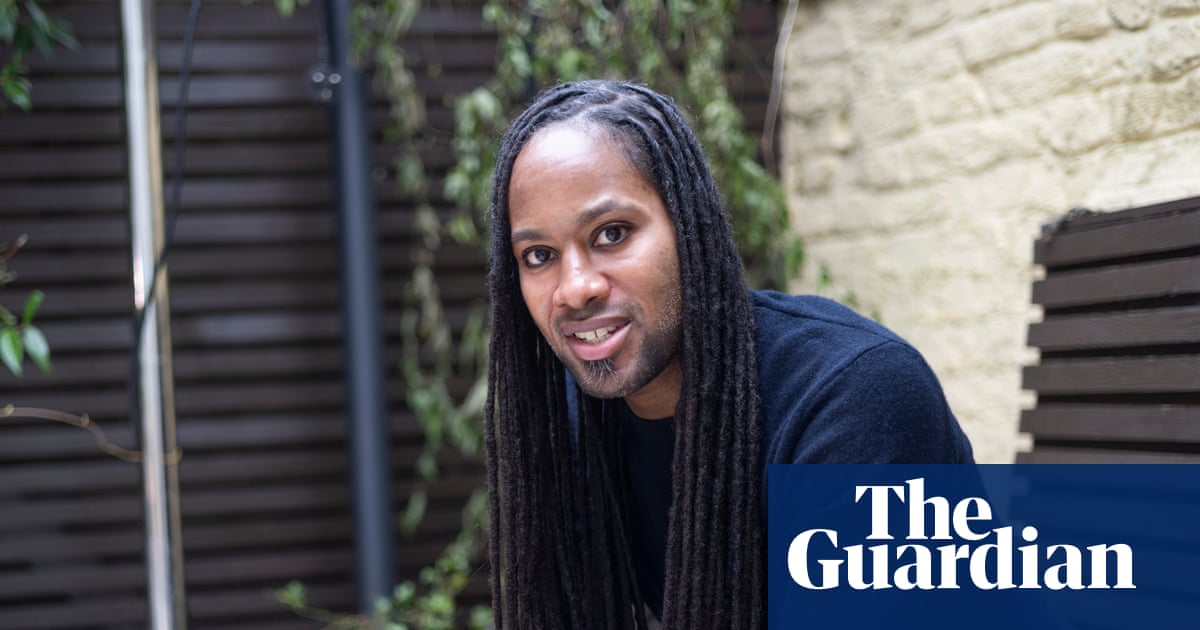
Taj Ali is a journalist and historian. His book, Come What May, We’re Here to Stay: The Story of South Asian Resistance in Britain, is published in September. His Guardian documentary, The Muslim Vote: Democratic threat or Islamophobic myth? | On the Ground, is out on Thursday 30 April
-
Do you have an opinion on the issues raised in this article? If you would like to submit a response of up to 300 words by email to be considered for publication in our letters section, please click here.