.png) 2 months ago
55
2 months ago
55
For the last two years, much of the Lebanese diaspora – estimated to be about 15 million people spread across Australia, Europe, North and South America and more – has held its breath. Much of it watched from afar, helpless, during the latest extended conflict between Hezbollah and Israel as Israeli attacks on their motherland, and particularly its southern villages, resulted in widespread destruction. To date, more than 1.2 million people have been displaced, thousands killed, and roughly 14.3% of Lebanese territory ordered to be vacated. But while those within the country endure their own suffering, those in the diaspora face a different, emotional struggle: the loss of familial homes they may not be able to return to, and a severing of connection to a place that is a fundamental part of who they are.
‘There is something especially painful about seeing a home destroyed twice’
Ali Hamka works in the construction industry. His family home in Bint Jbeil was among dozens ‘levelled’ in attacks in April. He lives in Sydney.
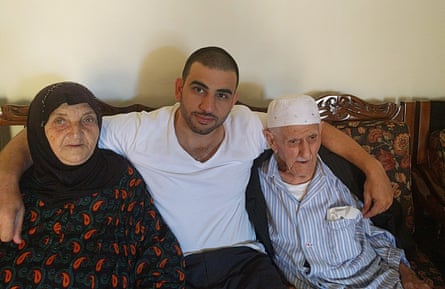
My grandparents’ home was one of many happy memories. When I first went back in 1999, I remember feeling at ease with people I was properly meeting for the first time. These were people who loved you without really knowing you, because your photo had been on a wall. I went back many times afterwards.
It is difficult to explain [how I felt when I found out it was destroyed]. You are in Australia looking at images and videos, trying to work out which street it is, which building it is, whether it is your family home or someone else’s. People outside Lebanon may not realise that many of these towns had become beautiful and prosperous again. The Lebanese diaspora had invested everything into them.
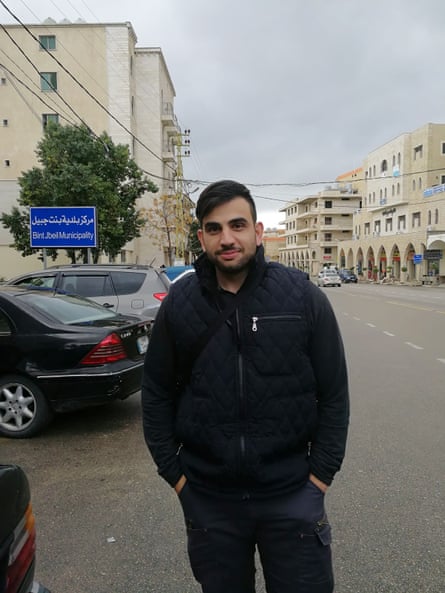
My grandmother is around 90 years old and [has] lived through the conflicts of the 1970s, the 1980s, the 2006 war and now this. If she was on her land, she was at ease with whatever life threw at her. [Seeing her] being made homeless again is very hard to accept.
There is something especially painful about seeing a home destroyed twice in one lifetime. For the older generation, it may be more than twice. In south Lebanon, a home is not just a building. Families are connected to a ḥāra [a small family quarter or neighbourhood within the village]. So when a home is destroyed, it is not just one private house being lost. It is a family presence, and part of the social map of the community being erased.
When a village is destroyed, it is not just infrastructure. It is family history. It is elders losing the place they expected to grow old and die in. It is children losing the chance to know where they come from. It is the diaspora losing the place that kept them connected.
But the bond to the land is too deep to be broken by destruction. To rebuild is not only to repair what was broken, but to say that we are still here.
‘It was always a dream to have a place I could return to’
Suha Karam Hourani relocated to San Diego from her village Deir Mimas 31 years ago. In the US she runs a YouTube cooking channel, Suha’s Dishes. She and her husband had planned on retiring in her village before their apartment was destroyed in May.
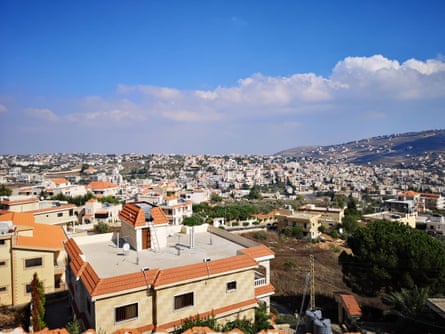
The village grew around a monastery said to date back to the early 1400s. It’s famous locally for olive oil production. Some olive trees around the village are said to be centuries – even millennia old.
I grew up in that village as a child and returned to it every year. All my family and friends live there and I was concerned that something may happen when the strikes broke out because the village was at the centre of the conflict.
Our apartment building was [destroyed by bombs] on May 12th. I found out from a neighbour through text messages. At first, I was shocked and couldn’t believe it, but when they sent over photos I realised it was true. I started crying, not believing it. The water pump station that supplies water to the village was also bombed. Many people in the village have moved to other towns across Lebanon.
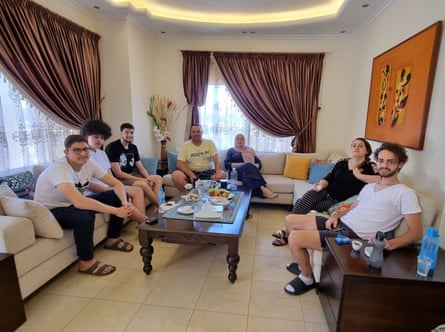
The apartment I had was a very special place for me because I lived abroad and it was always a dream to have a place in the village that I could return to. I decorated the apartment and handpicked all the items, haul[ing] everything with me in my suitcases from America. I put my heart and soul into designing every layer of it. I have two children who are also devastated by this news because they also wanted to have a home they could come to in the village and now that is gone.
I am so sad, mad and disheartened to know that many are displaced and suffering and to have also lost my dream house. I will miss all of it, every inch of that home has a chunk of me in it.
I feel devastated and lonely. Same feeling when I lost my mother. I feel down.
‘I want to thank that house’
Adam Al-Bassam lives in Brazil, where he works in digital media and political content strategy. His family home was destroyed in March.
I am from a small village called Aynatha, and I have never felt that I belonged anywhere else. I chose [to immigrate] to Brazil in 2023, and I haven’t been able to go back because of the situation there. But even though I am so far away, I am completely glued to what is happening. I often stay awake watching the live news while my mother is asleep in Lebanon.
On the first of March this year, I actually had to wake her up and tell her to run out of the village because an Israeli attack was about to begin.
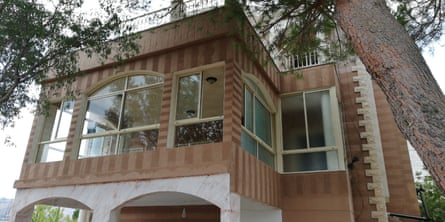
Our house [which was destroyed in the July 2006 war and rebuilt], and the entire neighbourhood were destroyed by the Israeli army. It protected us over these past 20 years and holds many wonderful memories, especially of my mother. It reminds me of her voice, her food, her kindness and her protection.
It feels awkward to thank a house, but I want to thank that house for all the memories it held, and of course, I will miss it deeply. Our balcony was the most important part of my house. Neighbours and visitors would drop in and we would have barbecues and play cards and play backgammon. It was a special place for the entire family.
The garden is [a big part] of village culture in Lebanon. We eat seasonally. In October [my family] would go together to pick olives from groves. We had a lot of olive trees prior to 2006 and they got destroyed in the July 2006 war. Now all our plants and homes [have been impacted by] chemicals and missiles so we can’t replant.
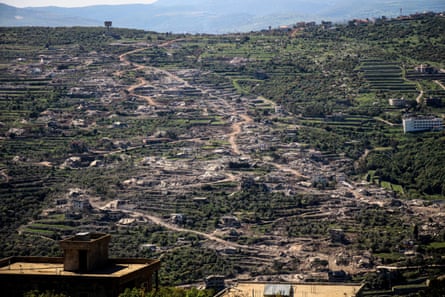
It’s hard to be so far away while this war takes place, because I don’t know what’s going to happen. Israel has occupied my village, and I am worried that we will become like the Palestinians … that we won’t have a home to return to. I am worried about my mother and 12-year-old brother, who are still there, and what will happen to them. I can’t defend them from here.
“Resilience” is the most famous word used to describe the Lebanese. We are people who love to live and have fun. War is not our culture: it is not what we want, and it is not our choice. That is what I need the world to know.