.png) 3 months ago
73
3 months ago
73
When the Guardian revealed that Peter Mandelson had failed his vetting checks before being appointed as British ambassador to Washington, members of Keir Starmer’s cabinet, who were scattered around the world on government business, were caught by the same element of surprise.
In Washington for the spring meeting of the International Monetary Fund, the chancellor, Rachel Reeves, had just come out of a meeting with the Ukrainian finance minister when she was told the breaking news.
“I didn’t know anything about the vetting process,” she told reporters. “I’m the chancellor, I’m not the foreign secretary and I’m not 10 Downing Street, so I can’t give you any more information on that.”
David Lammy, the deputy prime minister, was on a military flight back from the Middle East when he was summoned to the cockpit by the captain who told him that No 10 needed to speak to him over the radio.
Aides told him about the story and asked whether he had been aware of the vetting process given he had been foreign secretary at the time. He said he had not.
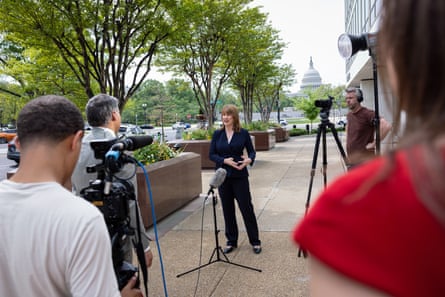
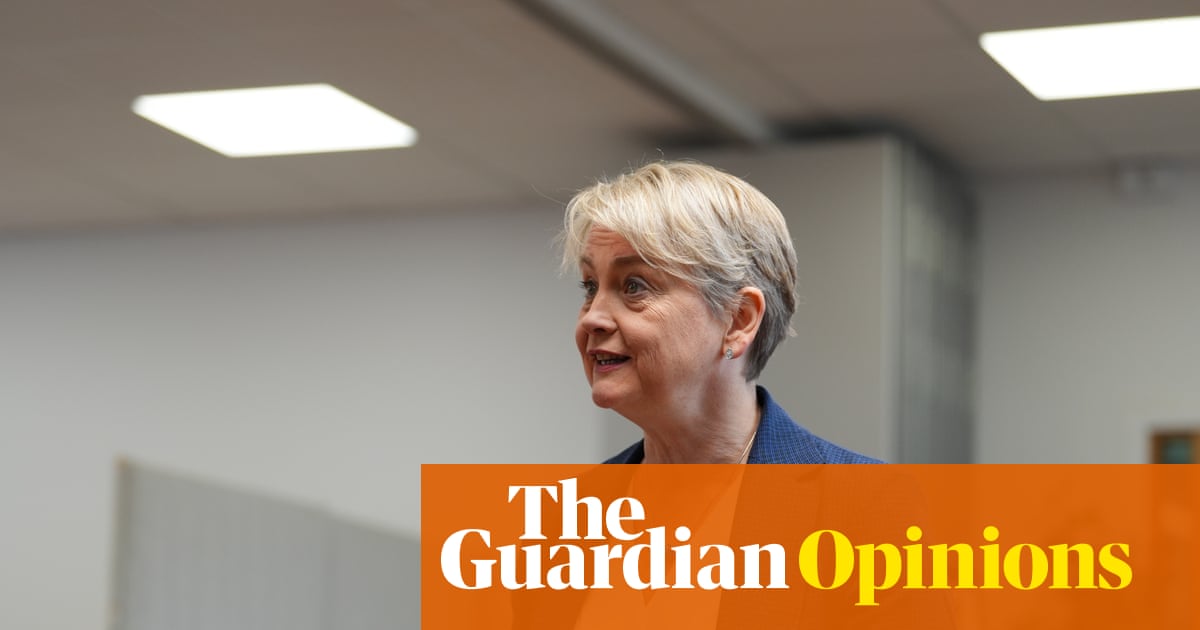
Yvette Cooper, the current foreign secretary, was sitting in her wood-panelled office in the Foreign Office in London, just about to start a meeting. When an aide received a message from the Guardian about the story and relayed it to Cooper, her immediate reaction was “pure, unbelievable shock” according to one person who was there.
Darren Jones, the prime minister’s chief secretary, was knocking on voters’ doors in Southampton when a Downing Street aide called and told him to get on a train back to London.
One cabinet minister happened to be travelling with a Guardian reporter when the news broke. After the journalist showed them the story on their phone, they simply replied: “Gosh.”
The common sense of shock felt by the most senior members of the UK government gives a sense of how few people knew that Mandelson had been appointed against the advice of senior security officials.
Downing Street insisted this week that no minister, including the prime minister, knew about it at the time. Whether that is true, and the exact sequence of events, both in the winter of 2024-25 and in recent days, will be pored over in the coming weeks.
The outcome of those inquiries will decide whether or not the British prime minister – who is already unpopular and faces heavy losses in the local elections next month – can remain in his job.
The Trump-whisperer
The story begins just over a year ago. It was January 2025, a month after Keir Starmer had announced Mandelson as his controversial pick for the most important post in the diplomatic service: the British ambassador in Washington, the UK’s Trump-whisperer.
It had been more than a decade and a half since Mandelson was last in government, and during his post-ministerial career he had founded a lobbying firm, Global Counsel, which has clients with connections to China, raising questions of conflict of interest.
There was also the question of his relationship with the convicted child sex offender Jeffrey Epstein, which was public knowledge at the time of his appointment.
But it is rare for applicants to be denied developed vetting by UK Security Vetting (UKSV), the division of the Cabinet Office that oversees the background checks of officials.
Almost all officials in the Foreign Office, including junior civil servants, require developed vetting (DV) and almost all of them get approval from UKSV. Mandelson was no junior official.
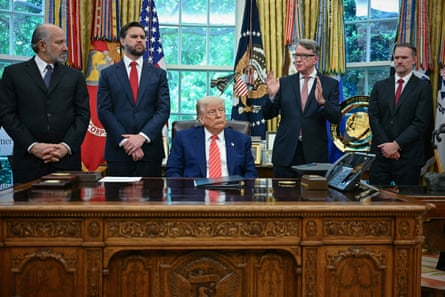
Hiscontroversy-laden career included stints in the Cabinet Office as business secretary and secretary of state for trade and industry. He had also held an extremely sensitive brief, secretary of state for Northern Ireland, and the role of European commissioner.
Despite his chequered reputation, and the many questions about his suitability for the job in Washington, the Foreign Office, and Starmer, may nonetheless have thought the UKSV process would be straightforward. It turned out to be anything but.
According to publicly available government documents, the DV process includes a questionnaire and interviews requiring disclosure of highly private information, including about personal finances, business connections and sexual history. The security services also provide input.
The UKSV had three options: approve Mandelson’s security clearance, approve his security clearance with risk mitigations, or deny him clearance. By 28 January 2025, it had made its decision. As the Guardian revealed on Thursday, security officials chose the third.
The incuriosity of Starmer
For whatever reason, senior officials at the Foreign Office decided to give Mandelson security clearance anyway, acting against the advice of those carrying out the vetting.
Downing Street said this week that the decision was taken inside the department, with the prime minister’s own team being unaware.
Starmer told reporters on Friday: “That I wasn’t told that he’d failed security vetting when I was telling parliament that due process had been followed is unforgivable. Not only was I not told, no minister was told and I’m absolutely furious about it.”
If Starmer is right, senior officials in the Foreign Office decided to take the incredible decision to override their own security advice without telling any senior politician or any of the prime minister’s advisers.
If he is not telling the truth, Starmer will stand accused of deliberately misleading MPs and the public. He has told parliament repeatedly in recent months that “full due process” was followed when appointing Mandelson.
Speaking to journalists during an event in February, he was even more specific: “[There was] security vetting carried out independently by the security services, which is an intensive exercise that gave [Mandelson] clearance for the role,” he said.
“Clearly both the due diligence and the security vetting need to be looked at again.”
While some of Starmer’s parliamentary colleagues do not believe his version of events, many believe he is telling the truth, and are still unimpressed.
They say the prime minister’s time in office has been defined by a lack of political nous and a noticeable incuriosity in the face of difficult or sensitive decisions.
“It does seems incredible that he didn’t know,” said one. “But the problem is that it’s quite possible as well.”
The week in Downing Street
As for the prime minister, aides say he was first notified of Mandelson’s failed security check earlier this week when officials in the Cabinet Office saw documents relating to the vetting process.
The Cabinet Office is the closest thing the prime minister has to his own department, and has been preparing various documents about Mandelson’s appointment after MPs demanded to see them. No 10 told Starmer there was a problem straight away.
The prime minister, who had just finished preparing for the following day’s prime minister’s questions, the set-piece event of the parliamentary week, called an urgent meeting at around 8pm on Tuesday.
Those in the room included Antonia Romeo, the most senior civil servant in the government, Catherine Little, the official in charge of the Cabinet Office, and the prime minister’s chief of staff, Vidhya Alakeson.
Officials told the prime minister there was an issue with Mandelson’s vetting, but they did not have the full facts. Those close to Starmer say he was furious and immediately tasked them with finding out exactly what had gone wrong so he could then tell parliament.
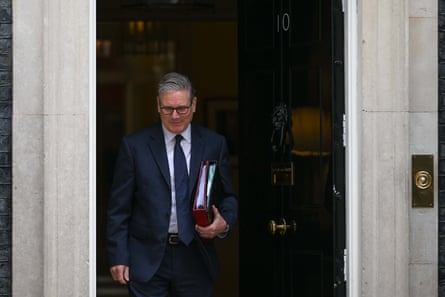
But he did not do so immediately. At PMQs the next day, which was dominated by questions about defence spending, there was no mention of the Mandelson vetting process.
Jones said on Friday the prime minister had not raised the issue because he still had not ascertained all the facts. “If he went before he’d had those facts and inadvertently made a mistake, parliament would rightly criticise the prime minister for doing that,” he told the BBC.
The prime minister’s allies say he is particularly angry that officials had not told him at various points when it would have been obvious to do so, such as when the US Department of Justice published the Epstein files.
Soon after the Downing Street meeting, Starmer picked up the phone to Olly Robbins, the most senior civil servant in the Foreign Office, to tell him he was fired.
Robbins has been invited to testify in front of MPs on the foreign affairs select committee next week, a session which will be watched closely by those keen to find out whether the prime minister is telling the truth.
If Robbins testifies, it will be one of two parliamentary sessions next week which could decide the prime minister’s political fate, the other being his own statement to the Commons on Monday afternoon.
The weeks to come
The leaders of all major opposition parties are already calling for the prime minister to be investigated or to resign.
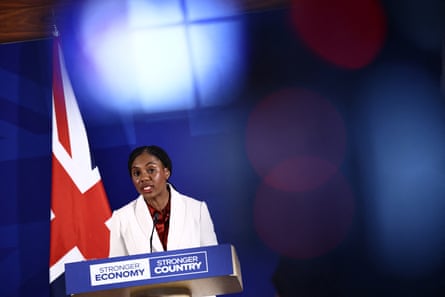
Kemi Badenoch, the Conservative leader, said on Friday: “You ask if I believe that the prime minister is lying? Yes, I do. The only other alternative is that he is so grossly incompetent he has no idea what is going on. He told me at PMQs, the full due process has been followed.”
More problematic for the prime minister is the fact that MPs in his own Labour party are already in a febrile mood, angry over repeated scandals and the likelihood that the party will suffer heavy defeats at the local elections in three weeks’ time.
Until Thursday, many around the prime minister believed he would survive the May elections, helped by the fact that there is no obvious successor behind whom the Labour party can unite.
The danger for Starmer now is that events overtake him. If MPs feel they can no longer defend the prime minister publicly, he will find it difficult to remain in post. As Boris Johnson said after he was unseated as prime minister, having lost the confidence of his parliamentary party: “When the herd moves, it moves.”