.png) 11 hours ago
17
11 hours ago
17
When the superstar academic Jason Arday took to the stage at the British Sociological Association’s 75th anniversary conference earlier this year, he delivered a talk called Wanted Dead or Alive: the Playbook.
The youngest black professor in Cambridge University’s history told an audience of his peers that the playbook in question had helped bring down some of the biggest names in US academia. Conservative “activists” were trawling through the work of black academics, looking for anything to use against them: inconsistencies, citation errors, passages in their work that were similar to existing papers.
Once an error was identified, rightwing media outlets and conservative politicians joined the pile-on – heaping pressure on universities to cut ties.
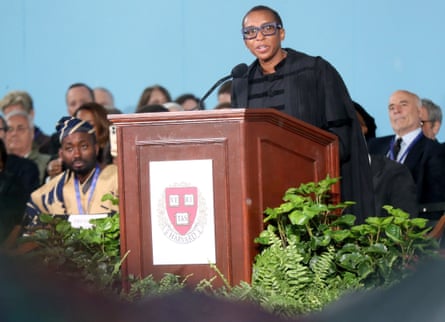
Claudine Gay, the first black woman to become president of Harvard, was only in the post for seven months before she was forced out over plagiarism allegations. Others said they felt like “sitting ducks” as their work was pulled apart. Some academics have killed themselves after being hounded out of their positions.
The playbook was not restricted to the US, Arday explained. The same tactics were being used to bring down some of the UK’s most high-profile black academics.
“The instruments that are designed to protect academic integrity, designed to protect our wellbeing and our intellectual property, are weaponised,” he told the audience in April.
He called for his peers to defend him. “There isn’t any room to sit there and watch your fellows suffer for no reason. It’s abhorrent, it’s a disgrace and, quite frankly, evil,” he added. “That’s the cancer that we need to eradicate from academia.”
Some of the audience thought it was strange. Keynotes are usually places where academics talk about their work and discuss breakthroughs, yet here was Arday talking about racism and harassment. Some felt he must have been saying this for a reason.
Then last week a row erupted concerning Arday’s academic work. The Telegraph reported that analysis had found more than 100 passages in his PhD were similar to another thesis by Paula Zwozdiak-Myers, a student at Brunel University in London, published six years earlier.
The report followed a Substack post by Nathan Cofnas, an academic who was previously embroiled in a free speech row at Cambridge after he suggested in a blogpost that, in a meritocracy, there would be “close to zero” black professors at Harvard. The British politician and activist Simon Woolley called the post “abhorrent racism, masquerading as pseudo-intellect”.
Cofnas, a self-defined “race realist”, was sacked by Cambridge’s Emmanuel College in 2024 and underwent a disciplinary investigation into the blogpost about black academics. The investigation concluded that Cofnas was not guilty of “discrimination or harassment”, and that his views, “while seen by many as offensive, did not breach the law and did not contravene university regulations designed to uphold free speech”. He now works at Ghent University, in Belgium.
Cofnas claimed he had put Arday’s PhD through plagiarism detection software, which found that “many passages are lifted with minimal editing, sometimes retaining copy-editing mistakes from the original source”.
Another critic of Arday was Dr David Harris, professor emeritus at Plymouth Marjon University, in Devon, who had previously written to Cambridge with claims about Arday’s work.
Harris had been stripped of his professor emeritus title after he wrote a post about critical race theory that was deemed “controversial” by colleagues, but it was reinstated in 2026. After Harris’s earlier queries about Arday’s work, two corrections were made to papers released in 2018 and another in 2020.
The fact that the two most vocal critics of Arday harboured controversial views on race appeared to inform Cambridge’s response, which was a robust defence of Arday. The university called the claims a “vile smear campaign to undermine his credibility”.
An open letter in support of Arday, signed by the Green party leader, Zack Polanski, and the prominent black studies academic Kehinde Andrews, argued there was “an orchestrated and grim effort to delegitimise a brilliant, young, working-class academic for the sin of being successful while Black”.
Cambridge said it had passed complaints to the university where Arday completed the PhD, Liverpool John Moores, which had reviewed the work and found he had not plagiarised it.
“We take allegations of academic misconduct incredibly seriously,” a Cambridge spokesperson said. “It is university procedure that investigations are carried out by the institution at which the research was undertaken. This is standard practice in the sector because that institution has access to the information to ensure a full and fair investigation.”
Arday told the Guardian he fully supported “fair investigation processes for genuine concerns” of academic misconduct. He added: “To clarify, there have been multiple thorough investigations across several institutions as a result of the allegations, and immense scrutiny, including with an academic misconduct panel who concluded that there was no plagiarism or academic misconduct.”
But prominent academics of colour that the Guardian spoke to said the claims of plagiarism were legitimate, and that Arday’s alleged actions risked undermining others who study race.
Some of Arday’s peers said the fallout from the row could send shockwaves through academia and set the study of race in Britain back 20 years.
One academic, who has worked in the area of race and education for decades and spoke to the Guardian on condition of anonymity, said the accusations against Arday were worrying. “I think it’s plagiarism and it’s obvious,” they said.
John Preston, an emeritus professor of sociology at the University of Essex, said: “Having seen the evidence, it triangulates and there is, in my judgment, a case to answer here.”
Some have argued that Arday has come under unfair levels of scrutiny. But the academics the Guardian spoke to said it was “fair for someone at Cambridge”, in one of the most prestigious positions in academia.
The tone of the coverage from rightwing publications has been a mix of outrage and “I-told-you-so” self-righteousness, with the Telegraph describing Arday as a “diversity poster boy”, and his online accusers all sharing a critical view of diversity, equity and inclusion policies.
The stakes are high for all concerned. For Arday, the accusations are potentially ruinous – plagiarism is as serious as it gets for academic malpractice and the professor has consistently claimed he has done nothing wrong.
In an interview with the Times on Friday, he suggested the issue had been blown out of proportion. “I am accountable for the mistakes I’ve made,” he said. “I hold myself accountable and other people should hold me accountable. We’re talking about academia here. I didn’t murder somebody. I think the cruelty that I’ve experienced, and the positioning of me as this kind of liar and fantasist, is totally unacceptable.”
For Cambridge, there are questions about judgment over Arday’s appointment, which occurred when its own track record on race was being scrutinised in the wake of the Black Lives Matter movement. Cambridge had been criticised for the lack of diversity in its student body and faculty; when Arday was hired, there were only five black professors at the university.
But the accusations of plagiarism are only one element of the Arday story.
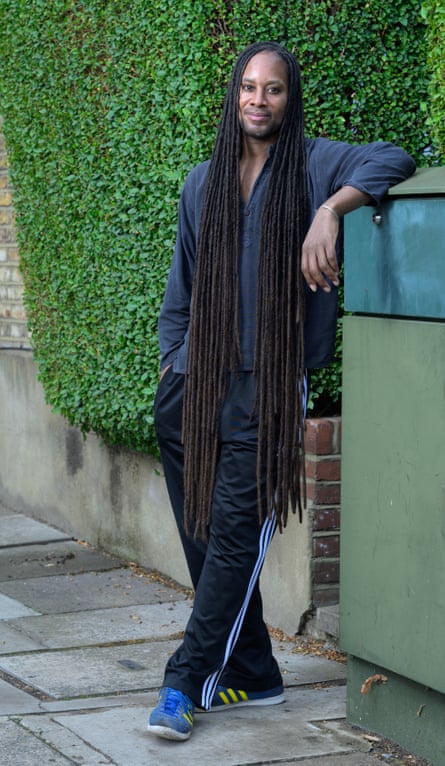
In March 2023, the sociologist’s arrival at Cambridge made headlines around the world. Not only was he the youngest black professor in the university’s history, but his backstory made that feat all the more impressive. His story is to be detailed in a memoir for Simon & Schuster this autumn.
At the age of three, the south Londoner was diagnosed with autism and global developmental delay. He was unable to speak until he was 11 and could not read or write until 18. Despite that, he forged an impressive academic career, mostly focusing on race and education, with stints at Roehampton, Glasgow and Durham universities.
From 17, Arday began completing charity challenges to raise money for various causes. They were often endurance challenges, which began when he was taking a BTec course in sport and development at Merton college in Morden, south London.
He has claimed in media interviews to have raised £5m for charities over a 20-year period (sometimes this figure has risen to £5.5m). He has done this, he says, by running 30 marathons in 35 days – a feat he has spoken about in media interviews and in his book. He also claimed at public events to have run 600 miles in six days.
As his critics online have pointed out, £5m raised for charity would be a staggering amount for someone who is not already famous. In 2012, Arday said he hoped to raise £250,000 by the time he was 50.
When asked if the £5m figure was accurate, Arday clarified to the Guardian that the money was raised with the help of “many fundraising collectives over a two-decade period”. When asked to identify other people who took part in these efforts, Arday said he had signed NDAs preventing him from disclosing that information.
The Guardian also asked Arday about his claim to have run 600 miles in six days, an achievement that would make him one of the world’s most gifted endurance runners. (The first woman to achieve the feat, Megan Eckert, only managed it last year; the men’s record is 650 miles.) He said that because of the “cumulative wear and tear of training” from his previous running challenges he “had to put rest days in between the running days just to finish” the 600-mile challenge, which was actually completed over a 12-day period.
Earlier this year, two universities that had given Arday honorary degrees and doctorates amended their websites, with Southampton Solent University removing the 600 miles citation, and Anglia Ruskin University changing the six days claim to 12 days.
In 2012, Arday was a torchbearer for the Olympic Games and met the tennis player Andy Murray via the TV programme Surprise, Surprise.
After the meeting, Murray said Arday had told him a story that inspired him to victory in his gold medal win against Novak Djokovic. “He is an epileptic who ran 30 marathons in 35 days,” said Murray. “He told me that on the 20th day he fell – he had a fit, a seizure – and had a hairline fracture in his leg, but he continued. He had asked to meet me, and that was pretty cool, speaking to someone like that.”
When asked by reporters at the time why he carried on, Arday said: “When I fell over, I didn’t want to have to pay back thousands of pounds.”
Doctors have told the Guardian that running nine marathons with a hairline fracture in a fibula would be incredibly painful, though technically not impossible. In his forthcoming memoir, Arday says he completed the distance by taking painkillers and despite his right leg swelling to twice its normal size. He previously said in a 2012 interview that he used ice baths to ease the pain between his runs.
As well as scrutiny of his academic record and fundraising history, Arday claims to have been the victim of a campaign of physical abuse and intimidation.
Arday began being sent racist emails as soon as he took up his position at Cambridge, becoming so intense that his emails had to be screened. But the messages paled in comparison to the other incidents the academic said he had faced.
In an open letter to the government minister Jacqui Smith in July 2025, which outlined Arday’s experiences, he claimed to have been “threatened with a knife, physically assaulted and spat on; [had] rape and death threats being made to him and his family; bananas and bullets being posted to him via the university campus; and corrosive substances and mutilated animals sent to his family home”.
In a subsequent interview with the Guardian, Arday claimed to have been confronted at his faculty building on two separate occasions by a masked man threatening to harm him if he did not resign, and evading detection both times. On the second occasion Arday said the intruder produced a knife and threatened him with it.
The Guardian understands that after Arday reported the first intrusion to the university, enhanced CCTV was placed in the faculty and a panic alarm was installed in his office. The professor said he hit the panic alarm during the second confrontation, but that no one responded. It should have triggered an alarm alerting the faculty’s security team, all of whom were present at the time of the alleged incident.
The intruder was not picked up by CCTV on either occasion and no one in the faculty reported seeing anyone suspicious. Arday did not report either intrusion at the time, telling the Guardian that after the second incident he continued his working day and even conducted a PhD viva for a student less than two hours later.
He did not inform colleagues that a masked man with a knife was in the faculty building.
Arday confirmed in an interview with the Guardian that the “mutilated animals sent to his family home” mentioned in the open letter was a severed pig’s head, delivered in a large cardboard box to his parents’ home address in south London. He claimed to have intercepted the package and immediately thrown it away, only telling the police several months later.
In a subsequent interview he claimed the police investigated, checking with butchers in south London if they had sold a pig, eventually finding one that had sold a “whole hog” on the morning the head was left outside the family home.
When the Guardian checked those details with the local butchers Arday named, they said no police officer had come in to ask them about a pig. When asked if they were sure, the butcher said “that’s the kind of thing we’d remember”.
When the details Arday gave about the pig’s head investigation were checked by London’s Metropolitan police, the Guardian was told they were “categorically” incorrect and no investigation had taken place.
Arday had contacted the Met to lodge a complaint of harassment against Harris after his plagiarism allegations and, because he was based in Plymouth, the case was handed over to Devon and Cornwall police. Correspondence seen by the Guardian confirmed that the force declined to pursue a case against Harris.
Arday took no photographs of the bullet, the banana, the corrosive substance or the pig’s head. The only other people who saw any of the items were close family members, who told the Guardian Arday had shown them the bullet and the “poison”. Arday could produce no messages from the time in which he discussed any of the items with friends, family, colleagues or the police.
A Cambridge University spokesperson said: “As soon as Professor Arday shared concerns with the faculty a number of enhanced security measures were urgently taken in response, with the advice and continuing engagement of university security and the police. These include the installation of panic alarms, screening of emails, post and packages, upgraded CCTV and revised security protocols.”
There are many examples of prominent black figures being intimidated in recent British history.
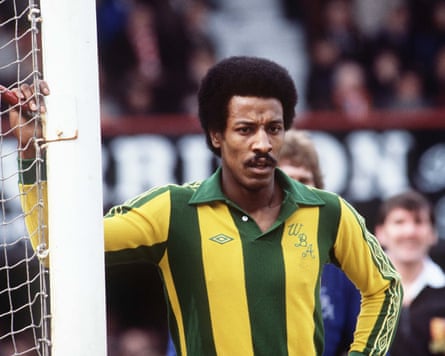
Black footballers, including Brendon Batson, reported being sent a bullet in the post during the 1970s after being selected for England. Bananas were often used by racists to insult black people. Severed pig heads have been attached to the walls of mosques by far-right groups. People have been attacked and intimidated at their place of work. Malicious communication is commonplace. Black academics are frequently hounded by organised groups.
But the abuse and harassment Arday has outlined would be some of the most extreme any academic has been subjected to in the UK.
When Arday was asked about his claims by the Guardian, he stood by them. “To be honest with you, I thought you’d just believe me,” he said. “Why would I lie?” He would be jeopardising his career.
In Arday’s memoir, Great and Unfortunate Things, he references the scrutiny placed on him and his work.
He writes that people have been “outraged and offended” by the idea of a black professor at such an elite institution, and that he has faced harassment and persecution as “the subject of targeted campaigns driven by racial animus”.
“There have been days when I can only describe the experience as traumatising. It’s hard for people to even comprehend or imagine the toll this can take on a person,” he writes.
But the row over his academic work and some of the claims he has made is far bigger than one person.
“The whole area of the sociology of education, and particularly race studies within that, is very fragile,” said Prof Preston. “It is primarily Black, Asian and minoritised people who work and study in those subjects. Professor Arday probably holds the top position in the world in sociology of education. It’s important for the whole discipline that he addresses these claims.”
In a recent interview to promote the memoir, Arday spoke about feeling like Icarus when he came under scrutiny after joining Cambridge. “I always wanted to be a person who flew close to the sun,” he said. “But sometimes I wonder: did I fly too close?”