.png) 2 months ago
68
2 months ago
68
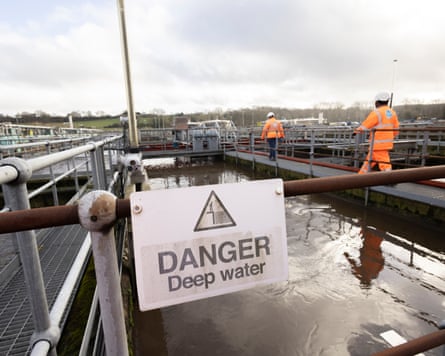
It is a grey day in a wet week but one of Thames Water’s neglected plants is still coping. Wastewater is being pumped into the vast Maple Lodge sewage treatment centre in Rickmansworth, just off the M25, at a rate of about 3,000 litres a second, within capacity.
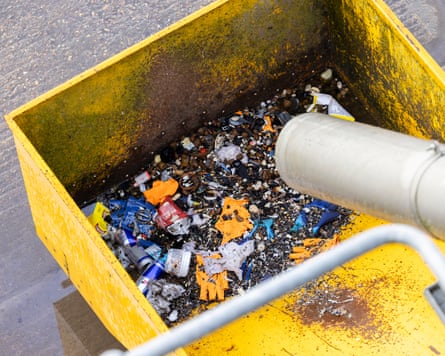
The site manager points out the first-line screens that catch everything that will not pass through a 5mm filter. A “sheep” – a bundle of wet wipes, sanitary pads, cotton buds, condoms and indigestible bits of sweetcorn – is rotating at one edge. Credit cards and false teeth have been known to end up here.
Maple Lodge is on the frontline of the national sewage scandal and the crisis over Thames Water’s future, amid protracted financing talks and the threat of a temporary nationalisation.
The tour takes us on to the grit removal process; the settlement tanks to extract sludge from the bottom and oily scum from the top; the aeration and biological treatment tanks; the circular final clean-up tanks. The treated effluent is sent into the Grand Union canal, as intended. Nothing, on this occasion, is going into the four storm overflow tanks, or being discharged as untreated wastewater into the River Colne.
The site does not always cope. Maple Lodge, Thames’s fifth largest sewage treatment centre, discharged 124 times for a total of 1,916 hours into the River Colne during the heavy rainfall year of 2024. In the wet start to January, Thames’s real-time portal was showing multiple storm overflow discharges at Maple Lodge, one lasting 66 hours and accompanied by the dreaded words “this means there could be sewage in this section of the watercourse”.
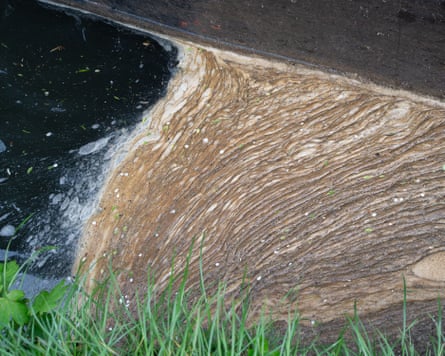
This is one of the facilities that the regulator, Ofwat, was referencing when it fined Thames £104m last year for failures “to build, maintain and operate adequate infrastructure to meet its obligations”. About 157 wastewater works were labelled “sites of concern”.
To see why Maple Lodge fits the description, gaze across its 10 hectares (24 acres). The place is tidy but unmistakably old, cramped, underinvested and designed to older standards. It is struggling with a growing local population and the sponge-like effects of the chalky landscape. Upstream, the village of Chalfont St Peter in Buckinghamshire can suffer sewer flooding. Thames last year belatedly threw cash at lining sewers, sealing maintenance holes and setting up tankering points.
Yet the core problem remains: the facility was built in the 1950s and 1960s and is a victim of Thames’s sorry tale of financial crisis and postponed investment. A major project to boost capacity and install equipment to meet higher regulatory standards for phosphorus removal and suchlike should have been finished a year ago. Completion is now scheduled for 2030.
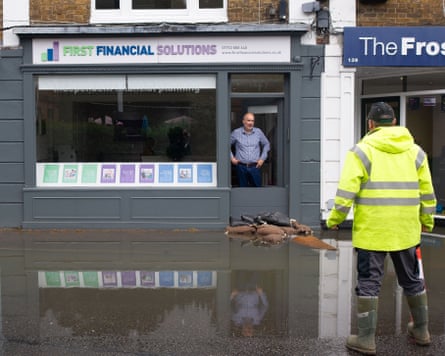
Why wasn’t the work done on time? Tessa Fayers, Thames’s wastewater and bioresources director, cites prices “materially in excess” of original expectations and “delivery constraints”. The projected cost has ballooned to £300m–£400m as the scope of the works has expanded. She adds: “Because of all of those factors we had to make difficult decisions. In August 2023, we told Ofwat about the decisions we had made. We are under investigation for that and we are cooperating.”
That ongoing investigation, note, is into possible breaches of environmental targets under the water industry national environment programme. It is separate from Ofwat’s concluded investigation into flow capacities and storm tanks that resulted in the £104m fine. It can be hard to keep up with the volume of investigations in the English water sector.
Thames talks drag on
Fayers says the Environment Agency is “entitled to give us a breach” if Thames operates outside its permit. “And they are doing that, believe me. Then we will face sanctions. So not only do we get the regulatory penalty, we also face sanctions.”
That comment goes to the heart of the negotiations to decide the future of Thames. Almost two years after shareholders declared the company “uninvestible” and accepted their investment was worthless, the endgame approaches. Talks between senior bondholders, who have lent £16bn to Thames, and Ofwat have been running since last June when the preferred bidder, the US private equity firm KKR, took fright at the political noise and pulled a rescue deal.
Insiders say gaps between the two sides remain but it is still odds-on the government will get what it wants – a “market-led” recapitalisation that avoids tipping Thames into special administration, effectively temporary nationalisation. It is an open secret the Treasury fears temporary would become permanent – and perhaps be demanded by Labour backbenchers.
But the precise terms of the deal matter. The headline element is the writedown to be taken by the senior bondholders to cut several billions of pounds from Thames’s debt pile. The creditors’ negotiating committee volunteered a light 20% haircut last June, then 25% in October. An outcome closer to 30% – in other words, 70p in the pound – looks more likely.
For that, the bondholders would probably get a 10% ownership slice. The rest would go to funds that cough up £3bn-plus of fresh equity. That is likely to include some of the same bondholders, including the US hedge funds Elliott Management and Silver Point, late arrivals to the Thames crisis and reputed to have bagged some of their debt at distressed prices as low as 60p in the pound. Junior bondholders, owed a theoretical £1bn, would get nothing and be wiped out like the old shareholders. That should be enough to get Thames’s rejigged debt rated above “junk” for the first time since 2024. If not, the exercise is pointless.
Political risk ahead
Then there is the part that matters most to customers close to the “sites of concern”. The bondholders, flying under the banner of London & Valley Water, have said they will “reprioritise” the £20bn of spending Thames has been allowed to raise from bills from 2025 to 2030, but which projects would they deprioritise?
One assumes investment in Maple Lodge would go ahead because planning is advanced and trials are under way on new membrane technology to accelerate phosphorus reduction. But the 100-strong bondholder consortium has said next to nothing about individual projects.
The fuzziest aspect relates to the penalties, sanctions and investigations. The creditors have appealed for regulatory “easements”, a euphemism for not clobbering Thames during an intended 10-year turnaround. The case for clemency is that current backers will have taken their financial punishment, so best to avoid recreating a “doom loop” of more fines that further delays spending on vital infrastructure.
Even if the principle is accepted, however, the details are everything. A new crew of owners surely cannot be allowed a free pass. Ofwat (or, since it’s about to be abolished, its successor body) will still need financial weaponry to hold Turnaround Thames to revised performance targets.
Government ministers, who have been largely invisible, ought to pay attention. Their resistance to special administration is understandable since the administrator would have a duty to maximise value for creditors, which sounds like a formula for rudderless management and more delays.
Yet there is political risk that an overly lenient deal creates the potential for fat profits for those late-arriving hedge funds without a meaningful uplift in Thames’s performance. Against the backdrop of the 35% rise in bills over five years for 16 million customers, the government would be well advised to insert an “anti-embarrassment” clause that removes the possibility of windfall gains.
The ‘time to be alive’ in water
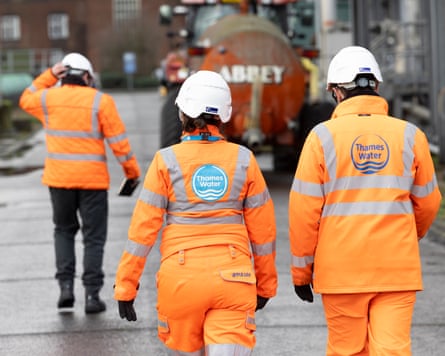
Back at Maple Lodge, Fayers swerves saying which option – special administration or market solution – she would prefer. “What people yearn for is stability. What we really want is to be able to deliver without mass turmoil and disruption. We want to be able to get on with things,” she says. As with last year’s BBC documentary that filmed inside Thames for six months, outsiders get an overwhelming impression of hard-working staff keeping the show on the road in the face of decades of underinvestment.
There are signs of improvement from a low base: a “material” drop in pollution incidents is expected in the latest financial year. “This is the time to be alive in the wastewater sector,” Fayers adds cheerfully. “You look at the record level of investment and we have opportunities at 80% of our sites to make a difference. But it’s a long old journey.”
The deep reasons for the crisis of underinvestment are well known by now. The list starts with the toxic mix of dividend extraction, debt accumulation and financial engineering at Thames in the 2006-17 era. After that came control by a collective of largely foreign-based absentee funds. Cost cutting, bad management and poor outsourcing took its toll. Ofwat was a weak regulator under political pressure to keep bills down. Environmental rules were inadequately enforced by an underfunded Environment Agency. Politicians did not engage with the sector-wide problems until pollution data was in the open from 2021 and public anger exploded.
The question is the next step for Thames. We should know in the next month. Some 37 years after the English and Welsh water companies were privatised to boost investment, the future of the biggest firm has come down to a standoff between Ofwat, the bondholders and ministers.