.png) 2 hours ago
3
2 hours ago
3
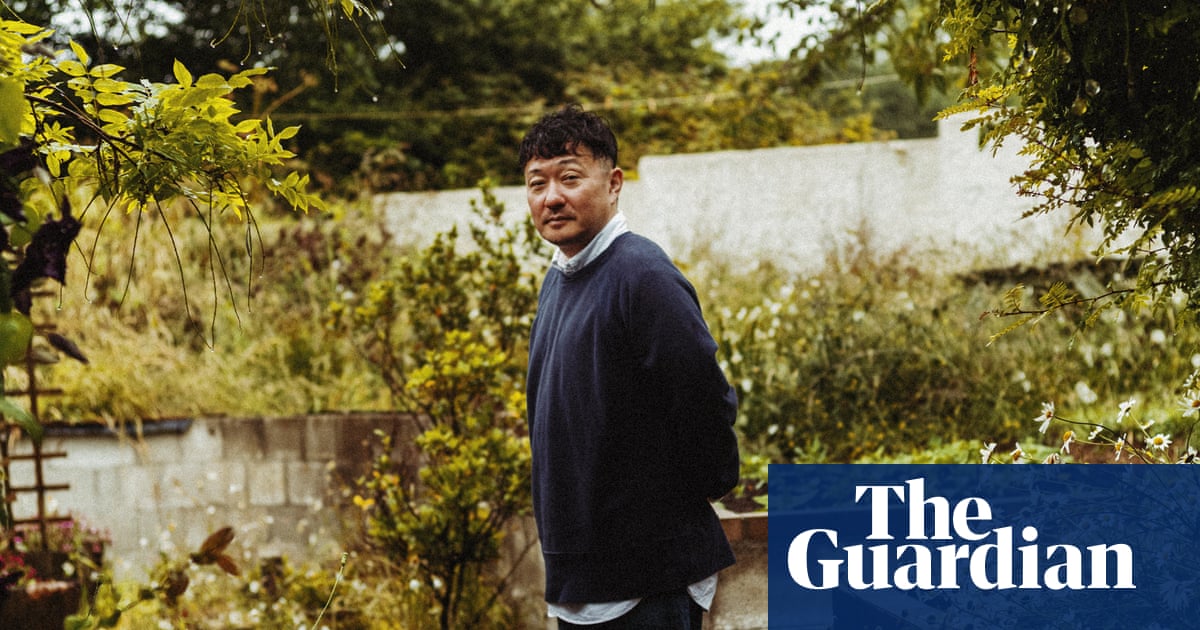
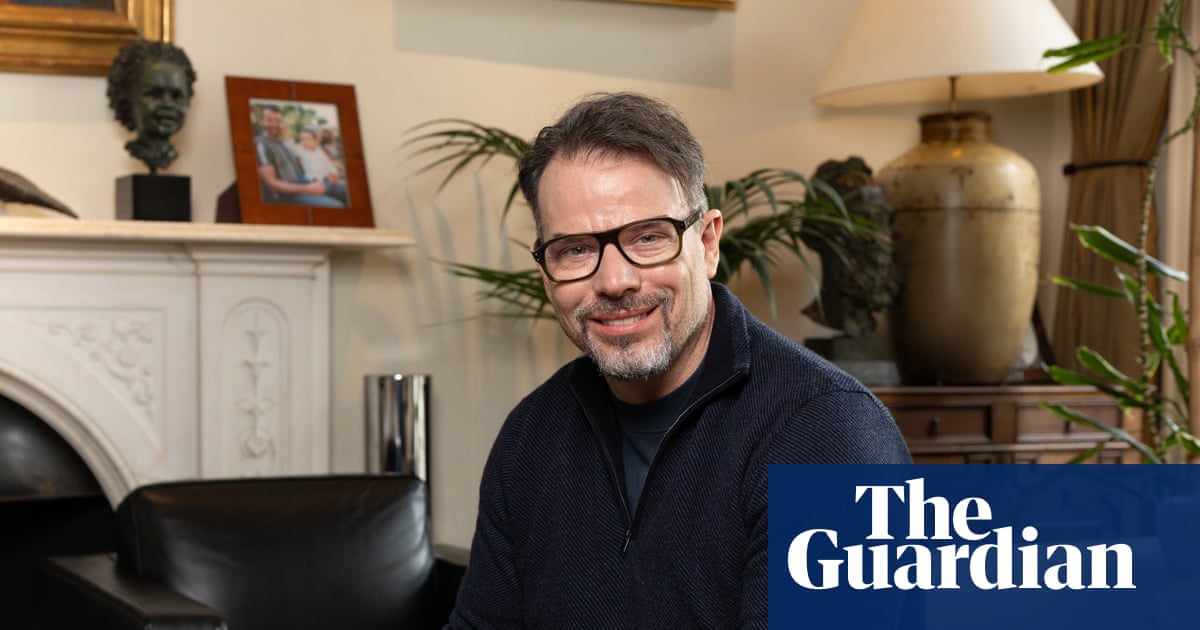
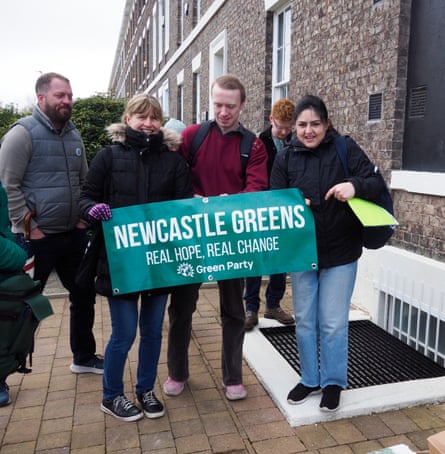
“Thank you very much to all you would-be penguins huddling together for warmth,” said Jamie Driscoll to the dozen supporters braving bitingly cold, blustery weather to begin knocking on doors and delivering leaflets.
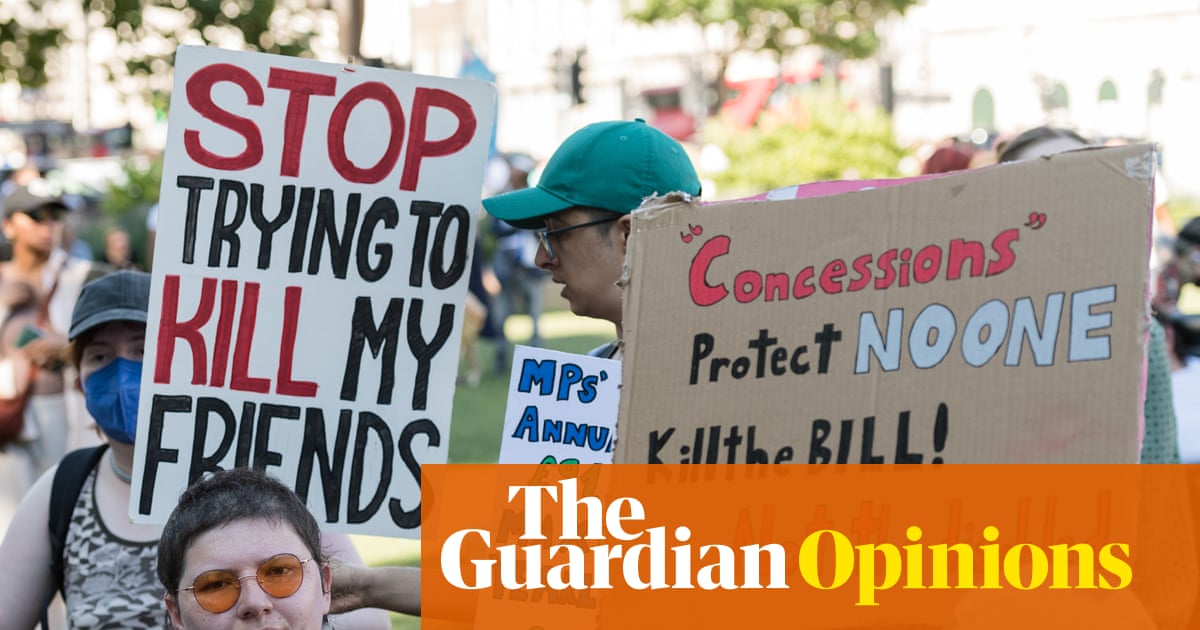
The former Labour North of Tyne mayor is one of the Green party’s highest-profile recruits. Standing for Newcastle city council in the central Monument ward, he was giving a pep talk to a group that would probably have been even bigger, were some not in London for a demonstration against the far right.
Driscoll is standing for election to a council with a minority Labour-led administration. The Greens, the Liberal Democrats and Reform expect to do well. Labour, meanwhile, will remember what happened last year in the once rock-solid stronghold of County Durham where it was almost wiped out by Reform.
What happens in the north-east of England could be pivotal for Keir Starmer. When Labour lost the Hartlepool byelection in 2021, the party was humiliated and he came close to quitting. If Labour loses heavily in the four full council elections of Newcastle, Gateshead, Sunderland and South Tyneside there will be people who expect him to do more than merely consider stepping down.
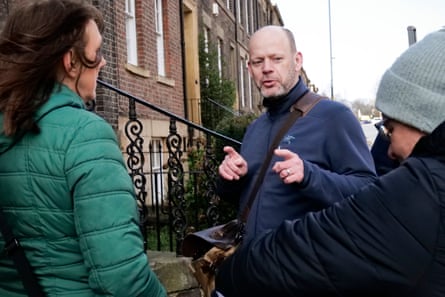
Driscoll had been Labour all his life, as had some of the campaigners gathered in the cold for the Greens on Saturday. Maysie Sharp, a retired stilt walker, said she had always voted Labour, apart from once when she voted Lib Dem as a protest against the city council.
She joined the party just before Jeremy Corbyn became leader and remained a member during the early years of Starmer but began to feel disillusioned by a number of policies, including on Gaza.
“I can’t remember what the final straw was, but there was one,” she said. “I joined the Greens because I think people need hope. The Greens do seem to have a plan. I’m 75 and have grandchildren and I want there to be a world for my grandchildren.”
Another recent Labour to Green convert is Richie Barlow, 44, who said: “I was so supportive of Keir Starmer, very supportive, but he is basically a red Tory. He has totally abandoned the people who voted for him, he is not doing what he promised. We need a viable alternative to the two-party status quo.”
That message is, of course, one that Reform is also putting out. On the campaign trail, the Greens are trying to convince people that they are the only party that can keep Reform out. Labour will say the same thing. It raises the question: what are left-leaning, anti-Reform voters meant to do?
It is a dilemma for Maureen Gilmore, a 77-year-old retired probation officer whose door was knocked on by Driscoll. The gist of their conversation is one likely to be repeated on many doorsteps before the elections on 7 May:
Gilmore: “It’s hard for me because I’ve been solid Labour, I’m a member of the Labour party. I don’t mind Keir Starmer, don’t get me wrong but I don’t like what they did to certain people in the Labour party.”
Driscoll: “Yes, yes, I’ve lived that.”
Gilmore: “Yes. I thought, they had some good people. They would have been excellent. And I’m very worried about Reform. I mean, I don’t think they’ll ever get into power, but they could do damage.”
Campaigner: “Well, not if we have anything to do about it.”
Driscoll: “It’s Green v Reform in Newcastle now.”
Gilmore: “Is it? Oh well I’ll vote for you.”
A bit later, Driscoll tells the still unsure Gilmore: “[Labour] deserted you, Maureen. You haven’t deserted them.”
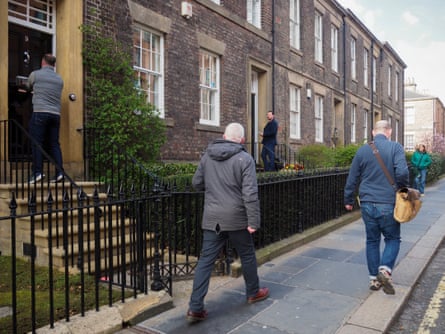
The campaigning was on the leafier streets of Newcastle – so not too much, perhaps, should be read into it – but it was striking how many once Labour-voting residents said they would vote Green.
One young woman assured Driscoll she would be voting Green, as would her pomeranian, Teddy, happily yapping and running round the politician’s legs. Later, a middle-aged man told Driscoll he was undecided between the Lib Dems and Greens but thought the Lib Dems were better on defence.
Driscoll told him his dad had been a tank driver, his brother in the Royal Navy, and then argued that the challenge was that warfare had changed and that the “current defence system is there to serve defence contractors rather than the needs of the service personnel”.
Bar one resident telling Driscoll that he supported Rupert Lowe’s Restore Britain party – “he said Reform was too leftwing for him” – the campaigners were buoyed and cheerful. The wind died down and the sun even came out.
Driscoll spoke about his history with the Labour party, the cataclysmic falling-out and his hopes for his new party. A former engineer, software developer, martial arts instructor and nightclub bouncer, Driscoll said he and his brother had joined Labour in 1985 “after we’d seen a party political broadcast with, funnily enough, Roy Hattersley”.
Driscoll was 15 and he is now in his mid-50s, so he has four decades of being Labour. He has repeatedly been called a Corbynista, but insists he has never been tribal. He was, though, never a Blairite, and remembers a time when the Labour party was more tolerant of a wide range of views.
He said: “You had Robin Cook resigning over the Iraq war, Clare Short resigning over the Iraq war. What they did is they told the truth. That’s how I’ve always made my decisions … I’ve never ever had any tribal loyalty to anything.”
After five years as Labour’s mayor for North of Tyne, he was blocked from being the party’s candidate for the new North East mayoralty. One reason suggested at the time was that he had shared a platform with the film director Ken Loach. John McDonnell, the former Labour shadow chancellor, blamed “out of control” factionalism among party leaders.
Driscoll quit the party and stood as an independent in the 2024 regional mayoral election. He won 28% of the vote but lost to Kim McGuinness, for Labour, who secured 41%.
After that, Driscoll set up what has been called a party, but what he insists was a social movement. Called Majority, it was “people-powered” and existed to “rebuild our democratic institutions to serve the interests of the many”.
Driscoll then played a role in setting up Your Party with Corbyn and Zarah Sultana, but he ended his involvement after it became mired in disputes and infighting.
In December last year, he was unveiled as a new member of the Greens. Driscoll said the party was on the rise and would need to show it could do a good job in power.
“We are an incredibly unstable country,” he said. “Our economic system isn’t working for most people. The public finances are having most of the money creamed off into billionaires’ bank accounts and until somebody fixes that, we are going to continue to have really febrile politics.”
Driscoll believes Labour is “mortally wounded” while Reform has “grown like a mushroom and they are collapsing as well”.
After the news broke that he had joined the Greens, a Labour spokesperson dismissed Driscoll as a “political liability”.
Driscoll insists he does not harbour grudges. Asked how it feels not to be in Labour, he replied: “It’s nice to walk into a room and not worry about who’s going to stab you in the back.”