.png) 1 month ago
56
1 month ago
56
If ever there was a TV show that you’d think should be left at a single season, it would be Jury Duty.
The Amazon series became a slow-burning, word-of-mouth hit through 2023 for pulling off a frankly unbelievable stunt: successfully convincing one man, Ronald Gladden, that he was taking part in an LA courtroom documentary when, actually, everything about the process was staged and he was the only participant who was not an actor.
Despite the continual escalations from the cast (including the actor James Marsden, playing an arrogant parody of himself roped into jury service) and the ever-present risk of Gladden cottoning on and toppling the entire production, somehow the makers manage to maintain the ruse for long enough for the “jury” to return a verdict.
Not only was 30-year-old Gladden not even a little bit peeved when the deception was revealed; the resulting comedy also managed to be warm, kind and genuinely funny. Jury Duty even won a Peabody award for proving that reality television could “bring out the best” in people.
So when a second season was announced, the response – even from fans – was one of trepidation. Jury Duty had been a critical and commercial success, making the hoax extremely hard to restage. Even if it were possible, surely you couldn’t hope to find a second solid-gold gem like Ronald Gladden?
Even the makers had their doubts, says director Jake Szymanski over Zoom. “We did not know if it could be done again … It is a lot of work, and there’s a lot of risk.” But, somehow, they’ve pulled it off.
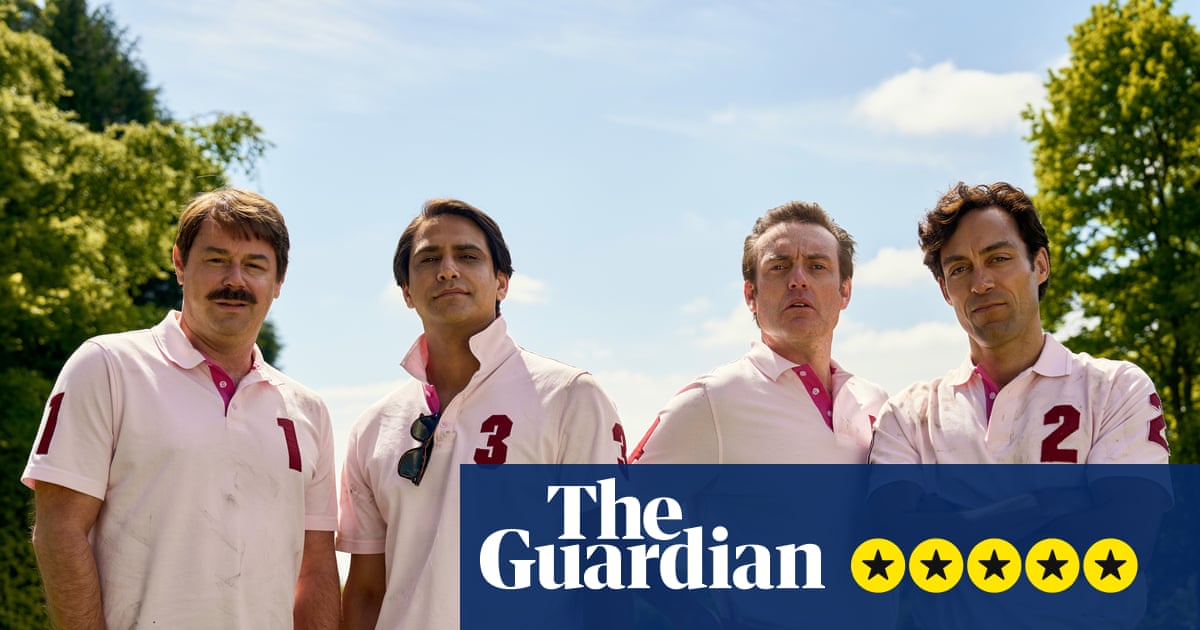
Jury Duty Presents: Company Retreat follows 25-year-old Anthony Norman from Nashville, a temp worker hired (like Gladden) via Craigslist to support a family-owned hot sauce company on its annual retreat.
When his manager abruptly takes flight, Norman is thrown in at the deep end, tasked with being “Captain Fun” to his new and eccentric co-workers. If that wasn’t enough, the company’s founder is preparing to step down; Norman finds himself responsible for not just the smooth running of the retreat, but also saving the business – all the while believing he is taking part in a documentary about the company at a transitional moment in its history.
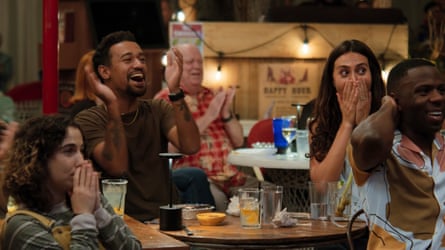
Executive producer David Bernad says the seed for season two was a “David v Goliath story”, pitting an unassuming hero against big business interests. “The aspiration wasn’t trying to beat or match or top Jury Duty – it was to create something that was unique and worked on its own.”
But Company Retreat doesn’t just repeat Jury Duty’s success; it raises the stakes with a more elaborate hoax, a bigger site and more cameras, filming for longer – meaning more danger of being found out. There is even another celebrity cameo, brilliantly pitched so as to just be believable.
“Season two is way more ambitious, in terms of the storytelling,” Bernad agrees. In season one, Gladden was dropped in the middle of 12 Angry Men; the confined setting and generally opaque workings of the legal system were also on the production’s side. This time, Bernad says, “we didn’t have the conceit of a jury trial, where the audience knows the beats … This is a completely created story.”
The hurdles were also higher for production, with 48 cameras filming across a 300,000 sq ft site, 10 times the size of the courtroom. Entire structures had to be built to conceal cameras and accommodate the 80-person-strong crew. The props team even had to develop a range of hot sauces.
And where Gladden’s fellow jurors had no prior connections, Norman was joining close-knit co-workers with decades of shared history and in-jokes. All that lore had to be developed and committed to heart by the actors to ensure they gave consistent accounts.
The preparation went far beyond what shows in the final cut, Szymanski says – down to details like where the characters went to college and whether they lived in houses with back yards. “If you’re real people who’ve known each other for over a decade, and all of a sudden you don’t know something basic about each other, it could break the whole world.”
Even the celebrity had to fit in with the production’s requirements for their cameo, as opposed to the other way around, “to make it seem real”, says Szymanski. “Nothing about the show is casual at all.”
As a result, Company Retreat often plays like a scripted workplace comedy, satirising its absurdities while also celebrating the genuine relationships forged there. You can forget Norman isn’t in on the joke until you see him trying to suppress a laugh at what he believes is yet another non sequitur or outburst from one of his kooky colleagues.
In fact, some were wearing earpieces and being fed lines or notes from the control room – and all leaned on improv, to keep Norman on course. If he turned left when producers had expected him to turn right, or decided to eat lunch outside instead of inside, it could spoil a scene or planned story beat, Szymanski explains. “This is going to play as an eight-episode TV show; we’ve still got to hit these moments. How do we best do that when our lead actor doesn’t know he’s in a TV show?”
The answer was months of writing, world-building and rehearsals before filming began, preparing for every possible scenario. “It’s a little bit like building a Jenga tower,” says executive producer Nicholas Hatton: every move risks tipping off “the hero”, as Norman and Gladden were designated behind the scenes. “You can’t have another take, you can’t reset, you can’t pause … and if anything goes wrong, you can end up without a TV show, which is a terrifying prospect.”
Season one did come perilously close to collapse when the supposed bailiff called one of the jurors by her real name rather then her character’s, in Gladden’s presence, requiring a cover-up to be improvised on the fly. There was another similarly heart-stopping moment on the last day of shooting on season two, mere hours before the big reveal. Hatton winces at the memory: “You can see just how close we get to ruining the entire thing … I think we’ve been fortunate, both seasons.”
For viewers, Bernad suggests, the element of risk only adds to the thrill of the high-wire act. “The hope is, as audiences are watching this season, that the ending is unpredictable … Do we get through it? And how do we get through it? That’s part of the fun.”
But for the team tasked with delivering it, the pressure is immense. “There’s nothing like the stress of making Jury Duty: there’s so much that’s unknown, and so much that’s unpredictable,” says Bernad, also an executive producer on The White Lotus. On that show, he says, there is next to no chance of it all falling over on the last day of filming. On Jury Duty, “the deeper you get into the production, the more the stakes rise”.
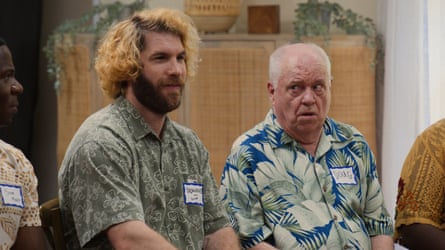
Though success can never be guaranteed, the odds increase with the correct casting of the hero, who serves as not just the heart of the show but its reason for being. “They’re number one on the callsheet – they just don’t realise it fully,” says Hatton.
More than 10,000 people responded to the production’s post on Craigslist last year, advertising a two-week-long temp gig. Applicants were vetted for character traits like kindness, empathy, compassion, sense of humour and a “certain degree of charisma”, Hatton says.
There were also practical concerns, like whether the hero was likely to have seen the first season or in danger of recognising any of the cast. But, for Szymanski, the most important factor was that, once the jig was up, whether they were likely to have appreciated taking part in the show.
“To me, it’s kind of the only thing that makes it worth it … it has to be positive and uplifting, not only to the audience, but to the person experiencing it,” he says. “Otherwise it’s not worth the risk.”
The cash prize ($150,000 in season two) likely helps soften the blow. Szymanski says there is “absolutely” professional aftercare offered to the hero after the reveal; the documentary conceit also allowed Norman to be offered support through filming, without giving the game away.
But, Szymanski adds, it was sometimes tough on the cast, building real connections with him under false pretences. (James Marsden has spoken of his relief at being able to finally reveal to Gladden, after the season one finale, that he wasn’t actually a self-involved moron.)
“What I tell them – which is true – is that we have to view this as if we are throwing Anthony a big surprise party,” says Szymanski. “You have to lie, and to keep some secrets, but if we do it right … he’s excited, and loves it, and feels like it was all worth it.”