.png) 4 hours ago
5
4 hours ago
5
Lunchtime summary
As the clocks ring noon in the City of London, here’s the situation.
European and Asia-Pacific stock markets have rallied sharply, after Donald Trump signalled that the Iran was could end soon.
The UK’s FTSE 100 share index is up 1.9% now at 10,369 points, up 192 points to a two-week high.
The pan-European Stoxx 600 index is up 2%, with gains in Frankfurt, Paris, Madrid and Milan. Earlier, Japan’s Nikkei jumped by 5%, with analysts reporting a ‘roar of recovery’ in the markets.
Investors are piling back into shares after the US president indicated the conflict with Iran could end in two weeks. Trump said:
Now we’re finishing the job. I think in two weeks or maybe a few days longer, we’ll do the job. We want to knock out everything they’ve got.
Iranian president Masoud Pezeshkian has reportedly said Iran is willing to end the war but only if there are guarantees “to prevent the recurrence of aggression”.
These encouraging signs from Washington DC and Tehran have also pushed oil down.
Brent crude fell below the $100 a barrel level this morning, having traded as high as $118 a barrel yesterday. It’s now changing hands at $102.92 a barrel.
Hopes of de-escalation, and an easing in the energy crisis, have pushed down the yield (or interest rate) on UK government bonds, and encouraged City traders to bet on fewer interest rate rises this year.
Key events Show key events only Please turn on JavaScript to use this feature
BoE's Bailey: Markets getting ahead of themselves over rate rise forecasts
The governor of the Bank of England has again claimed the financial markets are getting carried away by expecting the central bank to raise interest rates this year.
In an interview with Reuters, Andrew Bailey suggested it could be a mistake to aassume the BoE will raise borrowing costs this year.
Echoing comments he made last month when the Bank held interest rates, Bailey said:
“(The market)‘s still pricing us to raise rates. I would still say that is a judgment markets have to make but I think they’re getting ahead of themselves.”
As flagged earlier, there has been a fall in interest rate hike expectations this year. The money markets are currently predicting 44 basis points of rates rises by the end of the year, meaning two quarter-point increases are no longer fully priced in. That’s down from 75bps (three quarter-point hikes) last week.
Just in: US companies hired more staff than expected last month, despite the eonomic impact of the Iran war.
Payrolls operator ADP reports that private employers added 62,000 jobs in March, beating forecasts of a 40,000 increase.
The smallest employers drove job growth for a second month; companies with between 1 and 19 employees added 112,000 new staff in total.
But hiring in trade, transportation, and utilities continued to decline.
Dr. Nela Richardson, chief economist at ADP, says:
Overall hiring is steady, but job growth continues to favor certain industries, including health care. In March, this solid performance was accompanied by a boost in pay gains for job-changers.
US stock futures are up
The US stock market is rising in premarket trading, as traders become more optimistic about US military operations in Iran ending soon.
The futures contract for the Dow Jones Industrial Average is up 0.8%.
The S&P 500, the broader US stock index, is up 0.9% in pre-market trading, while the tech-focused Nasdaq is on track for a rise of almost 1.2%, when trading begins in under an hour and a half.
MSCI’s broadest index of Asia-Pacific shares outside Japan rose by 4.7% today - its biggest one-day increase since November 2022, Reuters reports.
Iran war may increase mortgage payments for extra 1.3m UK households, says Bank of England
The Bank of England’s latest financial stability report also shows that the US-Israel war on Iran could end up increasing monthly mortgage payments for more than one million more UK households, my colleague Kalyeena Makortoff reports.
Financial market jitters over the conflict in the Middle East have resulted in banks pulling about 1,500 mortgage products, with many banks raising interest rates on their remaining 7,000 home loan products in recent weeks, the Bank’s financial policy committee (FPC) said.
The increases, named “Trumpflation” after the US president, have put pressure households preparing to sign on to new mortgage contracts, with the Bank now forecasting that about 5.2 million borrowers – or roughly 58% of borrowers across the country – could face higher mortgage payments by the end of 2028.
The US dollar has slipped against other major currencies today, after President Trump raised expectations that the Iran conflict could end soon.
The dollar index, which tracks the greenback against a basket of other currences, is down 0.5% today.
The pound has gained almost a whole cent against the dollar, up to $1.3314.
David Morrison, senior market analyst at financial services provider Trade Nation, says:
President Trump’s remarks reinforced expectations that US strategic objectives had largely been achieved and contributed to a shift in risk sentiment across global markets. But this could all unravel as quickly as it began. Traders will be paying close attention as Mr Trump addresses the world about the war at 01:00 GMT Thursday morning.
Lunchtime summary
As the clocks ring noon in the City of London, here’s the situation.
European and Asia-Pacific stock markets have rallied sharply, after Donald Trump signalled that the Iran was could end soon.
The UK’s FTSE 100 share index is up 1.9% now at 10,369 points, up 192 points to a two-week high.
The pan-European Stoxx 600 index is up 2%, with gains in Frankfurt, Paris, Madrid and Milan. Earlier, Japan’s Nikkei jumped by 5%, with analysts reporting a ‘roar of recovery’ in the markets.
Investors are piling back into shares after the US president indicated the conflict with Iran could end in two weeks. Trump said:
Now we’re finishing the job. I think in two weeks or maybe a few days longer, we’ll do the job. We want to knock out everything they’ve got.
Iranian president Masoud Pezeshkian has reportedly said Iran is willing to end the war but only if there are guarantees “to prevent the recurrence of aggression”.
These encouraging signs from Washington DC and Tehran have also pushed oil down.
Brent crude fell below the $100 a barrel level this morning, having traded as high as $118 a barrel yesterday. It’s now changing hands at $102.92 a barrel.
Hopes of de-escalation, and an easing in the energy crisis, have pushed down the yield (or interest rate) on UK government bonds, and encouraged City traders to bet on fewer interest rate rises this year.
UK diesel prices up 29.4% since war began
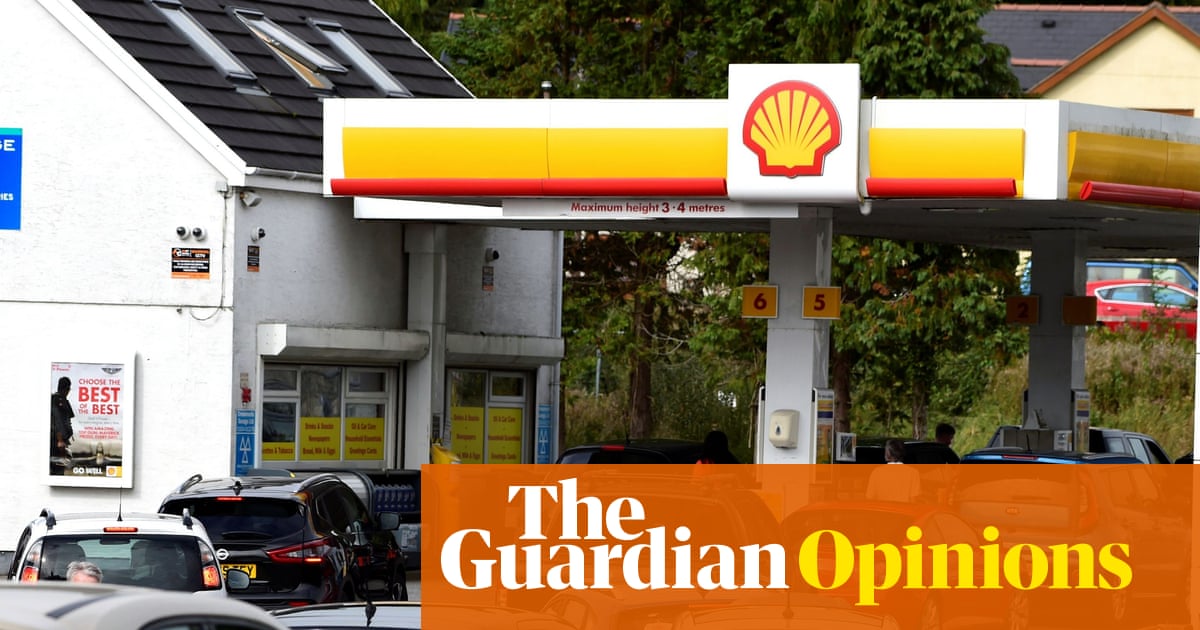
UK fuel prices have continued to climb, as the impact of the Iran war is felt at the forecourts.
The average price of a litre of diesel has risen by 1.4p today to 184.20p a litre. That’s an increase of 41.8p, or 29.4%, since the Middle East conflict began.
Petrol prices are up again too – up 0.8p a litre to an average of 153.68p a litre, or 20.9p (15.7%) higher than on 28 February.
Iran’s block of strait of Hormuz is ‘extortion,’ Abu Dhabi's Al Jaber says
The head of the United Arab Emirates’ largest energy company has condemned Iran’s blockage of the Strait of Hormuz as “global economic extortion.”
In a post in LinkedIn, Sultan Al Jaber, chief executive officer of Abu Dhabi National Oil Company, argues that this is “a threat the world cannot tolerate”.
He writes:
Asian economies have felt it first - with shorter working weeks, fuel rationing, fewer flights and AC cuts. Now the impact is moving west, across Europe food and fuel prices are rising for consumers and driving inflation.
Disrupting Hormuz hits food prices, air fares, energy bills, medicine costs and much more. This is not about oil supply; it’s about everyday affordability for billions of people.
The world must act together to protect the free flow of energy and safeguard economic stability, he adds, concluding:
That is why UNSC Resolution 2817, must be upheld to ensure free navigation through the Strait of Hormuz.
BoE: Iran war is new threat to AI valuations
The conflict in the Middle East posed additional threats to AI company valuations, the Bank of England warns.
In today’s financial stability report, the BoE points to the energy-intensive nature of the AI supply chain for key components and the operation of data centres.
It adds:
In addition, supply chain disruption for key input chemicals and materials could similarly act as a bottleneck on the buildout of AI infrastructure capacity.
Bank of England warns of "substantial negative supply shock” from Iran war
Newsflash: The Bank of England is warning that the Iran war had dealt “a substantial negative supply shock” to the world economy.
In its latest financial stability report, the BoE has warned that the shock will weigh on growth, increase inflation and tighten financial conditions.
This shock will weigh on growth, increase inflation and tighten financial conditions, it says.
And although markets have continued to function, the UK’s central bank fears there is a danger that several vulnerabilities “crystallise simultaneously”, damaging financial stability.
The BoE says:
The conflict has made the global environment materially more unpredictable and followed a period in which global risks were already elevated. This increases the possibility of large, frequent and potentially overlapping shocks and periods of intense volatility.
Heightened uncertainty and unpredictability have made it harder for markets to price underlying economic fundamentals, increasing the likelihood and magnitude of sharp market shifts in response to new information. The ultimate impact on financial stability will depend on the duration, scale and repercussions of the conflict, including whether any additional shocks materialise around the same time.
Europe could face recession if the Iran conflict drags on and oil prices jump over $150 per barrel, Greece’s central bank governor has warned.
Yannis Stournaras told Greek radio station Parapolitika:
“Right now, nobody says we’ll have a recession. But if it (the Iran war) continues, if we’re having scenarios with (oil prices) over $150 per barrel, nothing can be ruled out, even a recession.”
£1.5bn legal action filed against Rightmove, knocking shares
Away from the Iran war, property portal Rightmove has pledged to defend itself “vigorously” against a claim that it charges “excessive and unfair” subscription fees for listing properties on its site.
A £1.5bn legal action was filed today against property company Rightmove in the Competition Appeal Tribunal (CAT), claiming that that the company has abused its dominant position in the UK online property portal market.
Jeremy Newman, who is leading the case against Rightmove, said:
“There has been an extremely encouraging response from estate agents since we announced this legal action. The stories shared by businesses, both small and large, have confirmed long-held concerns in the market about Rightmove’s conduct.
Filing this claim today advances the route to meaningful compensation for those businesses who have had very little choice but to absorb excessive fee increases for many years.”
Update: Rightmove’s shares have dropped by 8% so far this morning.
In response to the filing, Rightmove told the City this morning:
Rightmove is confident in the value we provide to our partners and consumers, who are at the core of our business solutions and digital platform.
As one of the most efficient parts of the UK housing market, we help people across the UK to move home by bringing buyers, sellers, renters, landlords and agents together. Our platform continues to provide a growing range of constantly evolving products and features which facilitate market transparency, liquidity and confidence. This claim is without merit, and we will defend it vigorously.
Ryanair sees jet fuel supply disruption from May if Middle East war continues
The boss of Ryanair has warned that jet fuel supply to Europe could be disrupted from May if the Middle East conflict continues.
Michael O’Leary told Sky News:
“If the war finishes and the Straits of Hormuz reopens by the middle or end of April, then there’s no risk to supply.
“If the war continues and the disruption to supply continues, we think there’s a reasonable risk that some low level, maybe 10%, 20%, 25% of our supplies might be at risk through May and June.”
Brent crude has now edged back up to $102.60 a barrel, still down sharply on the $118 hit yesterday.
Michael Brown, senior research strategist at Pepperstone, suggests traders are anticipating an “Iranian-controlled Hormuz” once the conflict is over, saying this morning:
One interesting development over the last couple of days is the apparent de-linking of ending the conflict, and re-opening the Strait of Hormuz. Trump put this rather bluntly, telling those countries reliant on energy flows through the Strait to either “just take it”, and to “get your own oil”.
Quite clearly, this leaves the major unanswered question of what the Iranians would do regarding Hormuz if the US were to simply up and leave. The working assumption, for now at least, seems to be that Iran would likely reopen the Strait, albeit while likely retaining tight control over the ships that are able to pass through, potentially also levying a toll on transits too.
Here we can turn to the second conclusion markets have drawn – some oil flowing through an Iranian-controlled Hormuz, is better than no oil flowing through a contested Hormuz. The reaction in commodity prices somewhat speaks for itself here, with both Brent and WTI having dipped back beneath $100bbl, the former below that handle for the first time in a week.