.png) 2 months ago
63
2 months ago
63
The standoff in the strait of Hormuz has shown just how dependent the world’s economy is on fossil fuels. From petrochemicals to plastics and fertiliser, they all begin life as oil or gas – but are there alternatives? Can we loosen the grip that fossil fuels have on our lives?
While solutions to wean the transport system off imported oil are well understood – albeit not fully implemented – substituting the plethora of petrochemicals that underpin everyday life is a much more challenging task.
Chemicals produced from oil and gas make up 90% of all raw materials, according to the International Energy Agency, which says they are “intimately engrained in our daily routines: toothbrushes, carrier bags, food packaging, mobile phones, computers, carpets, clothes, furniture… and these are just the items we see every day.”
Petrochemicals account for 14% of oil demand and 8% of fossil gas, the IEA says, but remain a “blind spot” in the global energy debate.
Assoc Prof Stuart Walsh, a resources engineer at Monash University, says crude oil and petrochemicals can be found in “just about everything we interact with every day”. “It’s almost hard to enumerate them because they’re so ubiquitous.”
Among the largest consumers of petrochemicals are fertilisers, plastics and textiles – making up 70% of total demand.
With conflict in the Middle East disrupting supplies, increasing prices and casting a spotlight on alternatives, what are our options?
Can we grow food without fossil fuels?
About half the world’s food production relies on synthetic nitrogen fertiliser, or urea. It’s a product made using ammonia – a chemical derived from gas via the Haber-Bosch process.
Walsh describes Haber-Bosch as “kind of the miracle of the last century”. “It basically meant that we could continue to feed all of the people on the planet and also convert methane into other types of chemicals.”
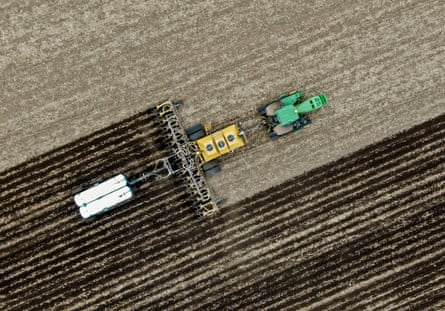
The first step involves turning gas into hydrogen. Amandine Denis-Ryan, chief executive of the Australian branch of the Institute for Energy Economics and Financial Analysis (IEEFA), says that makes ammonia a good candidate for using green hydrogen – made by splitting water into hydrogen and oxygen using a process powered by renewable energy.
Globally 80% of ammonia is used to make fertiliser. But Denis-Ryan says that in Australia the split is roughly 50/50 – half is used to make explosives (for mining), and half for fertilisers to grow food. Explosives are probably the “most prospective application” for green ammonia, she says.
Ammonia is a logical place to kickstart a local hydrogen industry, she says, as up to 30% of existing ammonia feedstock can be swapped for green hydrogen without requiring major plant upgrades.
The costs are higher, but the benefits are reducing reliance on gas and cutting emissions, Denis-Ryan says.
“We already have the technology to be able to do this,” says Walsh, including Australian technology like Jupiter Ionics.
When it comes to growing food, Prof Kadambot Siddique, director of the Institute of Agriculture at the University of Western Australia, says optimising fertiliser use, crop rotation and substituting organics are all strategies to reduce reliance on imported products.
A lot of the fertiliser currently applied on crops is wasted, he says. “The best efficiency is up to 30 or 40%,” Siddique says. The rest is lost from the system via leaching into water or air.
“We cannot completely replace Australian fertiliser requirements by organics simply because we don’t have sufficient quantity,” he says, but his recent research shows mixing in small amounts could benefit soil quality and crop performance, while easing reliance on supplies passing through the strait of Hormuz.
What about all that plastic?
More than 90% of the plastic that comes into Australia is imported, either as plastic resin, or in the form of products or packaging. Most are derived from fossil fuels, and only about 14% are recycled.
Dr Eddie Attenborough, a chemical engineer at Monash University, says bioplastics, made from renewable materials like corn, sugarcane, seaweed and food waste, could provide an alternative.
Their share of the market is currently tiny. A CSIRO report estimates global production at 2m tonnes, compared to 380m tonnes of plastics from petrochemicals.
A promising option is “polyhydroxyalkanoates” (or PHAs), Attenborough says, a polyester produced by bacteria when you feed them sugars, oils or fats – the resulting product is both home compostable and marine biodegradable.
Australia could scale up its bioplastics manufacturing, he says. It has the science and engineering expertise to do so, early-stage companies like Uluu (which makes plastic from seaweed sugars) and Ecopha, and access to feedstocks like agricultural waste, sugarcane and seaweed.
Another obvious solution is to produce and use less.
Cip Hamilton, the plastics campaign manager at the Australian Marine Conservation Society, says the problem begins with producing too much plastic and other materials.
“We cannot recycle our way out of a crisis driven by overproduction.”
What to wear? Can we switch to natural fibres?
Synthetic fibres overtook cotton in the mid-1990s and now make up about 73% of global textile production. They are much cheaper to produce, costing about half as much per kilo as cotton, and don’t depend on environmental conditions like soil and water, leading to an explosion in production and consumption.
Dr Rebecca Van Amber, a senior lecturer in fashion and textiles at RMIT University, says as well as fabrics, petrochemicals are also used in synthetic dyes and coatings, and in fertilisers for growing natural fibres.
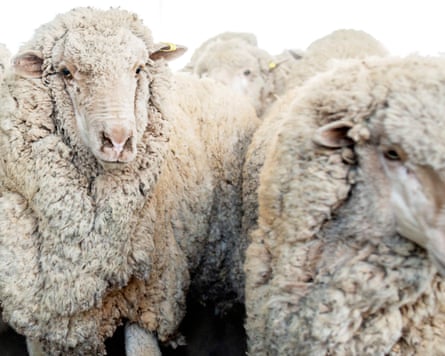
The uses for synthetic fibres extend well beyond fashion and furnishings. They are used in nappies, insulation and flooring, seatbelts and airbags in vehicles, and medical gowns, masks, sutures and plasters, to name a few.
But uncertainty due to the war in Iran has caused prices to rise, with reports in Reuters that some polyester producers are paying 30% more for fossil fuel feedstocks.
There are natural alternatives – like cotton, wool, linen, silk and hemp – but these materials are usually more expensive and produced in smaller quantities, Van Amber says. However, Australia has an advantage as a huge grower of cotton and the world’s largest producer of merino wool.
Some synthetics like elastane – which is added to stretchy materials used in athleisure, socks and underwear – are particularly hard to substitute. Natural rubber is an option, but limited in quantity.
Swapping some petrochemical fibres for organic ones would be possible, Van Amber says. The barriers to doing so at scale are largely systemic: the quantity of goods that are produced and sold, the volumes people are purchasing and the price they are willing to pay.
“There are definitely a lot of small brands out there doing really innovative things,” she says. An example is the New Zealand label Kowtow, which has eliminated plastics and petrochemicals from its garments.
Julie Boulton, a sustainable fashion consultant, says organic cotton currently makes up about 1% of the market – nowhere near enough to switch over at current rates of production.
Reducing dependence on fossil-fuelled fibres requires a “whole-of-system change”, she says, to become a society that values durable fabrics, quality garments and craftsmanship along with reuse, repair and recycling.
“We’ve become used to this cycle of cheap and fast fashion, of having the shops completely full of stuff. Is that really what we should be aiming for?”