.png) 2 months ago
49
2 months ago
49
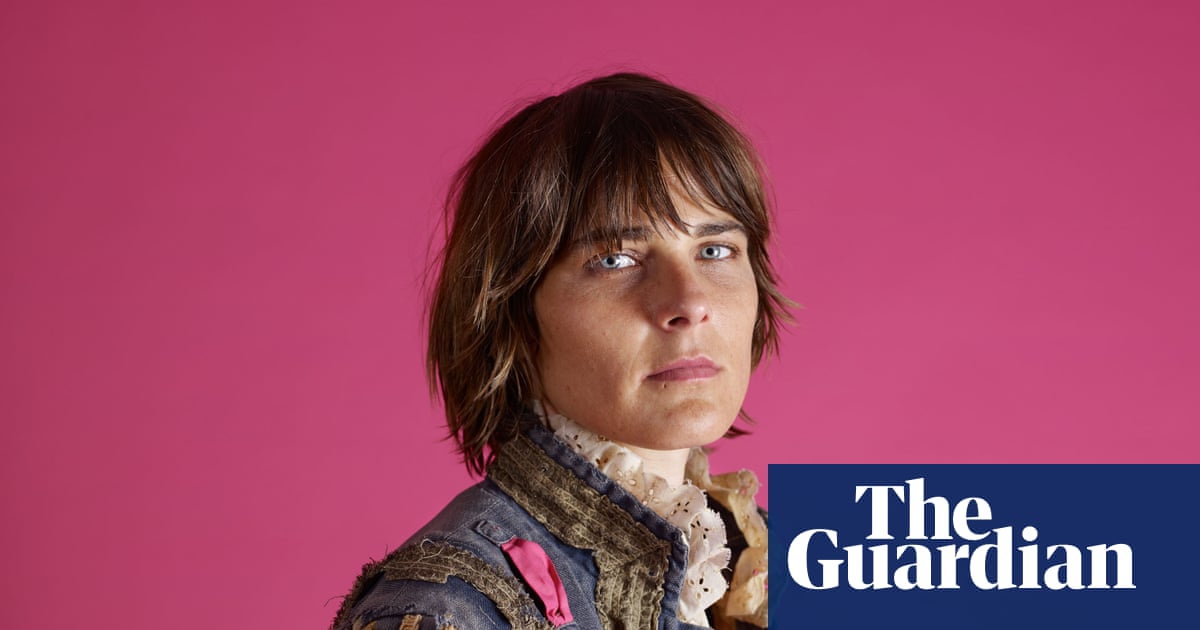
In Jimpa, Olivia Colman plays a woman called Hannah who leaves Adelaide with her husband and 16-year-old child to visit her father in Amsterdam. This is Jimpa – the word sticks better once you know it’s a compound of Jim and grandpa. At the airport, the teenager, Frances, who’s trans, drops a bombshell: they want to move to the Netherlands and finish their schooling there. Hannah and her husband, Harry, respond thoughtfully, not freaking out.
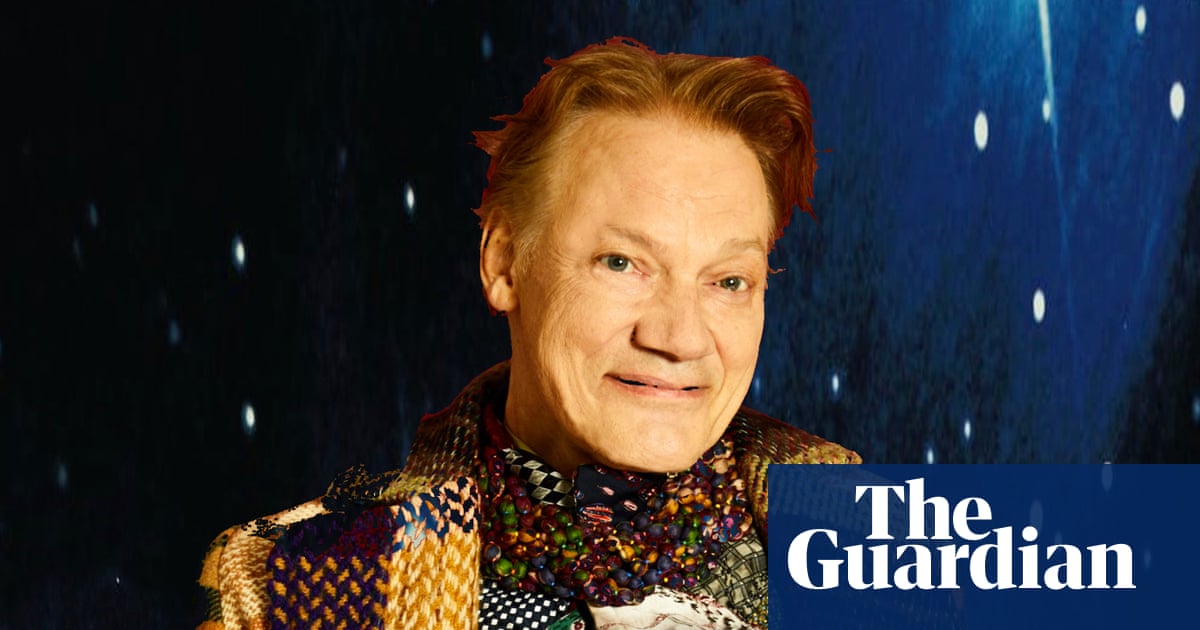
But once they arrive in Amsterdam, Jimpa, played by John Lithgow, brings enough drama for everyone – something he’s been doing for 40 years, since he left his family for a fuller queer life than Australia at the end of the 20th century could offer. The film revels in revealing the sort of lifestyle he enjoyed instead.
“When I first met John,” says director Sophie Hyde, “he said, ‘Jimpa has to be naked!’ He was so sure about that.” And Lithgow, now 80, is exactly that in the film – although often just because he likes to model for life drawing.
Hannah is a film-maker trying to sell an autobiographical feature idea: what if there were two parents in the 80s – the dad comes out as gay, but the couple remain happily together as platonic co-parents, and even when the father leaves the country, there is no conflict? We see her on Zoom calls, producers asking: “Where the hell would be the drama in that?”, juxtaposed against exactly that family history played out on the screen. It’s funny in a bone-deep, unshowy way.
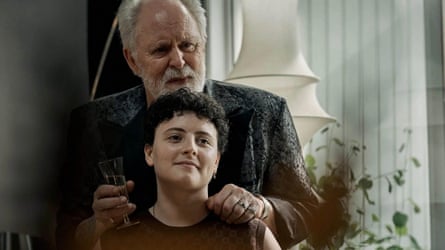
And, well, where is the drama in all this familial love? Hyde ponders the question. “Can we ask our characters to respond with loving kindness, when usually our instinct is instant conflict? How do we lovingly disagree with each other? How do we not repress ourselves and yet not fight with each other? I think it’s a very pertinent question right now.” It’s one of the things that makes the film so lingering, that all its topline topics – intergenerational queerness, filial disappointment, fabulous septuagenarians who refuse to grow up – are in dialogue with the wider question: has the world lost its ability to conciliate, or just its inclination?
Colman is speaking over video chat from LA, Hyde is dialling in from Adelaide. Next to her is her own child, Aud Mason-Hyde, who plays Frances in the film. “I spent my 19th birthday on this set,” they say, “having a fake argument with my fake mum, directed by my real mum, and the dynamics of the whole thing, when you zoom out, make you think, ‘What are we doing?’” Their character isn’t identical to Frances’s, though. “I’m quite outspoken and opinionated, and they are opinionated but in a much more observant way. I had to exercise a lot of restraint.”
Frances and Jimpa have an intensely affectionate relationship, but there’s a lot of indulgent keeping-the-peace, all of it travelling in one direction, from young to old. In that sense, says Mason-Hyde, it’s pretty on the nose. “In an immensely magnified way, to be a young trans person, you are constantly asked to belittle your needs and wants for the sake of being palatable and agreeable, being one of the easy trans people to get along with. Not to ask too much of others, whether that’s about language or being political or being unconventional. Other people’s reactions to you – their feelings and the way they express them – can be quite hateful or violent, but it’s somehow the responsibility of young trans people to soothe everyone. Which makes no sense at all.”
Colman also found in the film a sharp parallel, as she lost her father not long before shooting started. “My dad and I, in real life, fought a lot. We adored each other, but oh my God, did we fight, and I don’t really fight with anybody else. I learned a lot from pretending to be someone else, from being with Sophie/Hannah, just to listen and shut up. I liked being that nicer person.”
Lithgow – with whom Colman previously worked on The Crown, he as Churchill, she as the queen – reminded her frequently of her own father. “There were moments when a scene would make me wish I’d been able to be calmer with my dad when he would say something inflammatory. I think he would have loved this film. He’d have sat and cried all the way through it and probably also gone, ‘Damn it, I wish I’d done it in a different way.’” That must have been hard. Colman responds with droll pragmatism: “From an acting point of view, I could use it.”
Hyde’s last film was 2022’s Good Luck to You, Leo Grande, in which Emma Thompson has a compelling sexual awakening courtesy of a younger sex worker, played by Daryl McCormack. In Jimpa, each character (save for Harry) has a sexual encounter that completely changes them. “It didn’t feel like that was a huge choice,” Hyde says. “I was just showing something I see all the time in other humans, and rejecting assumptions we make about people based on their age.

“I definitely didn’t want Jim to not have a sexuality about him because he was older. I didn’t want him to become somebody who talked about gayness as a theory. I wanted him to be a virile human being.”
Frances arrives in Amsterdam “intellectualising the right way to be in the world, what it means to be queer, what it means to be non-binary, what it means to get consent, what polyamory means” – but with no lived experience. When they have sex with a slightly older girl, even though it’s awkward and utterly unlike the teenage sex typically delivered on screen, it’s groundbreaking to watch them “decide to actually be vulnerable with someone else”.
Meanwhile, Hannah, whose marriage is sort-of open, has a thing with her father’s amanuensis, an insanely hot, bi, younger man. Her sexual complexity is taken so seriously, while depicted so lightly, that I wonder if that’s what appealed to Colman about the role. “No,” she says firmly. “I really liked the script. I liked these characters, I liked the story. Then I met Sophie and I really liked Sophie.”
We see Jim, too, have a casual encounter with calamitous consequences. “I remember being in the edit suite,” says Hyde, “and thinking, ‘God, I hope this doesn’t read to anyone like a moral message – he goes for a blowjob, now he’s having a stroke.”
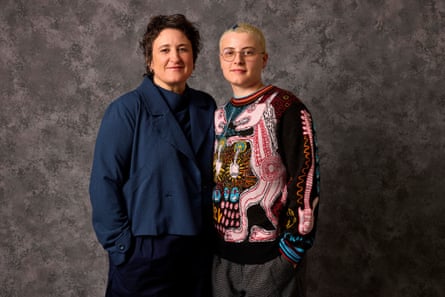
Her child interjects. “We had a screening today here in Adelaide,” says Mason-Hyde, “and someone in the audience made a passing comment after the film – ‘The kind of sex people have is the least interesting thing about them.’ I’ve been thinking about it all day because I just really feel that our sensibility – Sophie’s sensibility as a film-maker – is a very queer one: through a queer lens, the sex we have is instrumental to who we are. The way that we do it, and whether we’re having it, is such a huge part of who all of us are. It’s so informative to our dynamics, a dialogue between people that is really embodied and therefore very queer.”
Colman defends the audience member, saying they probably intended the comment “as a kind thing. But then you think there are people who are having sex they don’t want to be having. There are people lying about the sex they’re having. There are people loving the sex they’re having, which is changing them, in important ways. Hannah, I think, is very happy with her decisions.”
Critical response to the film has focused on that question: is it possible to make a no-conflict drama? Colman just responds by calling the characters “an advanced level family, they’ve worked shit out that other families will never sort out”.
Meanwhile, Mason-Hyde says: “Oh, just me being here seems to merit backlash, you know. The basics of who you are, and whether you deserve to be there in the first place, is being debated. It’s awful and dehumanising and a real disservice to art and the complexity of humans.”
As for Colman? She never reads reviews, she says. “I’m not very thick-skinned and I don’t want to know. I just thought it was a beautiful story about kind people and who the fuck would have a problem with that?”