.png) 3 months ago
63
3 months ago
63
Clearing mines in strait of Hormuz could take six months - report
A Pentagon assessment has estimated it could take six months to completely clear the strait of Hormuz of mines deployed by the Iranian army, the Washington Post reported.
Carrying out the task would unlikely begin until after the war ends, according to the Pentagon assessment, shared in a classified briefing for members of the House armed services committee earlier this week.
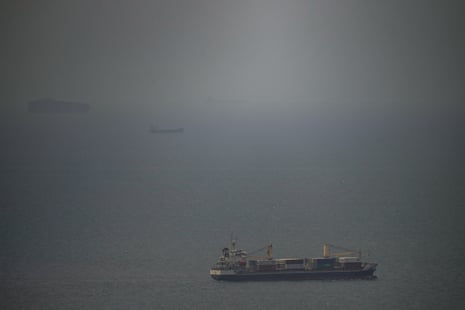
strait of Hormuz. Photograph: AP
Speaking to the Washington Post about that assessment, three officials close to the discussion said the six-month estimate frustrated both Democratic and Republican lawmakers. They were reportedly told that Iran may have placed 20 or more mines in and around the strait, with some floated remotely using GPS technology which makes them more difficult to detect.
The narrow waterway, which carried a fifth of global oil and gas supplies before the war, has been effectively shut since the start of the conflict on 28 February despite a ceasefire largely halting the fighting between the US, Israel and Iran.
Commenting on the Washington Post’s report, Pentagon spokesperson Sean Parnell acknowledged the assessment was made in a classified briefing and described the information as “inaccurate”.
Key events Show key events only Please turn on JavaScript to use this feature
The second round of negotiations between Israel and Lebanon is scheduled to take place today in Washington, while the US-Iran talks that were slated to resume this week in Pakistan have been thrown into doubt.
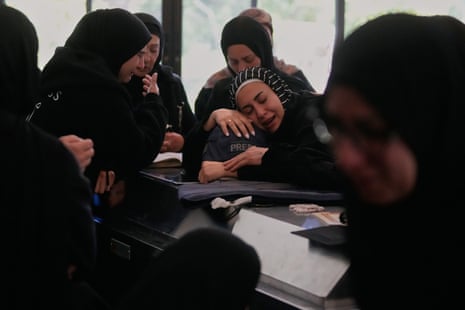
Lebanon plans to request a one-month extension of a ceasefire that is due to expire on Sunday, according to reports. Despite a 10-day truce, Israeli forces killed at least five people in southern Lebanon yesterday, including Lebanese journalist Amal Khalil.
Reacting to Khalil’s death, the Lebanese president, Joseph Aoun, said Israel’s “deliberate and consistent targeting of journalists” was aimed at “concealing the truth of its aggressive acts against Lebanon”.
Meanwhile, Pakistan remains prepared for potential talks between US and Iranian negotiators.
Pakistan’s interior minister, Mohsin Naqvi, said he hoped for “positive progress” from Iran after a meeting with the US ambassador to Pakistan, Natalie Baker, in Islamabad today.
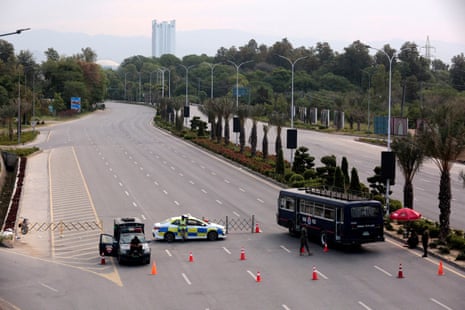
In statement, the Pakistani interior ministry said the officials discussed diplomatic efforts related to reconvene the US-Iran ceasefire talks, which was delayed after Tehran did not confirm when it would send its delegation.
Naqvi said the Pakistani prime minister, Shehbaz Sharif, and army chief Asim Munir were making efforts “at every level” to support a peaceful settlement and hoped all sides would give diplomacy a chance.
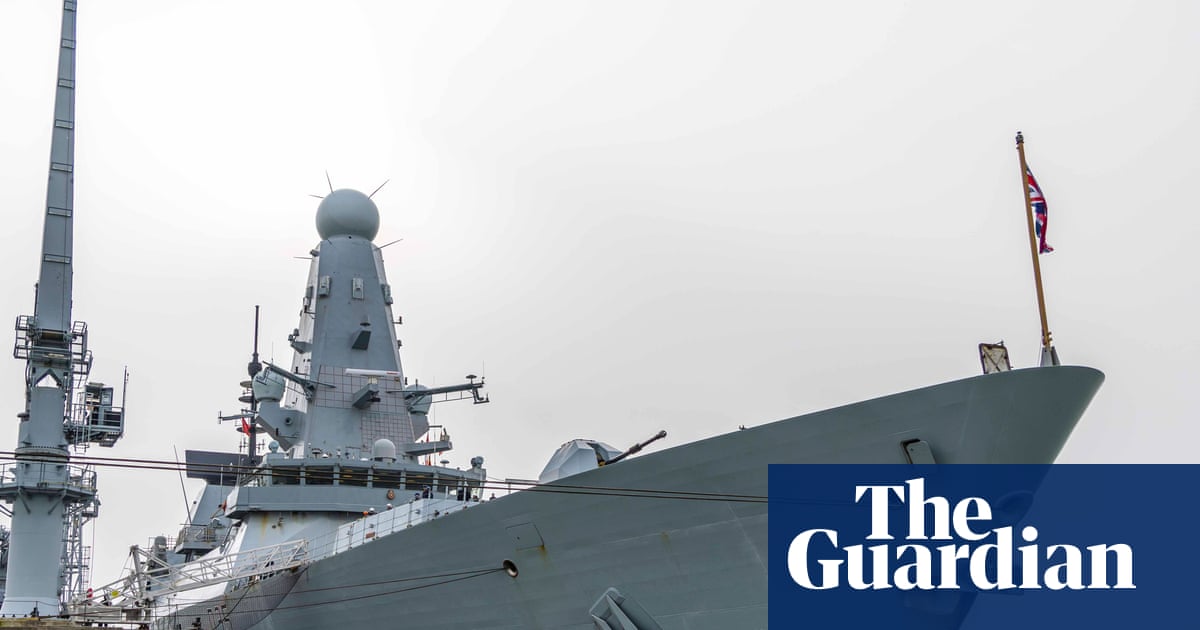
The Pentagon abruptly announced that the secretary of the US navy, John Phelan, would be leaving his job yesterday. No reason was given for the unexpected departure of the navy’s top civilian official, who had addressed a large crowd of sailors and industry professionals at the navy’s annual conference in Washington just a day before the announcement.
People familiar with the dynamics at the Pentagon told the Guardian Phelan was fired. Phelan had an increasingly rocky relationship with the US defence secretary, Pete Hegseth, and other senior staff.
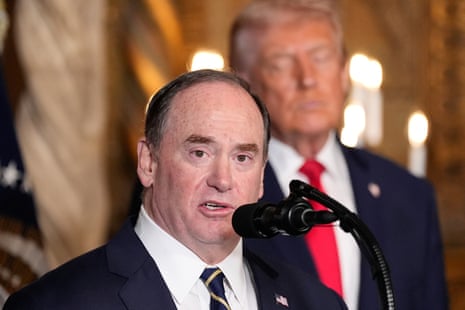
Phelan’s departure is the latest in a series of shakeups of top leadership at the Pentagon, coming just weeks after Hegseth fired the army’s top uniformed officer, Gen Randy George.
Phelan is leaving just as the US navy has imposed a blockade of Iranian ports and is targeting ships linked to Tehran around the world during a tenuous ceasefire in the Iran war.
You can read more on this story here:
The Israel Defense Forces (IDF) said its troops have captured a member of Hezbollah’s Radwan force, the most elite unit of the pro-Iran armed group, in southern Lebanon.
The IDF claimed the Hezbollah fighter was planning to carry out an attack on Israeli troops before he surrendered and was detained yesterday.
The Israeli military said it would continue to operate in what it called the “forward defence line” (or “yellow line”), an area deep inside southern Lebanon along the border with Israel.
The 10-day ceasefire that began on Friday has largely paused the war between Israel and Hezbollah that, since 2 March, has killed more than 2,400 people and injured more than 7,500 others, according to Lebanese health officials.
The Israeli defence ministry said it has bought $200m (£148m) worth of aerial munitions from arms manufacturer Elbit Systems.
The ministry said the deal for missiles and other weaponry for strikes and interceptions was part of “improving readiness for immediate combat scenarios and preparing for a decade of strong defences”.
A similar deal was signed between the ministry and Elbit for aerial munitions in January for $183m (£136m).
Interim summary
If you’re just joining us, here’s a recap of the latest developments in the Middle East to bring you up to speed.
-
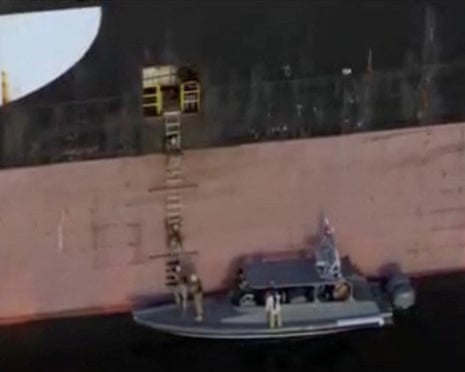
Iran’s Revolutionary Guards seized two vessels in the strait of Hormuz for what it called maritime violations and escorted them to Iranian shores, according to the shipping companies and Iran’s semi-official Tasnim news agency. Wednesday’s move was the first time Iran has seized ships since the war began in late February.
-
Donald Trump announced earlier that the US would extend the ceasefire with Iran until the country’s leaders came up with a “unified proposal” to US negotiating positions amid Tehran’s “seriously fractured” government. He had earlier threatened to renew bombing.
-
Trump was “satisfied” with the US naval blockade of Iranian ports and “understands Iran is in a very weak position”, White House press secretary Karoline Leavitt said. The US president had not set a deadline for Iran to submit a peace proposal, she said.
-
Iranian officials said they had not agreed to any extension of the truce, and criticised Trump’s decision to maintain the US naval blockade. Lead Iranian negotiator Mohammad Bagher Ghalibaf said a full ceasefire only made sense if the blockade was lifted.
-
The status of a two-week ceasefire – due to expire earlier this week – remained unclear and there was no sign of peace talks restarting.
-
The Pentagon said the US secretary of the navy, John Phelan, would depart the office “effective immediately”, without providing an explanation for his sudden exit amid the naval blockade.
-
The US-Israeli war against Iran is “starting to weaken Europe”, Turkish president Recep Tayyip Erdoğan has told his German counterpart.
-
Lebanon is reportedly planing to ask for a month-long extension of the soon-expiring ceasefire with Israel at a fresh round of talks between the countries in Washington on Thursday.
-
Iran has executed a man convicted of links to the exiled opposition group Mujahideen-e-Khalq and to Israel’s intelligence service, the judiciary’s news outlet Mizan said on Thursday.
-
Israeli strikes in southern Lebanon killed Lebanese journalist Amal Khalil and wounded a photographer accompanying her, a senior Lebanese military official and Khalil’s employer said. The death of Khalil, 43, brought the death toll to five people on Wednesday – the deadliest day since the 10-day truce between Israel and Hezbollah was announced on 16 April. Lebanese prime minister Nawaf Salam said Israeli targeting of journalists and obstructing relief efforts constituted war crimes. Israel’s military earlier denied it prevented rescue teams from reaching the area.
-
Oil prices leapt 4% on Thursday after Iran vowed not to reopen the Hormuz strait amid the US naval blockade despite the truce extension. The benchmark US oil contract West Texas Intermediate (WTI) rose 4.06% to $96.73 a barrel, while the international oil benchmark Brent North Sea crude climbed 3.62% to $105.63. Both eased back minutes after.
-
Two Palestinians, including a 14-year-old schoolboy, were killed in the occupied West Bank after Israeli settlers opened fire near a school amid mounting assaults on education in the territory, witnesses and local officials have said.
EU needs playbook on helping members under attack, says Cypriot president
EU leaders meeting in Cyprus on Thursday need to start preparing a playbook on what should happen if a member country facing attack puts out a call for help from bloc partners, the president of Cyprus said.
Nikos Christodoulides said EU leaders would discuss “giving substance” to article 42.7 of the bloc’s treaties, which oblige all 27 member states to assist each other in such times of crisis.
“We have article 42.7 and we don’t know what is going to happen if a member state triggers this article,” he told the Associated Press ahead of an EU-Middle East summit he is hosting later this week which is expected to focus on the Iran war and its fallout.
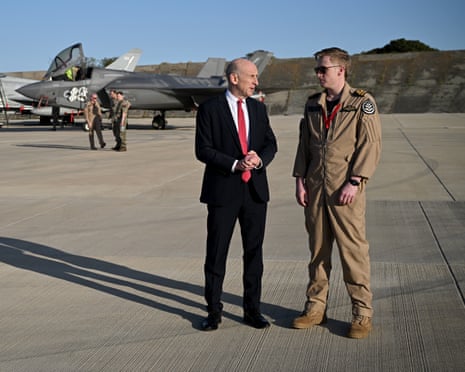
The issue resonates particularly with Christodoulides, who appealed for help from fellow EU countries last month when a Shahed drone struck the British air base RAF Akrotiri in southern Cyprus early in the Middle East war. Cypriot officials said the drone was launched from Lebanon.
Greece, France, Spain, the Netherlands and Portugal dispatched ships with anti-drone capabilities to help defend the island.
Christodoulides said he was pleased to see that fellow EU leaders now “understand the importance” of bringing the bloc closer to the Middle East with such initiatives as the Mediterranean Pact that implements specific projects on a range of issues including health, education and energy in Middle Eastern countries.
Attending the informal EU leaders’ summit later this week will be the leaders of Egypt, Lebanon Syria and Jordan, affording the opportunity “not just to exchange ideas but to see in action how we elevate our cooperation in a strategic level”, Christodoulides said.
Iran has executed a man convicted of links to the exiled opposition group Mujahideen-e-Khalq and to Israel’s intelligence service, the judiciary’s news outlet Mizan said on Thursday.
Mizan identified the man as Soltanali Shirzadi Fakhr, saying he had been a long-time member of the opposition group and was found guilty of cooperating with Israeli intelligence.
His death sentence was upheld by the supreme court and carried out after legal procedures were completed, Mizan added, quoted by Reuters.
Lebanon to request ceasefire extension at Israel talks
Lebanon is reportedly planing to ask for a month-long extension of the soon-expiring ceasefire with Israel at a fresh round of talks between the countries in Washington on Thursday.
Israel said ahead of the negotiations that it had no “serious disagreements” with Lebanon, calling on it to “work together” against the Iran-backed Hezbollah militia, which opposes the talks and is not taking part.
The two countries’ direct talks on 14 April were their first in decades and the US soon after announced the 10-day truce, which is set to expire on Sunday.
As in the last round, US secretary of state Marco Rubio will bring together Israeli ambassador Yechiel Leiter and Lebanese ambassador Nada Hamadeh Moawad, in the presence of the US ambassador to Lebanon, Michel Issa.
The US ambassador to Israel, Mike Huckabee, is now also expected to join the meeting, a state department official told AFP.
An unnamed Lebanese official told the news agency that Lebanon would request a month-long extension of the truce, as well as “an end of Israel’s bombing and destruction in the areas where it is present, and a commitment to the ceasefire”.
Lebanese president Joseph Aoun said on Wednesday that “contacts are underway to extend the ceasefire period”.
Most stockmarkets in Asia have fallen in response to the latest Iran war developments.
Tokyo, Hong Kong, Shanghai, Sydney, Singapore and Wellington are all down. But Seoul rallied more than 1% to a new record due to a fresh rally in the tech sector that has been the backbone of a surge in the Kospi index this year.
Taipei, Manila and Jakarta were also up.
Oil prices remain elevated, with Brent holding above $100 after a surge on Wednesday, although they pared Thursday’s initial gains.
Brent crude briefly jumped above $105 earlier today, before dropping to hover around $103.
Iran’s Revolutionary Guards released video footage earlier today purportedly showing their forces seizing two vessels in the strait of Hormuz.
The Islamic Revolutionary Guard Corps (IRGC) said it seized the vessels for what it called maritime violations, and escorted them to Iranian shores, according to statements by the shipping companies and Iran’s semi-official Tasnim news agency.
It is the first time Iran has seized ships since the war began at the end of February.
Tasnim said the IRGC had accused the two ships – the Panama-flagged MSC Francesca and Liberia-flagged Epaminondas – of “attempting to exit the strait of Hormuz covertly”.
At the White House, spokesperson Karoline Leavitt said Donald Trump did not consider the capture of the two container ships to be a violation of the US-Iran ceasefire because the vessels were not American or Israeli.
Leavitt said:
No, because these were not US ships, these were not Israeli ships. These were two international vessels.”
Opening summary
Welcome to our live coverage of events in the Middle East.
Iran has seized two ships in the strait of Hormuz a day after Donald Trump announced he was indefinitely calling off US attacks, while there is no sign of peace talks restarting.
The status of a two-week-old ceasefire – due to expire earlier this week – remained unclear. In an about-face hours after threatening renewed violence, Trump made what appeared to be a unilateral announcement on Tuesday that the US would extend the ceasefire with Tehran until it had discussed an Iranian proposal in peace talks to end the two-month war.
But Iranian officials did not say they had agreed to any extension of the truce, and criticised Trump’s decision to maintain the US navy blockade of Iranian ports. Lead Iranian negotiator Mohammad Bagher Ghalibaf said a full ceasefire only made sense if the blockade was lifted.
Iran’s Islamic Revolutionary Guard Corps seized two vessels on Wednesday for what it called maritime violations and escorted them to Iranian shores, according to the shipping companies and Iran’s semi-official Tasnim news agency – the first time Iran has seized ships since the war began in late Februar.
In other key developments:
-
Trump was “satisfied” with the US naval blockade and “understands Iran is in a very weak position”, White House press secretary Karoline Leavitt said. The US president had not set a deadline on Iran submitting a peace proposal, she said, after Trump on Tuesday said he was indefinitely extending the ceasefire at the request of mediator Pakistan until Tehran responded to the US’s negotiating positions or until talks were concluded “one way or the other”.
-
The Pentagon announced that the US secretary of the navy, John Phelan, would depart the office “effective immediately”, without providing an explanation for his sudden exit amid the naval blockade.
-
The US-Israeli war against Iran is “starting to weaken Europe”, Turkish president Recep Tayyip Erdoğan has told his German counterpart. Erdoğan said: “If we do not address this situation with an approach that prioritises peace, the damage caused by the conflict will be far greater.”
-
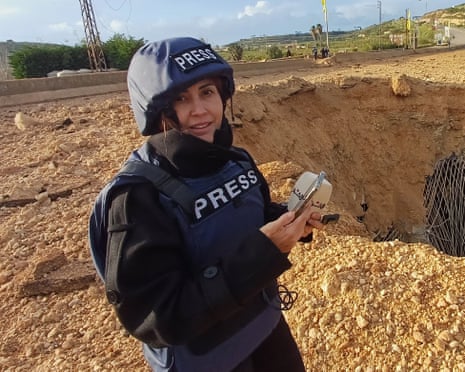
Israeli strikes in southern Lebanon killed a Lebanese journalist, Amal Khalil, and wounded a photographer accompanying her, a senior Lebanese military official and Khalil’s employer said. The death of Khalil, 43, brought the death toll to five people on Wednesday – the deadliest day since a 10-day truce between Israel and Hezbollah was announced on 16 April. There was no immediate comment from the Israeli military on Khalil’s death.
-
Khalil and freelance photographer Zeinab Faraj were covering developments near the town of al-Tayri when an Israeli strike hit the vehicle in front of them, Reuters reported. They ran into a nearby house that was then also targeted by an Israeli strike, said Lebanon’s health ministry. Lebanese prime minister Nawaf Salam said Israeli targeting of journalists and obstructing relief effort constituted war crimes.
-
Oil prices leapt 4% on Thursday after Iran vowed not to reopen the Hormuz strait amid the US naval blockade despite the truce extension. Around 0025 GMT, the benchmark US oil contract West Texas Intermediate (WTI) rose 4.06% to $96.73 a barrel, while the international oil benchmark Brent North Sea crude climbed 3.62% to $105.63. Both eased back minutes after.
-
Two Palestinians, including a 14-year-old schoolboy, were killed in the occupied West Bank after Israeli settlers opened fire near a school amid mounting assaults on education in the territory, witnesses and local officials have said.
-
United Airlines implemented broad-based rises of 15-20% on fares as it sought to offset the surge in petrol prices while protecting profits, executives said. The big US carrier has also cut its 2026 flying capacity by 5%.