.png) 3 months ago
76
3 months ago
76
Lloyds, Halifax and Bank of Scotland customers hit by app outage
Lloyds Banking Group has apologised to its customers after reports of an outage of its online banking services and apps.
The group has 26 million customers across Lloyds Bank, Halifax and Bank of Scotland. Users started reporting problems at around 11am, according to the online tracker Downdetector.
In a statement on X, Lloyds Bank said:
We’re aware some customers are having issues with our app and online banking. We’re really sorry about this. We’re working hard to fix it and will let you know as soon as we’re back to normal.
It is not the first time this year there have been problems with online banking at Lloyds. In March, the group personal data of nearly 500,000 customers in an IT glitch that left people’s payments, account details and national insurance numbers visible to other users.
Key events
Reeves optimistic on a "science supercluster" across Oxford and Cambridge

Heather Stewart
Rachel Reeves struck an optimistic note about the prospects for the UK creating a “science supercluster” across Oxford and Cambridge, as she announced new government backing for the scheme.
At a conference about the OxCam corridor, as she calls it, in Westminster, the chancellor said:
The talent is extraordinary, and the ambition in this room is extraordinary. If we get this right, working together, this corridor will not just compete globally, it will lead globally. We can do that together.”
She made several specific announcements, including Homes England buying a former airfield East of Cambridge to create new houses; and government funding for a new exit at Bletchley station, on the East-West rail line connecting the university cities and a string of towns in between.
Reeves also confirmed that a powerful development corporation would be created covering Greater Cambridge, to drive through development, calling it, “a delivery vehicle with the powers, the governance, and the mandate to unlock strategic sites and to accelerate growth,” and adding, “Cambridge has been waiting for this. The time for waiting is now over.”
Reeves said the government wanted to help innovative businesses “start, scale and stay” in the UK, and she would say more in the coming weeks about that.
She also highlighted a string of existing government policies, including streamlined compulsory purchase powers for local authorities to speed up building on blocked development sites. She said:
We want to work with landowners where we can, but when people are holding our country back, this government is not afraid to use those powers to ensure that our growth happens, and we will make sure that authorities that want to use these powers have the guidance that they need to do so.
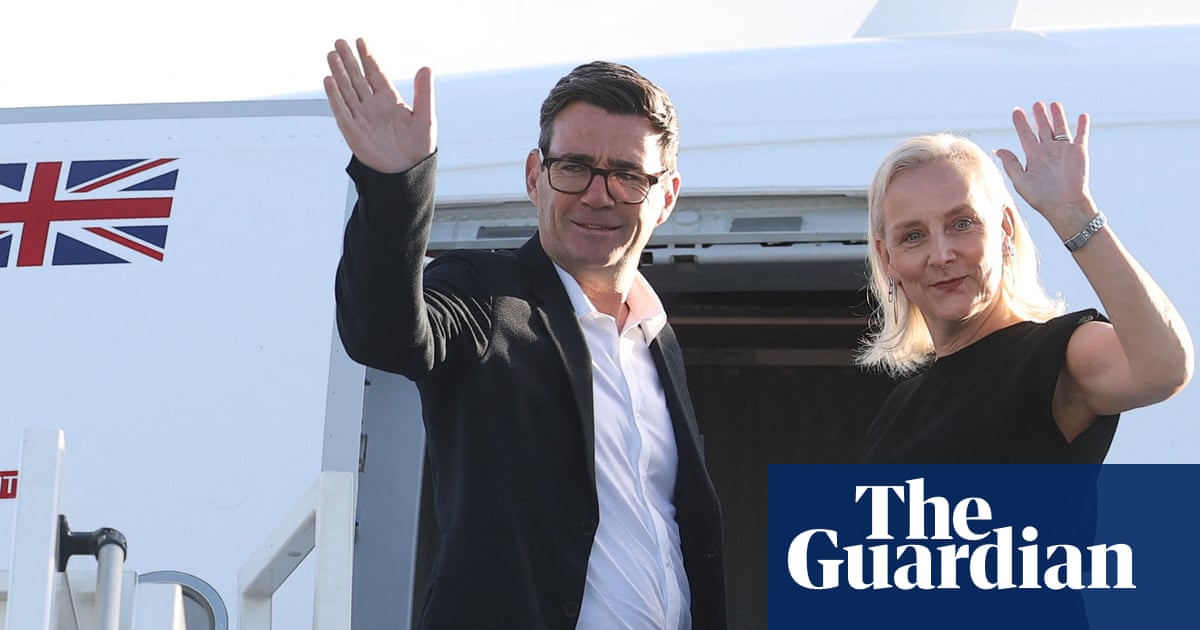
No mention was made of the potential for Reeves to be swept out of a job in the coming weeks and months, if Andy Burnham wins the Makerfield byelection and takes on Keir Starmer in a leadership contest. Her supporters are arguing that she should be allowed to stay in post to reassure financial markets.
Social media is awash with complaints from Lloyds customers who are unable to access their account to make either personal or business payments.
An error page on the Lloyds app reads:
Sorry, we’re having a few technical problems. Logging in again may fix the issue, but if this doesn’t help, please try again later.
There are more than 2,000 reports of issues with the online banking service at Lloyds on the tacker Downdetector – of these, 65% are about the app, 14% about login and 13% about online banking.
Lloyds replied to a customer on X who could not log into the app:
Sorry about this. Some customers are having issues with accessing our Mobile App right now. Bear with us as we fix this.
There are reports that the online service for Scottish Widows – the pension provider also part of the Lloyds group – is down. Problems also started at around 11am, according to Downdetector.
Lloyds, Halifax and Bank of Scotland customers hit by app outage
Lloyds Banking Group has apologised to its customers after reports of an outage of its online banking services and apps.
The group has 26 million customers across Lloyds Bank, Halifax and Bank of Scotland. Users started reporting problems at around 11am, according to the online tracker Downdetector.
In a statement on X, Lloyds Bank said:
We’re aware some customers are having issues with our app and online banking. We’re really sorry about this. We’re working hard to fix it and will let you know as soon as we’re back to normal.
It is not the first time this year there have been problems with online banking at Lloyds. In March, the group personal data of nearly 500,000 customers in an IT glitch that left people’s payments, account details and national insurance numbers visible to other users.
It is around midday now, and the UK’s blue chip FTSE 100 is still down a bit by 0.3%. The worst performer today is the asset manager ICG, with its shares down by about 5%. The distribution and outsourcing company Bunzl is the best, with its shares up by 3.8%.
The FTSE 100 will announce its next reshuffle today, based on yesterday’s closing prices – the London Stock Exchange has hinted that the housebuilder Berkeley, property portal Rightmove and packaging company Mondi are likely to lose their places, while IT reseller Computacenter, the asset manager Aberdeen and financial services firm Investec are expected to join the index.
Trump administration threatens extra 10% tariffs on 60 countries including UK
Donald Trump has threatened tariffs of between 10% and 12.5% on 60 countries including the UK, EU and Australia over alleged forced labour failures, in the latest attempt to revive his signature trade policy.
The allegations around forced labour enable Trump to skirt previous court-imposed limits on his protectionist agenda.
The US trade representative, Jamieson Greer, said:
The failure of our most important trading partners to address the importation of goods made with forced labor is unacceptable. This creates a dynamic where American workers are forced to compete globally on an unlevel playing field. We will no longer tolerate this disparity.”
The European Commission has said the EU “fully shares” US concerns about forced labour but “considers tariffs imposed on these grounds to be unjustified”.
Read the full story by Lisa O’Carroll here:
Currys appoints Fredrik Tønnesen as new CEO
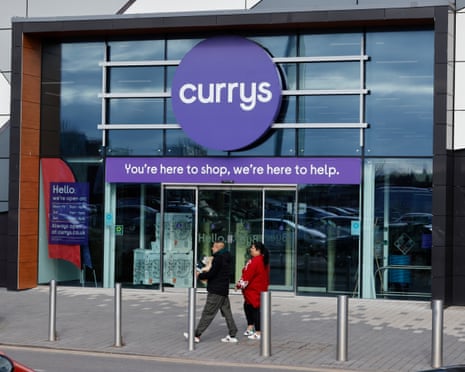
The retailer Currys has appointed Fredrik Tønnesen as its new chief executive, starting from 3 August.
The FTSE 250 company has promoted Tønnesen, who is currently head of its large Nordic business, to replace Alex Baldock, who announced in March that he would step down after eight years in the top job. Reports suggest he is expected to become the boss of Boots, as the pharmacy chain prepares for a potential stock market listing in London.
Tønnesen joined Currys 20 years ago as a sale assistant on the shop floor. He said in a statement:
I’m incredibly proud to be leading Currys, a company that I joined 20 years ago on the shop floor and know extremely well. This is a great business comprising thousands of capable and committed colleagues, and it is hugely exciting to take on its leadership at a time of such strong momentum.
My job, with the full support of the leadership team and all my colleagues, is to keep this momentum going and find every way to accelerate it. I can’t wait to get started.”
Chair Ian Dyson said:
I am delighted to welcome Fredrik as our next group chief executive. He has huge experience inside the business and has led an extremely impressive operating performance improvement over the last three years. He understands our customers, our colleagues and our culture from the inside, and brings the right combination of clarity, energy and leadership to take Currys forward, building on the strong foundations that Alex and the team have put in place.”
More data from S&P Global shows that euro zone private sector activity shrank at the fastest pace in 18 months in May, weighed down by weaker demand for goods and services.
Its composite PMI, which includes both manufacturing and services data, dropped to 48.5 in May from April’s 48.8, its lowest reading since November 2024. The headline services PMI rose slightly to 47.7 from 47.6.
Chris Williamson, chief busisness economist at S&P Global, said:
With business activity in the euro zone falling for a second successive month in May, it is looking increasingly likely that the economy will slip into contraction in the second quarter. The PMI data are indicating a 0.2% quarterly GDP decline barring any significant change in June.
UK services companies report first drop in activity in over a year
Companies in the UK’s services sector have reported a drop in business activity for the first time in more than a year, as pressure around the Iran war weighed on the industry.
The S&P Global purchasing managers’ index (PMI), which surveys hundreds of companies across the UK each month, said activity among firms working in the services sector fell to 49.3 in May, compared with April’s 52.7 –and the first fall in output since April 2025.
The services sector, which ranges from hospitality and retail to finance and IT, accounts for about 80% of the UK economy, meaning its performance has a significant effect on GDP growth.
Tim Moore, economics director at S&P Global Market Intelligence, said:
Subdued business and consumer demand, across both domestic and overseas markets, was cited as holding back performance.
Many service sector companies noted that the Middle East conflict had an adverse impact on sales pipelines and general business prospects. Those in the hospitality and transportation sectors typically commented on squeezed discretionary spending and pressure from sharply rising input costs, while professional services firms reported a setback from rising risk aversion among clients. Business investment spending on technology services remained a bright spot for parts of the service economy, however.
A rapid acceleration in input cost pressures has been the major challenge for service providers so far this year, driven by higher fuel prices and transportation bills. The overall rate of input price inflation did ease slightly in comparison to April, but it was still higher than at any other time since the energy crisis in 2022.
Worries about a prolonged spike in inflationary pressures, combined with elevated geopolitical tensions and subdued demand, continued to weigh on business activity expectations in May. The degree of optimism eased for the third time in four months, to its lowest since the US tariffs-related slump in April 2025.”
Matt Swannell, chief economic adviser at the Item Club, predicts the economy will continue to lose momentum and flirt with recession in the second half of the year. He said:
Rising energy bills and a deteriorating jobs market will squeeze households’ spending power further. Meanwhile tighter financial conditions, elevated costs, and prolonged uncertainty will lead businesses to postpone or cancel some investment plans.
…Firms are now facing much higher energy bills, but they also continue to experience heightened labour costs. Illustrating the trade-off currently facing the Monetary Policy Committee, companies are managing rising costs by both reducing headcount and pushing up consumer prices. We expect Bank Rate to be left unchanged for the rest of this year as it manages this dilemma, although risks are skewed towards tighter policy.
Oil prices rise after clashes between US and Iran
Oil pries are rising again this morning – Brent crude, the international benchmark, is up by about 2% to $98.8 a barrel after further clashes between the US and Iran last night.
Kathleen Brooks, of the broker XTB, says:
It is unclear if talks to end the war and reopen the strait [of Hormuz] are ongoing, but the latest developments suggest that investors may have been too quick to price in the impact from last week’s promised memorandum of understanding between Iran and the US.
As we enter the start of the fourth month of the conflict, there are clear signs that the energy price spike is becoming embedded in the global economy.
Jim Reid, of Deutsche Bank, notes that there is “increasing pessimism that a US-Iran deal to reopen the strait of Hormuz is imminent”.
New clashes took place overnight as US forces conducted strikes against Qeshm Island while Iran fired missiles and drones towards Kuwait and Bahrain, with the [Islamic Revolutionary Guard Corps] saying it targeted the US 5th Fleet headquarters in Bahrain. Meanwhile, further Israel-Lebanon talks are expected today, according to the US.
Prior to that, we saw little sign yesterday of concrete steps towards an imminent deal. For instance, Iran’s Mehr reported that ‘The final text from Iran is still under discussion in Tehran and no response has been sent yet’. Then later on, US secretary of state Marco Rubio said that when it comes to a deal ‘it could happen today, it could happen tomorrow, it could happen next week’.