.png) 1 month ago
50
1 month ago
50
In more than a decade as an MP, I have attended hundreds of meetings in parliament. Most pass. Some linger. Few stay with you. But a recent event was very different.
We hosted the actors, the real-life people they portrayed and the production team behind the Channel 4 docudrama Dirty Business. It tells the story of campaigners and families who have spent years fighting not just privatised water companies, but a system that was meant to protect them – and has too often failed.
At its centre is a mother, Julie Maughan, whose story is one of the most difficult of the series. Some years ago, her eight-year-old daughter, Heather Preen, died after exposure to polluted water. It’s the kind of thing that you read about from a distance and struggle to take in. You register it, and move on.
But there’s no distance when you are sitting a few feet away from Julie in a quiet committee room that suddenly feels very small. Or when you hear her sobbing as the room watches the TV clip of her daughter dying; her voice breaking as she speaks of the impact this unspeakable tragedy had on her and her family. It’s something I will not forget.
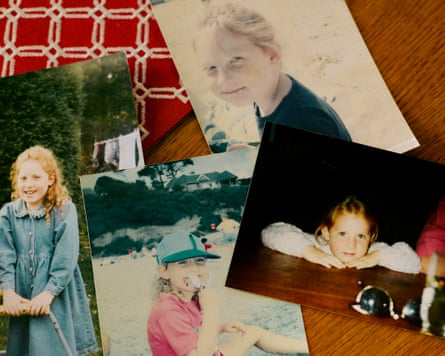
There was no performance, no grandstanding, no playing to the audience. Just grief, dignity and a quiet determination that no other family should go through what they had. At the end of the meeting, she came over to thank me for the work we have been doing to bring water back into public ownership. That moment cut through everything. Because statistics can be argued with. Stories like this cannot.
And so, in that instant, this stopped being about policy or process. It became something simpler: what kind of country allows this to happen? And what kind of country decides it will not allow it to happen again? These two questions define the scale of what this Labour government faces – and the standard by which a sceptical, exhausted electorate will judge it. People who have watched a political system promise and fail, promise and fail, until the promising itself becomes the insult.
It’s why I brought my private member’s bill on water ownership and why I have kept at it. Because the water industry doesn’t just expose a series of failures within one sector. It exposes something far larger and more damaging: the logic of a system that has run its course. A system that took our water, our housing, our energy networks, our care homes, our childcare – the things people cannot do without – and handed them to those whose obligation was never to us. That extracted profit from necessity. That made the most vulnerable corners of our lives into the most lucrative. That called this “efficiency” and told us the alternative was unthinkable. But it was never unthinkable. It was simply inconvenient – to those amassing vast fortunes at our collective expense.
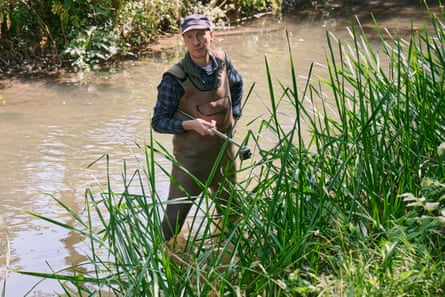
For more than three decades, our water industry has operated on a model that allows private companies to extract profit from a basic necessity while the public carries the risk. Bills rise. Investment falls short. Pollution becomes routine. Regulators are co-opted into collusion. This is what campaigners have called the “privatisation premium”: the extra cost households pay not to run the service, but to sustain a system built around debt and shareholder returns. A transfer of wealth from public to private, designed into the system itself.
Water is simply the clearest example. And that is why it matters. Because if we cannot get something as fundamental as water right, what does that say about the rest of our economy?
We have lived through austerity, the disruption of Brexit, the shock of Covid. And now, as conflict in Iran drives a new energy price surge through the global economy, millions of households face another wave of pressure on their living standards – one that will not be abstract. It will show up in bills. In services that no longer function. In a growing, justified fury that the system is not on their side.
This is the moment that should concentrate every progressive mind in government and beyond. Because what is coming is not just an economic shock. It is a political test. Incumbent centre-left parties across the world are about to discover whether the economic framework they inherited – the one written 40 years ago, the one that said privatise, deregulate, trust the market with the essentials of life – has any road left to run. The honest answer is that it does not.
The coming energy surge will not be absorbed quietly. It will sit alongside growing ecosystem collapse, deeper droughts, all driving living standards down for millions of people who have already absorbed too much.
The question for Labour is whether it responds by playing within rules that are visibly failing – managing the crisis, cushioning the edges, hoping it passes – or whether it uses this moment to make a different argument entirely. To tell the public, and if necessary the bond markets, that a fundamental reorientation of the economy isn’t reckless. Rather it’s essential. That an economic system under this degree of stress can no longer afford the luxury of price gouging on the essentials of life. That extracting shareholder returns from water, energy, care and housing is not a quirk to be regulated around. It is a structural problem that demands a structural answer.
Because these are not luxuries. They are foundations. Water. Food. Energy. Transport. Housing. Care. Education. Universal. Accountable. Democratic.
And if we’re asking more of people – as we will have to, including through taxation – we must be able to say with confidence that those foundations are run in the public interest. Not as an aspiration: as a fact.
The pressures people feel are not abstract, but nor is the politics those pressures are driving. The sense that decisions are made somewhere else, by someone else, in the interests of someone else – that is the space in which Reform UK is growing. The answer cannot be to mimic that politics. It must be to offer something genuinely different.
Campaigners have warned for years that the damage being done to our rivers and ecosystems runs far deeper than a series of regulatory lapses. This isn’t just pollution. It’s the slow degradation of the natural systems that underpin everything – and when those systems fail, it isn’t felt equally. Some pay with inconvenience but others pay a far higher price.
Julie Maughan, the grieving mother whose pain and strength so moved us all, knows that better than anyone. She should not have had to become a campaigner. She should not have had to fight for answers. She should not have had to carry that loss. If her story tells us anything, it is this: this is not just a policy failure. It is a moral one. And it is time we acted like it.
Labour must decide. Is it on the side of the electorate, or on the side of the water companies? Water companies do not have a vote. I know where my loyalty lies.
-
Clive Lewis is the Labour MP for Norwich South