.png) 3 hours ago
6
3 hours ago
6
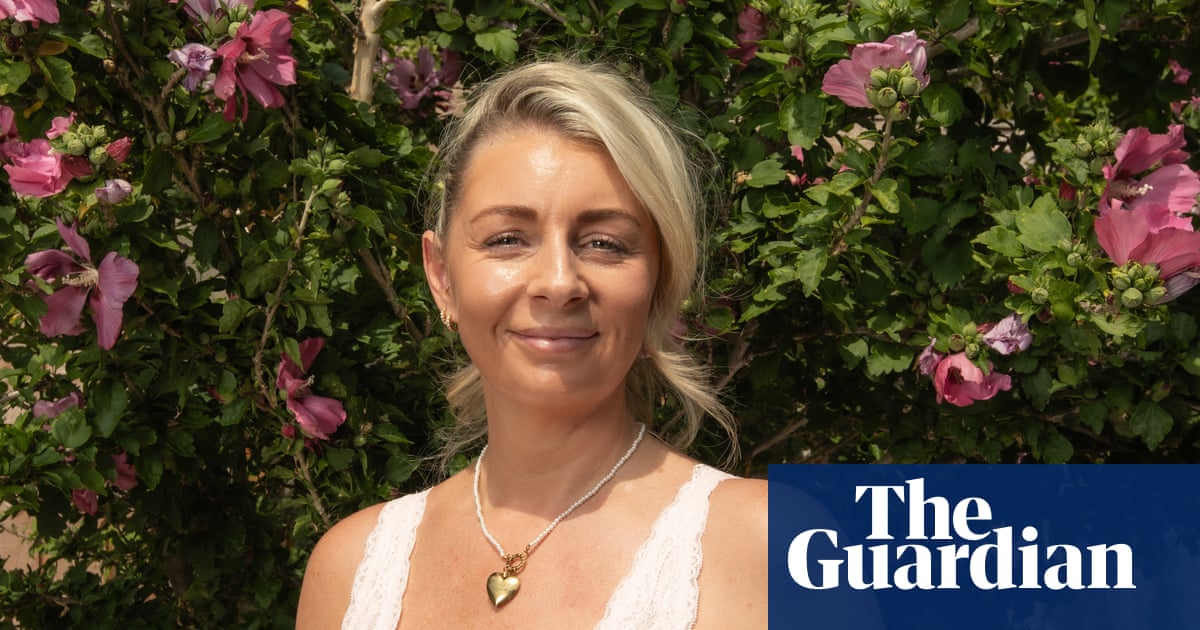
Born in Hamilton, Bermuda, in 1973 and raised in West Yorkshire and Somerset, Lena Headey is an actor, writer and director. She made her film debut in Waterland in 1992. Her career spans 300, Terminator: The Sarah Connor Chronicles and Game of Thrones, in which she played Cersei Lannister from 2011 to 2019, earning five Emmy nominations. Intimacy, which she writes, directs and stars in, is an eight-part comedy audio drama for BBC Sounds and Radio 4.
I was an OG onesie wearer. This was taken on Christmas Day in our house in Bermuda. My parents were in the police force, and for some reason one day the Yorkshire branch decided: “We’re all going to go to Bermuda for some training.” I don’t remember much from that time, but I know that it was hot, everyone had scooters, and that it was fun.
My mum says I was an independent kid. If my parents ever tried to help me, I’d shout at them: “Leave it, leave it, leave it!” I was playful and adventurous and liked to wander far from home. We left Bermuda when I was six and moved to Somerset, where my brother was born. Having police as parents didn’t make them rule-abiding or strict. Instead – being a kid of the 70s and 80s – they would go to work while us kids were allowed to do whatever we wanted. I had a feral decade, one full of dangerous things done outside, and I feel very grateful for it.
I had no ambitions to become an actor as a child, but I was obsessed with films and loved drama classes, mainly because they were the easy part of school. I found the academic side of learning difficult, but socially I survived. I had friends, and was always down for a good time.
From 11 to my late teens, I had a particularly difficult time mentally, to the extent that when I was 14 I ran away from home. I got on a bus to Birmingham to meet some older guys that I’d met on holiday. I had their addresses as we had sent letters to each other. What happened next? I smoked a bunch of weed, ran out of money and went back home. After that, my parents took me to the doctor. When he asked what was wrong, why I ran away, I said: “I don’t know. Everything just feels shit.” The doctor’s response was: “You seem depressed.” That was that, no further help.
When I started acting properly in my late teens, the whole world opened up and I felt much happier. I was 17 when our school entered a play into a competition, and we went to the National Theatre to perform it. They put our photographs up in the lobby, and some casting directors saw them and asked a bunch of us to audition for a film called Waterland. I didn’t have an agent, but I drove to London for the audition at the Groucho Club. I got the part and remember thinking: “Great! Now I get to leave school.”
Even though I was green and clueless, my memories of making that film are of joy and collaboration. The director, Stephen Gyllenhaal, was brilliant and the cast were all young and we got on with each other. On set, there was no hierarchy, no distinction between cast and crew – we were all in it together. On the other hand, I felt deeply vulnerable and uncomfortable being naked and pretending to have sex with another actor. Nothing’s changed – I’m still never the most enthusiastic with that side of the job. I don’t think any actor wakes up and goes: “Oh my God, today’s the day I get to wear a thong and shag someone.”
After Waterland I embarked on a decade of auditioning. Sometimes it was heartbreaking, and sometimes I’d nail a job and feel fantastic. But in general, my 20s and 30s were tough. I hadn’t found my own value as a woman and was trading on external, social value rather than who I really was.
Throughout my career, I’ve had great experiences in the industry, and some really bad ones too. I was lucky with Harvey Weinstein. He didn’t get his hands on me because his keycard didn’t work for the hotel room he had taken me to. I was young, cocky and drunk in our first encounter – and so when I realised what was happening I essentially told him to fuck himself. While I was fortunate nothing worse happened, I didn’t ever get another Miramax film after that. A decade and a half of possibilities disappeared. I felt I was blacklisted because I refused to do what he wanted.
I was 35 when I auditioned for Cersei in Game of Thrones. It was in a tiny room at HBO in LA. I put everything I had into it. Then I heard a phone go off – it was one of the exec’s. She got up and answered the call and left the room. I watched her walk out, and said: “Are you joking?” At that moment I thought: “I’m never getting this. I am obviously very uncharismatic and unengaging.” Turns out that is quite normal, and I was wrong.
after newsletter promotion
Game of Thrones threw me into visibility on a scale I hadn’t experienced before and it was a strange dynamic to contend with. The show ran for a decade of my life, one in which I went through a divorce and became a mother, twice. Even though I was in a big show and making money, and had financial security for the first time as an actor – and for the last time, it turns out – I was still wrangling with major life changes while being in the public eye. There were lots of weird moments, such as going on holiday with the kids, being half-naked in the sand and someone coming up to me and saying: “Can we do a quick video?” I’d have to say: “Nah, not really.”
Fame is not for me. I could employ a stylist and go to the opening of this and that. But I’m really lazy. I look at people who seem to get lots of work and opportunities and ask: “Why didn’t I get that job?” My agent will reply: “Well, if you did a bit more press or agreed to having a publicist, things might be different.” After that, I often think: “Nah, forget it.” The trade-off for having lots of work is that you have to get out there, always pushing to be seen. Which is tough when you have Jomo: the joy of missing out.
It’s often said that women become invisible when they reach midlife. While it is true, I’ve never liked being available; that feeling of shrinking under the weight of feeling scared and alone when you’re by yourself on a train or in a cab. I’ve had way more horrible experiences than what happened with Harvey, but that is life. My main takeaway is that I never, ever, want those things to happen to my children. The biggest stress of being a parent is wanting your children not to feel the same pain or disappointment or violence or sadness. When I’m out with my daughter, who is gorgeous and only 11, I see the power of her beauty in the eyes of men that really shouldn’t be looking at her. I hate it. So I don’t miss being leered at, at all. There’s a liberation to getting older.
When I see that photo, I wish that I could protect my younger self from some of the things she would go through. But I can’t. Instead, I’m appreciative that I can protect my girl instead.