.png) 2 months ago
53
2 months ago
53
Beyond the sequins, feathers and gold hotpants, the stories of the most enduring pop megastars tend to be ones of jaw-dropping grit and undimmable power. Especially when they’re women. So it is with Kylie: pint-sized seller of over 80m records, singer of two of the greatest pop bangers of all time (Can’t Get You Out of My Head and Padam Padam, obviously), and the reticent subject of this increasingly intimate and, finally, profoundly moving three-part Netflix documentary. What starts as a bog-standard run-through of Kylie’s ascent to superstardom – an excess of Pete Waterman, Neighbours clips and virulent 1990s sexism – ends with a disclosure that moves me to tears.
It comes in the final 10 minutes. It’s 2023: a euphoric high point in Kylie’s career. Padam Padam, the first single from Kylie’s 16th album, Tension, has just been released. Then the words “One More Thing” flash across a black screen. Cut to present-day Kylie arriving at the studio, singing songs from Tension with her longstanding team of British songwriters. “There’s a song called Story … ” she says to director Michael Harte (also the editor of Netflix’s Beckham), who shot the documentary over two years. Kylie, who is notoriously private, falters. Her songwriting partner of more than 25 years, Richard “Biff” Stannard, takes her hand. She starts to cry as she divulges what Story is really about: her second cancer diagnosis, in early 2021.
“I was able to keep that to myself and go through that year,” she says, “not like the first time. I’ve been trying to find the right time to say it. I don’t feel obliged to tell the world, and I just couldn’t at the time because I was just a shell of a person … Thankfully, I got through it. Again.” It’s a genuinely raw, real moment, neither of which are words generally associated with pop’s top tier. Or, for that matter, the fawning and micromanaged documentaries made about them.
The start of that fiercely embargoed episode covers what happened when Kylie was diagnosed with cancer the first time, in 2005, when she was 36. There was the surge in mammogram bookings, dubbed the “Kylie effect”; but also the devastation experienced by her family, relentless press intrusion and her grief at not being able to have children. She talks about postponing her chemo to go through IVF. Dannii Minogue, a regular talking head in Kylie, recalls the fear that her sister would “never be well again – is she going to live through this? I felt so helpless.” The closeness of the Minogue family comes across strongly, as does their reluctance to be on film. “We’ve never done anything like this before,” says Kylie in one of the film’s regular nighttime chats around the bonfire. “It’s not as scary as I thought it might be.” “I think it’s because we’re in the dark,” says her mum, off camera.
Episode one, which opens with Kylie travelling to London in 1987 to record her first single, is less engaging – and more revealing of the times than the icon in the making. Waterman says he didn’t have a clue who “the small antipodean in reception expecting to make a record” was. They bashed out I Should Be So Lucky in 40 minutes, according to Kylie. Actually, Waterman says, it took two hours. Only later did he discover she was in Neighbours, by then a phenomenon. Oh, but apparently he had no idea what Neighbours was either …
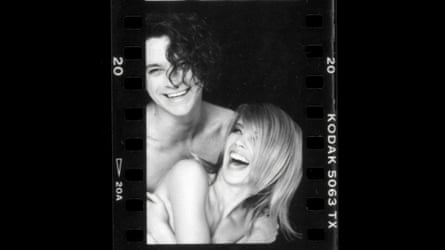
Jason Donovan recalls how, as Minogue rose to fame, he would get in to cabs and be asked “How’s Kylie?”, and replying: “Fuck, I don’t know, go and fucking ask her!” Michael Hutchence, for whom Kylie left Donovan, is a key figure. She breaks down recalling the significance of her relationship with this “hilarious, cultured and tender” man, confessing that: “I’ve probably been looking for something like that ever since … and I haven’t got it.”
Then came the years of abuse, when Kylie was labelled the “singing budgie” and written off as talentless and dull. “Raunchy”, a word dripping in 90s misogyny, was how she was endlessly described. She speaks about how deeply those “wilderness years” affected her. Only her gay fans remained, a loyalty she has never forgotten and continues to return.
What emerges, less through the sometimes stilted interviews with Harte and more via the archive footage, is Kylie’s sunny disposition, vitality and her immense struggle to become what she always was at heart – a magnificent pop star. Nick Cave, whom she met in the mid-1990s when they recorded the sublime murder ballad Where the Wild Roses Grow, is devilishly accurate in describing Kylie’s unique force for good as a “joy machine”. “The definition of joy is the capacity to rise out of suffering,” he says, reflecting on her powerhouse performance in Glastonbury’s teatime “legends” slot in 2019. “Her connection with the audience is not phoney,” he says. “It’s very real for her. It is a true form of love.” It was Cave who inspired Kylie to abandon her failing attempts at indie in the late 1990s and embrace her inner pop spirit. “You’ve got the coolest guy on the planet saying: ‘Where are the pop tunes?’” she says. “Right, let’s get the jetpacks on and get back to the dancefloor!” What followed was one of the most celebrated comeback singles in pop history. This is my favourite revelation in Kylie: Cave, rock’s prince of darkness, inspired the princess of pop’s Spinning Around.