.png) 1 month ago
57
1 month ago
57
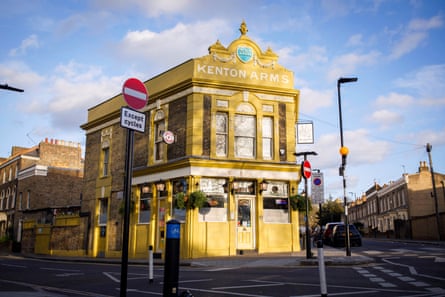
“It was like the wild west. If you had an hour, I could talk you through so many scenarios,” says Egil Johansen, the landlord of the Kenton pub in Hackney, east London. He sounds exhausted just remembering them.
Johansen is still shaken by the three-year-old who recently toddled behind the bar and tumbled down the cellar hatch while his parents sat, oblivious, in a different part of the pub.
He is also still angry about the five-year-old who “came out of nowhere” and careered into a member of staff carrying a tray of drinks, sending the glasses crashing to the floor.
And he is equally outraged by the audacity of the six parents who brought 10 children in after a birthday party, all high on sugar and excitement, and proceeded to ignore their offspring as they bounced off the walls.
“In every case, the parents blame us when something goes wrong or get really angry when we ask them to control their children,” says Johansen, who has run the pub for 17 years. “But I’m legally obliged to keep children safe on my premises and if the parents let their children run riot, the only answer is to not allow them in at all.”
Johansen has finally had enough. After the failure of an interim measure that he had hoped would be the solution – banning children after 5pm – he has now banned children entirely.
Online debate has framed Johansen as the baddie in this scenario. But, if anything, he just sounds sad about the situation. “I’m a publican; I’m a people-person,” he says. “It gives me no joy to ban anyone, but it’s just not safe: parents don’t control their children and our other customers were beginning to go elsewhere. I had no choice.”
While the Kenton’s decision has proven controversial, it is far from unique. His pub has become one of a growing number that see an opportunity to appeal to drinkers in rejecting the increasing tendency for pubs to resemble soft play centres without the ball pit.
But while some welcome the development, others – usually parents – see it as a declaration that they are not welcome and Johansen has found himself in a beer-based culture war.
On the other side of the battle lines is Lee Jones, the landlord of the Brewers Arms in West Malvern, Worcestershire.
Jones reversed the previous landlord’s ban on children. “We’re dog-friendly, child-friendly, adult-friendly,” he says. “We’re just friendly – we don’t distinguish. Pubs are for the community and I don’t see bans in the spirit of what we’re here for.”
Jones’s customers sound less challenging, however. “If children do get a bit rowdy, we just have a polite word with their parents. But that’s very rarely needed,” he says.
Landlord Stephen Boyd, from the Alma in south London, could only dream of such ameliorative parents.
“When I took over the pub, we wanted to attract young families but it turned out that we didn’t realise what it was we were getting ourselves into,” he says.
Boyd found families with children often took up a disproportionate amount of time over their lower-price kids’ orders; wanting detailed discussions about ingredients, different meals prepared and adapted drinks.
“It’s not that anyone was being particularly unreasonable, but there were just so many requests: diluted drinks – heated up but not too hot. Babyccinos. Dishes without mushrooms, onions, salt. And all the time, adult customers who were paying full price were waiting longer for their orders,” he says.
Children were beginning to rule the roost. “You just need a couple screaming, banging on a table or running up and down, and it dictates the whole atmosphere of the pub,” he says. “Parents would take massive umbrage if staff asked them to stop their children doing something.”
When Boyd took the leap and banned children, he says it was a “fucking revelation”.
“All the stress just disappeared overnight,” he adds. “Staff retention is up. Takings have doubled. I just wish I’d done it sooner.”
Boyd admits, however, that the backlash had taken a bit of the shine off his relief. “I got a lot of online hate,” he says. “Mainly from people who had never been to the pub but felt I was doing something morally hateful.”
Tom Stainer, the chief executive of the Campaign for Real Ale, gives an involuntary snort of laughter when asked if the child-free pub debate can become heated. “This topic can certainly be a very live one,” is the diplomatic response he settles on.
Stainer admits he would prefer to see all pubs welcoming all customers, no matter what their size.
“But you do have to look at the responsibility of the parents in these situations, not just at the pubs,” he says. “They’re the ones responsible for making sure that their children behave.”
It’s not always just about behaviour, however. Mandy Keefe, the landlady of the Wheel Inn in Ashford, made the decision to ban children from her pub partly for behavioural reasons, but also financial ones.
“I’ve had people saying that I’m doing myself out of business, but I have a full restaurant every Sunday. If a third of those were children eating from a reduced-rate child’s menu and not drinking any alcohol, that wouldn’t be financially viable,” she says.
Across the country there is no single approach, only a series of individual decisions, taken pub by pub. But as Johansen knows better than most, it only takes one child behind the bar – or down a cellar hatch – to settle the question for good.