.png) 3 months ago
100
3 months ago
100
The streets of Islamabad were on strict lockdown as Pakistan’s capital prepared to play host to historic negotiations between Iran and the US that have dangled the promise of an end to war that has devastated the Middle East.
Even as the US-Iran ceasefire looked increasingly precarious, amid Israel’s continued bombardment of Lebanon and disputes over the terms of the talks, Pakistani officials insisted that the make-or-break peace negotiations would be going ahead over the weekend as planned.
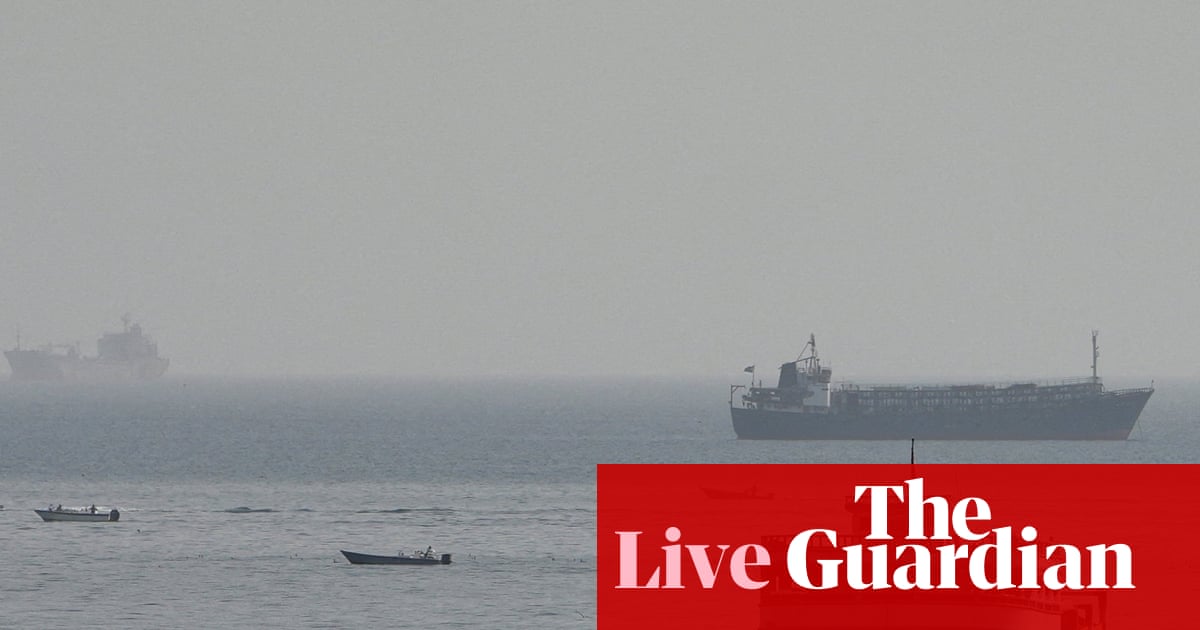
The conflict, which began when Israel and the US attacked Iran in late February, has left thousands dead and caused global economic devastation. Iran’s retaliatory blockade of the critical shipping route, the strait of Hormuz, has led to a global shortage of oil and gas and triggered the worst energy crisis in history.
It was Pakistan’s mediation efforts on Tuesday night that finally pushed the two warring countries to agree to a two-week ceasefire, after US president Donald Trump had threatened that a “whole civilisation will die” if Iran did not meet his demands.
As part of the ceasefire deal, the two sides agreed to meet in Islamabad for talks to negotiate a lasting peace, which was seen as a resounding diplomatic victory for Pakistan.
However, critical questions remain over the ceasefire and the basis of the talks. While Iran and Pakistan stated that the ceasefire included Lebanon, the US and Israel have since insisted that is a separate issue. Iran’s president, Masoud Pezeshkian, has said that any peace negotiations would be “meaningless” if they took place as bombs continued to fall on Lebanon.
According to Iran’s deputy foreign minister Saeed Khatibzadeh, Pakistan’s interventions to maintain the peace and protect the fragile ceasefire had continued behind the scenes. Khatibzadeh claimed that Pakistan had intervened to stop Iran retaliating against the strikes on Lebanon.
Ahead of the first round of discussions in Islamabad, which are due to take place on Saturday, army personnel and paramilitary rangers were deployed and security was beefed up across the capital. A public holiday was declared on Thursday and Friday and the streets were eerily empty.
Pakistani officials remained tight-lipped about the arrangements for the negotiations, citing security and diplomatic concerns, but said the preparations were full steam ahead.
“Our priority is that the talks go smoothly,” said one official involved in the arrangements. “We don’t want to be seen as a spoiler. Our role is as a facilitator and mediator. We will leave it to both parties, Iran and the US, to share any developments with the media if they want.”
The official confirmed that the key delegations were due to arrive on Thursday night and Friday morning. On the US side, the White House confirmed their negotiating team would be led by vice-president JD Vance, with special envoys Steve Witkoff and Jared Kushner also travelling to Islamabad.
Iranian officials said their delegation would include foreign minister Abbas Araghchi and parliament speaker Mohammad Bagher Ghalibaf, who were both part of the ceasefire negotiations. Senior figures from Iran’s revolutionary guard are also expected to attend.
Officials said that delegations from Gulf countries, including Qatar and Saudi Arabia, which have faced heavy bombardment from Iran since the war began, would also be travelling to Islamabad and may take part in sideline talks.
Due to the high security risks involved, Pakistani officials confirmed that there were three to four possible venues being lined up for the critical meeting between Iran and the US.
The most high-profile attenders are expected to stay in Islamabad’s exclusive five-star Serena hotel, which may also play host to the talks. The hotel was cleared of its guests and the surrounding 3km of roads were shut off to cars and put under army control. Other possible venues cited by officials were the prime minister’s secretariat, Islamabad’s convention centre or a secure military location.
Officials said there was no set timeline for how long the talks would take. However, guests who were evicted from the Serena hotel on Wednesday were informed the hotel would be occupied until Sunday night.
In a meeting on Thursday between prime minister Shehbaz Sharif and Pakistan’s army chief, Asim Munir, who was credited with helping to broker the ceasefire, the pair “expressed satisfaction over the de-escalation achieved so far”.