.png) 2 months ago
65
2 months ago
65
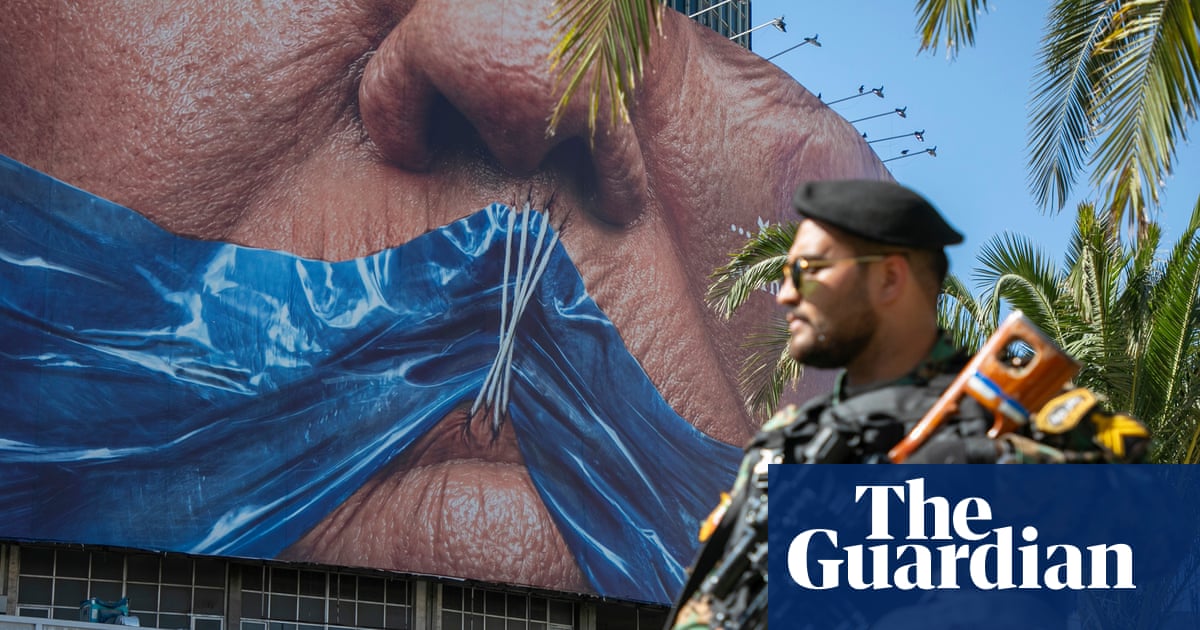
When Mojtaba Khamenei was named Iran’s new supreme leader, many observers reacted with surprise. For decades, the son of Ayatollah Ali Khamenei had been a shadowy figure in Iranian politics, rarely seen in public and almost never heard speaking.
He has never given interviews, has held no elected office and appears publicly only on rare ceremonial occasions. Even among political insiders, knowledge of his views is fragmentary. What little is known about him consists of scattered anecdotes: brief involvement in the Iran-Iraq war as a young man, occasional appearances in political circles and a long association with figures inside Iran’s security establishment.
And yet, at one of the most consequential moments in the Islamic Republic’s history, he has been chosen to lead it. The decision tells us less about Mojtaba Khamenei himself than about the wartime logic now shaping Iran’s ruling system.
His selection sends a message of defiance to the US and Israel. After the assassination of Iran’s supreme leader and members of his family in the opening phase of the US-Israel war, the Islamic Republic has chosen continuity over uncertainty. The symbolism is unmistakable: the state will survive the killing of its leader and will continue to be led by a Khamenei.
But beneath that symbolic message lies a deeper institutional reality about how power actually works in Iran. The Islamic Republic was founded on explicit rejection of hereditary rule. Ayatollah Ruhollah Khomeini, who led the 1979 revolution, denounced monarchy as “abhorrent to Islam”, and the new system defined itself in opposition to the dynastic politics of Iran’s past.
For decades, the idea that the supreme leadership might pass from father to son was widely seen as politically dangerous. Even Ali Khamenei himself reportedly dismissed the possibility. Under normal circumstances, Mojtaba Khamenei would therefore have been an unlikely choice. His public profile is minimal, and he lacks the scholarly reputation traditionally associated with senior Shia clerics. But these are not normal circumstances.
Iran’s leadership is operating under wartime conditions. In that environment, the regime’s priorities have shifted from ideological consistency to survival and continuity. Choosing another Khamenei projects stability at a moment when Iran’s adversaries hoped the state might fracture. The message is simple: the system lives on.
The logic of Mojtaba Khamenei’s selection becomes clearer when viewed through the institutional evolution of Iran’s system of rule. The doctrine of velayat-e faqih, or guardianship of the jurist, originally rested heavily on the charismatic religious authority of Ayatollah Khomeini. But over time, that authority became increasingly institutionalised.
By the late 1980s, the system had been reshaped so that the office of supreme leader could function even if the individual occupying it lacked Khomeini’s religious stature. In practice, the real foundation of the supreme leader’s authority gradually shifted away from clerical scholarship and toward control of the state’s coercive institutions.
At the centre of that power structure stands the Islamic Revolutionary Guard Corps. For years, Mojtaba Khamenei has operated within this security apparatus. He cultivated close ties with elements of the Revolutionary Guard and its intelligence branches, building networks of loyalists inside the institutions that ultimately guarantee the survival of the Islamic Republic. In other words, his authority does not derive primarily from religious charisma. It derives from institutional muscle.
Understanding Mojtaba Khamenei’s rise also requires recognising the heterodox character of the Islamic Republic itself. Traditional Twelver Shiism historically discouraged clerics from direct involvement in political rule. The Islamic Republic broke sharply with that tradition by placing a cleric at the apex of the state.
Since then, religious doctrine has often functioned less as a fixed theological framework than as a political instrument adapted to the needs of the regime. Within that system, legitimacy is constructed as much through state power and narrative framing as through classical religious authority. From this perspective, Mojtaba Khamenei’s lack of clerical stature is less a disqualifying factor than many outside observers assume.
What matters is whether the institutions that sustain the Islamic Republic – the security services, the Revolutionary Guard and the broader state apparatus – accept his leadership. For now, there are strong indications that they do.
In the short term, Mojtaba Khamenei’s leadership may therefore produce a degree of stability. A figure embedded within the security establishment is well positioned to maintain control of the coercive institutions that underpin the regime.
But that does not mean the transition is without risk. Dynastic succession runs directly against the revolutionary ideals that originally legitimised the Islamic Republic. Over time, it could provoke resistance within parts of the clerical establishment and deepen factional tensions among Iran’s political elite. The system may be able to manage those tensions during wartime, whether it can do so over the longer term remains an open question.
What is far less uncertain is the direction of Iran’s broader strategic posture. Mojtaba Khamenei’s rise is unlikely to produce a dramatic shift in the Islamic Republic’s foreign policy. The core strategic paradigm established under his father – emphasising resistance, deterrence and economic self-reliance – remains deeply embedded in the state’s institutions. If anything, the trauma of war and assassination may reinforce that outlook.
The Islamic Republic was built to survive external pressure. By choosing the least expected successor, Iran’s ruling establishment appears determined to prove that it still can.
-
Sina Toossi is a senior non-resident fellow at the Center for International Policy, where his work focuses on US-Iran relations, US policy toward the Middle East and nuclear issues