.png) 11 hours ago
10
11 hours ago
10
Elon Musk’s long interview with the editor of the Economist is as good a representation as any of the current clash between two worlds. In one corner, the editor of an 182-year-old news organisation which promotes economic liberalism and freedom. In the other, the world’s first trillionaire, who spreads misinformation to his hundreds of millions of followers on his own social media platform. The bout is a masterclass in the challenges journalists face in a new world of AI, fact avoidance and online aggression.
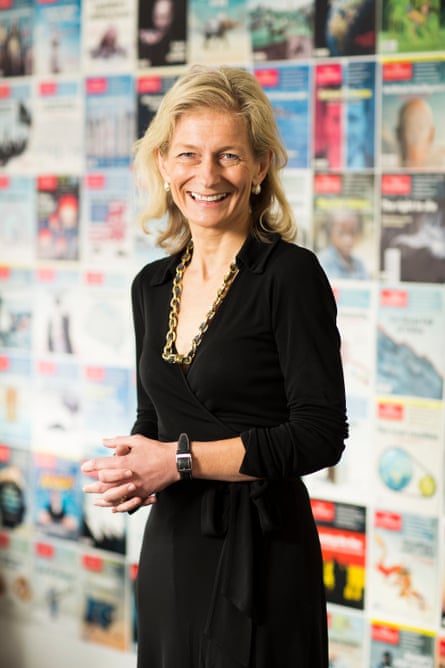
The flash points in Zanny Minton Beddoes’ conversation with Musk start with definitions. Musk says that the people Minton Beddoes calls “far-right” and “fringe” (she mentions Germany’s AfD party) are in fact just “normal people”. They clash over whether the speed of his cuts to USAID led to unnecessary deaths in developing countries – she believes his claim that it didn’t defies not only statistics but the evidence from her reporters on the ground. Asked if he is racist, he cites the fact he has four children with a woman who is “half Indian”. In an awkward exchange, when asked by Minton Beddoes whether he is anti-Muslim, Musk says he is against “people coming to a country with antithetical views … I’m against rape and murder.”
The tone shifts when Minton Beddoes accuses Musk of spreading misinformation about Europe and particularly her home town, London, telling him that the statistics show that it is a safer place to live than most large US cities. She appears genuinely irritated that he rejects all evidence that violent crime is far lower than he says and grooming gangs are not terrorising the streets. After she asks if he understands why this makes people loathe him, it becomes a playground spat. Musk points out that with so many followers on X, he must be popular. Besides, “they hate you far more than they hate me”. She admits to the media losing trust.
The exchange says a lot, not just about both participants and what they believe in, but also the state of our current media ecosystem. To use the metaphor of the summer, if the interview were a Homeric quest, the editor would be trying to get back to a place of truth and safety while Musk would be the angry sea god unleashing violent storms and monsters after the challenge was seemingly over.
That dynamic was mirrored in the response. The interview appears to end with the two agreeing to disagree; they even continue to chat while Musk has his photo taken. When Minton Beddoes promoted the interview on X, Musk then reposted it, adding “zany interview with Zanny”. She liked this so much she reposted his repost. After some of his followers posted rude things about the media he piled in on “the reality distortion nightmare mirror that is the legacy mainstream press”. By the weekend, he was calling her a “traitor to the west”. On Thursday, she confessed to being “bemused” but not scared by the “more and more aggressive” response. She has learned not to look at online comments, she told Radio 4’s Media Show. “If you scroll through them and read hundreds of things saying how awful you are, it’s not very pleasant, so don’t do it.”
It seems particularly timely to see what lessons can be learned from all this, given the latest government-backed investigation into the safety of journalists found that many admitted to self-censoring reports on contentious issues such as rightwing protest for fear of being attacked. Throwaway vitriolic comments about journalists are directly linked to increased aggression online and off, the report found. Female journalists bear the brunt of this aggression.
The shift to online and video journalism, the increasing celebritification if you will, has made more journalists identifiable, and therefore afraid for their safety. Again, Minton Beddoes is a great example of this given that the Economist, famous for the anonymity of its writers, has recently moved into far more video content. The Insider – the platform on which she interviewed Musk – is a weekly interview launched last September; guests have included Benjamin Netanyahu and Tucker Carlson, so Minton Beddoes is no stranger to combative subjects.
Musk’s view of truth is the reason the exchange feels more important than similar confrontations. Asking powerful people questions and continuing to try to find the answers even when they react badly is the essence of what journalism is. In her short response to newsletter subscribers this week, Minton Beddoes promised to double down on the issues raised in the interview. She told them to look forward to new reports examining the facts surrounding the impact of shutting down USAID, the number of victims of grooming gangs in Britain and the amount of violent crime in European cities – all topics she had clashed with Musk over.
The news business has not always behaved as ethically as it should and trust levels are at an all-time low and falling across the developed world. But data and on-the-ground reporting are the only ways to beat misinformation. You can claim that it’s just too dangerous to walk around in Britain, as Musk did – despite having not visited for several years – or you can find the data which suggests that homicide rates in general and even knife violence crimes are far lower than in major US cities, as the Economist did in a social video liked 73,000 times.
after newsletter promotion
Ownership of his own platform and infinite riches may give Musk a loudspeaker, but this old-fashioned reporting is the kind of public service the world needs. Especially if Musk really is the Cassandra he says he is and artificial intelligence is going to best humans within a decade, making it even harder to keep a firm hold on reality.
-
Jane Martinson is a Guardian columnist. She is a board member of the Scott Trust, which owns the Guardian Media Group. As the Marjorie Deane professor of financial journalism at City St George’s, University of London, she has a connection through a charitable foundation to Zanny Minton Beddoes, who is chair of trustees. She writes in a personal capacity
-
Do you have an opinion on the issues raised in this article? If you would like to submit a response of up to 300 words by email to be considered for publication in our letters section, please click here.