.png) 1 month ago
41
1 month ago
41
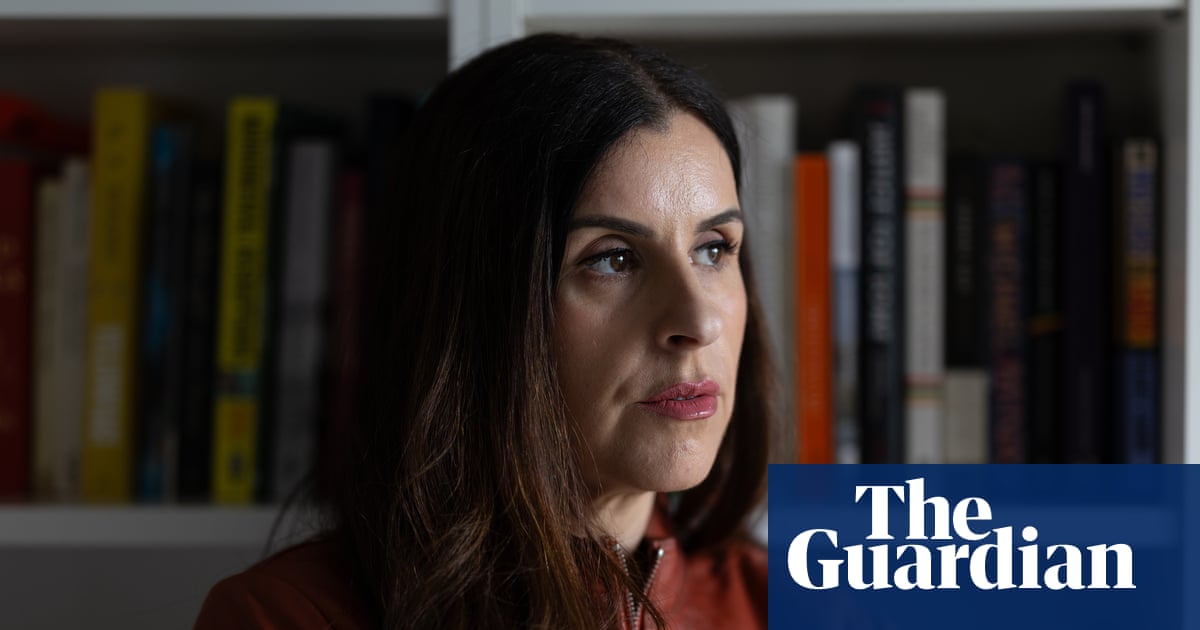
When Brooke Nevils’ allegations about the former NBC anchor Matt Lauer, one of the most powerful TV stars in the US, became public in 2019, she found herself reading comments about herself online.
Nevils, formerly a producer at NBC, had alleged in Ronan Farrow’s book Catch and Kill that Lauer had sexually assaulted her in his hotel room, after an evening drinking while covering the 2014 Winter Olympics in Sochi, Russia. Back in New York, there were other incidents – she went to his apartment, where she says it happened again. In his dressing room at the NBC studios, Nevils claims Lauer pushed her down and forced her to give him oral sex. Lauer has consistently denied Nevils’ allegations, in an open letter describing it as an “extramarital affair”. Lauer maintains that Nevils’ account is “filled with false details” creating the impression that the encounter was abusive. No charges were ever brought.
The online comments said it sounded more like a relationship she regretted, or that she was angry that Lauer had ended their “affair”. She said she had sent him friendly emails and messages after the alleged incidents; she had gone to his apartment twice. It defied common sense – although Nevils’ new book, Unspeakable Things: Silence, Shame and the Stories We Choose to Believe, is an exercise in challenging our idea of “common sense”.
The question she had was: “Why do we think like this?” Unspeakable Things is a painstaking unravelling of the difficulty of defining “consent”, the inherent dangers in power imbalances and, for victims, the behaviour and self-delusion that double as self-protection – and are a gift for defence lawyers. Her book is an account of the “grey areas” in rape and sexual assault; as Nevils reminds us, most rapes and sexual assaults are not committed by strangers in alleyways. Even if you are the sort of progressive person who believes women are not “asking for it” if they are drunk or wearing certain clothes, you may find it hard to believe why someone who claims they were assaulted would be alone, again, with the person they are accusing. Nevils doesn’t flinch from this – it is one of the many questions she has asked herself over and over.
Writing the book, she says with a weary smile over a video call, felt at times “like an act of insanity. I was trying to move forward and then I would spend hours a day reliving this and embedding myself in this mindset that I was trying so hard to not be in any more.”
As a journalist, it gave her some detachment. She interviewed many professionals who work in this area, including sexual violence researchers and forensic psychologists. “It gave me permission to look at it with brutal honesty and to ask myself: are you really being honest?” She is painfully hard on herself and excavates the contradictory and confusing feelings – the way she is flattered, for instance, by Lauer’s attention – that make her case, and others’, so difficult to view clearly. “I read the Reddit threads about myself. That was an exercise in emotional torture, but it really helped me understand how people see these issues and why juries have such a hard time understanding why victims react the way they do, why perpetrators behave the way they do and why it’s such an uphill battle to handle these stories.”
Nevils thought she knew how people reacted in the aftermath of sexual violence. “We’ve been led to believe these things from the media, from how we see sexual assault portrayed in these stereotypical stories. It’s only if we can dismantle them and understand how to navigate the grey area that we really have any hope.”
Nevils untangles how victim behaviours that seem counterintuitive actually make sense. Not forcibly resisting, but freezing or acquiescing, or even feigning pleasure. (Even in cases of rape by a stranger, Nevils writes, fewer than a third of women fight back.) Maintaining friendly communication afterwards, keeping a professional relationship going for fear of losing a job or being ostracised. Not being sure, even, whether what happened would be considered assault or not.
Consent, too, is difficult to define. “I think I was clueless,” says Nevils. “I thought that yes means yes and no means no.” She says she did say “no” in that hotel room with Lauer, but she also, as she puts it, “just gave up”. “We have this perception that the impetus is on the victim to stop this from happening, that you have to fight, scream, do whatever you have to do. In reality, consent is a lot more complicated than we think it is.” Is it consensual if one person, when weighing up all the factors, feels they can’t say no?
The Epstein files have shown, she says, “how much we do not want to look too closely or ask too many questions of powerful people, and almost the universality of that”. The power disparity between Epstein and his elite associates on one hand and the trafficked girls and women on the other was vast. “But those structures exist in our day-to-day life and we all look the other way in a million tiny little ways,” says Nevils. “I hope that when people read these files, read those emails, as disgusting and inexcusable as they are, that we all pause and think about those structures in our own lives, and how we benefit from them, and who suffers from them.”
When Nevils was a child, she would sometimes go on trips with her mother, a flight attendant. It felt like magic, she says, that in hotels all over the world she could put the TV on and watch NBC’s Today show. The hosts, she says, felt like “part of your family – you could trust these people”. Nevils wanted to be a writer and journalist. After college, she moved to New York and got a place on NBC’s “page program” – a media apprenticeship – in 2008. She started working full-time on Today in early 2009.
She felt important walking past the groups of fans who had collected outside the building to her job as an assistant (she would work her way up to become a news producer). There were rumours about Lauer’s “affairs” with women at work, framed as office gossip, not as inappropriate. It wasn’t something she worried about. The TV world, she says, “is full of beautiful, telegenic, charismatic, confident people and I was not one of them. I was an awkward, gangly person. I just thought: ‘Well, that is never going to be my problem.’ I just ignored it. You become a part of these cultures and you don’t even see your own complicity.”
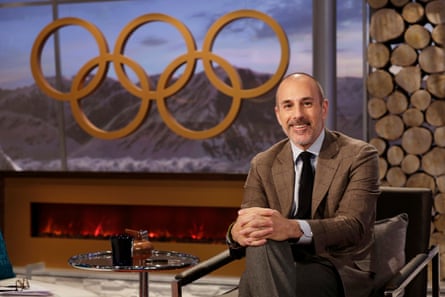
Russia’s conflict with Chechen rebels meant tight security for the Sochi games. NBC sent a skeleton staff; assistants, including Nevils, were put in the same high-end hotel as the TV stars. Nevils says that one night she was having a drink with her boss, the TV presenter Meredith Vieira, and Lauer joined them. “Here’s this once-in-a-lifetime opportunity to literally have a seat at the table. You think of yourself as lucky.”
She caught herself thinking that it felt unreal, that she was sitting with these stars she had been watching on TV since she was a child. Nevils was 29; Lauer was in his mid-50s. “It’s only now that I’m much older that I can look back and realise my role in making myself vulnerable.” She meant she was drinking.
Later, in her hotel room, Nevils recalls emailing Lauer a thank-you note for picking up the tab. He replied, suggesting she come to his room. In TV production, she points out, hotel rooms are not quite the intimate spaces we might imagine – they worked out of each other’s rooms all the time. She did briefly have the thought that Lauer might make a pass at her. “And then I was almost embarrassed for having it. Like: who the hell do you think you are? You’re just you, in your awkward jeans and sweater.”
Even now, it’s not clear why Nevils thought she was going to his room – although she isn’t the first person to have made an impulsive decision while drunk. But she does remember thinking she would get a chance to ask him to delete some unflattering photos of her, drunk, he had taken in the bar.
Nevils says that when she got there, Lauer opened the door, already in his underwear, the room dark, and started kissing her. She was disoriented, not least because she was so drunk that the room was spinning. She felt flattered, but it was also shocking. Had it been anyone else, Nevils writes, “an option would have been to laugh it off as a misunderstanding and then walk back out”. But Nevils felt that her job was to keep the “talent” happy and she didn’t want to make an enemy of a powerful man; Lauer was NBC’s star presenter, paid a reported $20m a year. It was just sex, she told herself – she could get through it. Except that it wasn’t what she expected.
The next morning, Nevils was in immense pain and bleeding – Lauer had had anal sex with her, even though she says she told him no. “The temptation is to write about it simply: the power disparity was huge, this never should have happened. But I wanted to really describe why so many people find these things confusing. You would think that it would be obvious that there was something terribly wrong. She remembers wondering if she would have told someone else in her place to go to the police, but she couldn’t imagine having to deal with the Russian police.
And it wasn’t “someone else”. “The truth is that it was almost a relief, because had that been an option, my life would have never been the same.” Nevils did not want to lose her career. “I understood that my job, as I saw it, was discretion.”
She also uses the word “relief” when she describes the ambiguity around what happened. The next day, Lauer sent her an email, asking how she was. She thought: “Oh, I must have misunderstood what happened. This was a nice thing, he is a nice guy, everything’s fine. You want to believe that – that’s a much nicer, safer realisation to come to than the alternative.”
The ambiguity, she says, allowed her “to tell myself this was my fault”. A better person, she thought, would not have gone in the first place, or would have turned around as soon as Lauer opened the door in his underwear. Nevils never thought her life was in danger in that room. “So if you didn’t think you were going to die, then you chose: just get through it. That’s a choice you believe you made, and you can blame yourself for it, and that makes you feel as though you were in control.”
Nevils returned to New York a different person. “I did what I had to do to keep my job and keep functioning, but, to look at it now, I don’t know how I survived.” She started drinking heavily. She sexualised herself, wearing higher heels and tighter clothes. Later, she would learn that this is a classic response. “It’s almost as though it’s been proved to you that your only value is as a sexual object. I suddenly saw myself almost only through this lens of how I was seen by powerful men and what my value would be.”
It was partly this that explains her decision to go when Lauer invited her to his apartment, she writes. Again, she says, it’s counterintuitive, but it’s common to go back to someone, “especially when you have a pre-existing relationship with them, that you have to continue to see, either to do your job, or in your community, or for whatever reason you depend on them. You are trying to, essentially, make things go back to how they were before. You’re trying to reassert control. That’s what I thought I was doing.” There was also part of her that was flattered, that it was appealing to think of herself as empowered.
Nevils’ delusion is heartbreaking, with the realisation dawning that she would experience a repeat of what she claims happened in Sochi. She felt herself dissociating from her body. But a few weeks after that, she went back. It’s only later, she says, “you realise all you were doing was implicating yourself in your own exploitation. It takes a long time to see that, and by the time you have returned an email or a text message, or you’ve maintained the relationship, or gone back, you feel like you’re trapped. And, of course, you blame yourself for that, too. You blame yourself for all of it.”
What changed for Nevils was seeing #MeToo begin to unfold in the autumn of 2017 and seeing how the experiences of other women were being described as assaults and abuse. “I thought that, because of how I reacted, because I didn’t react like a ‘real’ victim, that I couldn’t possibly be one. I believed all of those stereotypes.” With the stories that came out, “I saw so many other people had responded exactly the same way.”
In November 2017, Nevils made a complaint to NBC. The next day, after a rapid investigation and an interview with Lauer, NBC terminated his contract. It was a huge story and reporters tried, unsuccessfully, to out Nevils as Lauer’s “mistress”. Shortly afterwards, Nevils ended up in a psychiatric ward, where she was diagnosed with post-traumatic stress disorder. It was there that she started “untangling what had happened and how I’d been dealing with it”. She started trauma therapy and began the process of putting her life back together. She didn’t return to NBC.
Just over a year later, Farrow’s book was released. Nevils spoke to him, she says, to take control. “It felt like living under a guillotine, where I never knew if today was the day that I was going to be outed.” The media attention was “awful”, she says, but the news cycle moved on and, “ultimately, it did allow me to move on with my life”. With her book, she says, “what was different this time was that I had a choice. It was my choice to talk about it and to speak for myself.”
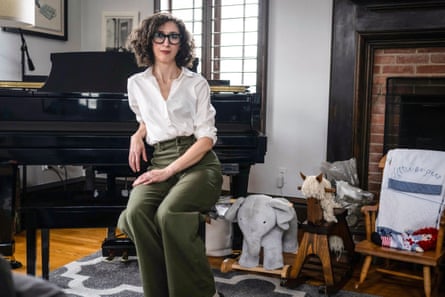
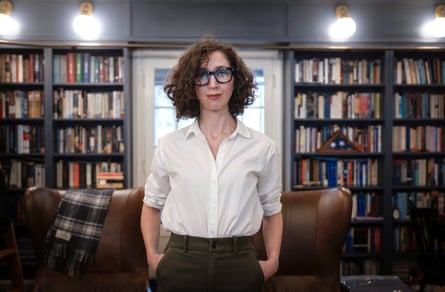
Nevils got married, moved away from New York and had two children. Her experience still has the power literally to floor her, and she is in therapy, but she also says how lucky she is. “I am OK because I was loved, I was supported. Because my complaint was taken seriously.”
Nevils says she doesn’t think #MeToo was “entirely a success, because it created this atmosphere where you either felt like you had to pretend you were 100% on board or you were cast as part of the problem. If you don’t feel like you can ask the hard questions about consent, about how these situations arise, about why they’re abusive and how you deal with them, you really have no hope of understanding.” Nevils has asked them of herself, sometimes brutally. It’s time we did the same. Otherwise, she says, “these situations are going to keep repeating again and again”.
Unspeakable Things: Silence, Shame and the Stories We Choose to Believe by Brooke Nevils is out now in the US