.png) 3 hours ago
4
3 hours ago
4
From old love letters to pieces of string, our homes are stuffed with stuff. When it comes time to empty a parent’s home, sorting the junk from the memory can be overwhelming
Soon after her marriage in 1952, Ellen Rogers’ mother, Fay, bought a coordinated bedroom ensemble – a floral dressing gown and matching bedspread. The day I talk on the phone with Rogers, she has made a tough decision – she is putting the gown and bedspread in a garbage bag to be sent off to a charity shop. “I feel so bad,” she says.
Fay died in May aged 97, and had lived in the same terrace house in Camperdown in inner Sydney her whole life. Rogers grew up in the house and returned three years ago to be a live-in carer for her mother. Now she’s cleaning out the house so it can be sold. The decisions she must make are endless; which pile for what item – family, rubbish or charity? “It’s overwhelming – there’s so much,” Rogers says, “including every bloody card she ever received.”
Through winter, Rogers moved through the house alone, trying to focus on the task but not always succeeding. Her three brothers are elsewhere. “It’s quite lonely and I hate this house because it’s so cold. I just wish I could speed up the process but I can’t. Some days I’m right on to it, and then other days I just can’t, because it’s very emotional – and I’m not really an emotional person.”
I’ve been in a similar situation. I know the emotion and loneliness of emptying a family home. After my father died in 2010, my mother moved to a smaller place on the Queensland coast. The large family home in Toowoomba where I grew up remained – overflowing with my parents’ household items, their collections (beer steins, fabric, books, Royal Doulton figurines), as well as every last item from my grandparents’ home which arrived in a large removal truck when they came to live with us.
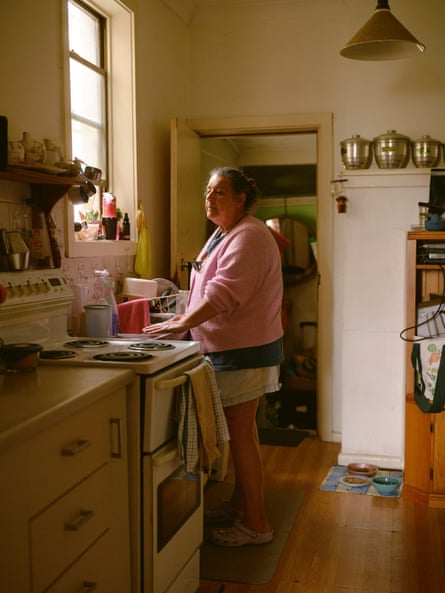
It took me 12 years to empty what came to feel like an emotional halfway house; I flew up from Sydney for a fortnight or more a couple of times a year. My mother was with me, but absent too, lost in memories and completely incapable of making decisions about anything. We argued over everything. We argued over a piece of string. “That’s a perfectly good piece of string,” she said one day of a fragment maybe 10cm long.
I moved through the silent house feeling the ghosts of the family’s past, the grief-filled shadows, the immense weight of possessions, of stuff.
But Rogers and I are not alone in the challenges we’ve faced. The global population is ageing and members of the so-called “Silent Generation” – those born before 1945 – are now in their 80s and 90s and either moving into care or dying. (Deaths in Australia have risen by 20% over the past decade.) This is the generation that came of age during the increasingly affluent decades after the second world war. They bought stuff – lots of stuff. And now, emptying out their homes is becoming a rite of passage alongside weddings, anniversaries and funerals. (Are Australia’s charity shops ready?)
The four women I spoke to for this story (research suggests women are more likely than men to manage estate admin alone) use similar words to describe the grief-edged process: “wrenching”, “gruelling”, “overwhelming”. For others, especially in families riven with tensions and fractures, it can be explosive.
“Get a skip [bin], clean it out while your mother’s not there,” a close family member who made no contribution to the clean-up told me. (I was enraged.) “Throw it in a skip,” people told Anne (she asked that only her first name be used) as she and her siblings started to clean out her mother’s home in Sydney’s southern suburbs in July.
Anne’s feelings about the presence of a skip on a footpath are similar to mine. “The earth’s too fragile” to just toss things into landfill, she says. Among my many recycling triumphs, I found a charity to take a pile of old spectacles that emerged during my cleaning; Anne has organised for more than a hundred of her mother’s X-rays to be recycled for their silver and PET plastic content. “I would do that for every single item in the house if I could.” But she has had to compromise with her sisters and allow some things to be discarded. “The stress for me is looking over my shoulder all the time and monitoring what’s happening; my sisters are wonderful but they have a different approach.”
Kathy, a former Sydney public servant who asked that I not use her real name, inherited her late mother’s house after she died in 2024 and has been living in it while trying to clear it out. She has also found herself unable to simply toss things away. “The problem with getting rid of Mum’s stuff is I look at it and think, ‘I can’t just throw it into a skip’ … It’s like, someone will want this.”
She thought she’d found a home for her mother’s extensive collection of vases when a friend said her Japanese floral arranging group was looking for big vases for a demonstration. “Have I got big vases for you!” Kathy told her. She pulled them out of a cupboard. Her friend looked at them. “Oh no, none of them are suitable,” she said.
The women I interviewed have all had another concern: paying respect to possessions that carried layers of meaning for their parents. A house full of things is not a house but a memory machine; things are not things but layers of recollection of self.
Melbourne woman Adrienne lost her mother in 2022 (she asked that I only use her first name). But even before her death, she had already started to tackle her mother’s house. “I completed a ‘Swedish death clean’ at my mum’s house over three stifling January days,” Adrienne wrote in an email to me. Her motives were pure – to make things easier for her mother, who was expecting visitors to stay – but she regrets now her vigour.
“She watched me, sat forlorn at her kitchen table, while I ruthlessly moved things on. I did not empathise with how much meaning might be attached to stuff I was basically calling worthless. I see now that objects can store all sorts of nostalgia including several versions of self – old interests and enthusiasms, even unrealised aspirations. I store the picture of her sitting at the kitchen table and can see her grief during the process. I wonder if she was also reflecting on her eventual end as well?”
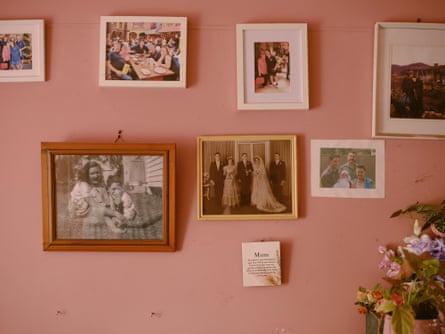
My mother also bore witness to the moving on of things invested with meaning. Like Adrienne, I was ruthlessly efficient through the process, driven by a wild rage at the staggering physical and emotional scale of the job left to me, the absence of my sibling, and my mother’s shifts between pigheadedness and shilly-shallying. But an image of Mum sitting at her kitchen table, looking lost, remains with me too. As is something she said as we went through a pile of Dad’s old clothes: she remembered, she said, the feeling of his dinner-suit jacket brushing her arm as they walked down the aisle on their wedding day.
But a parent present in spirit only can still exert a powerful psychic influence. Anne, as the oldest child, felt responsible for ensuring that her mother’s possessions received “due acknowledgment” as stitches in the fabric of her life. As Rogers builds piles in her late mother’s Camperdown home, she is flushed with guilt. “Well, I said to my brothers when I was getting cranky the other day in a group [chat] … I feel like I’m cancelling out her life.”
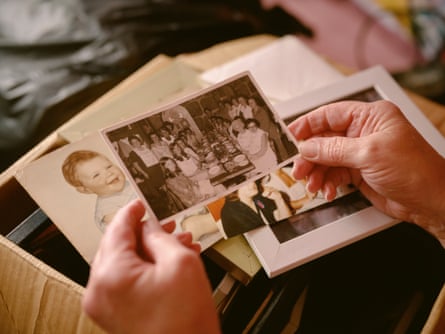
The women’s stories reveal something else: the exercise of emptying out a family home has come to reveal a deep generational gap in attitudes towards stuff. What’s frequently described as “brown furniture”, for example, holds no appeal for members of the Ikea generation. But frugal memories and habits, and a sometimes almost reverential respect for material possessions, were embedded in the Silent Generation’s psyche. Frequently, a shiny new item signified status, a step forwards and upwards.
My mother, born in 1936, reminds me frequently how little she had growing up. I heard the old lessons as we waged a battle over kitchen cupboards and linen closets. “When sheets wore out, we’d cut the sheet down the middle and sew the outer edges together to give it new life,” Mum told me more than once. Soap, she said, was removed from its wrapping paper so it hardened and lasted longer.
Kathy has also found that her mother’s lessons are sticky. “There are still things in the kitchen that she used before she was married in 1967, and the good wedding china does not have a broken or chipped plate amongst it; everything she had is in good condition because we didn’t grow up with much money.”
She thought clearing out her mother’s things so she and her partner could make the house their own would be straightforward. “It just isn’t.”
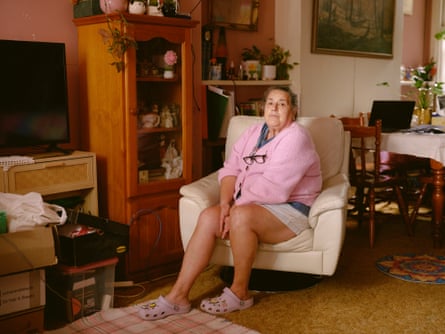
Kathy found that dealing with her late father’s hoardings – old speciality books related to his profession and “a garage full of things to fix stuff or build stuff” – was simple. But in the kitchen, she came to a screeching halt over casserole dishes.
“I unpacked them on to the bench, and I just thought, ‘right, which of these will I keep?’ And then I just looked at them and thought, ‘I can’t,’ … it was just like a whole shutter came down in my head,” she says.
“They’re so tied up with memory; I thought, ‘I know what she used to put in each one, I know the difference between the one she made lemon delicious in and the one she made chocolate pudding in, the one that was always out at Christmas with the tomato casserole.”
For Rogers, the emotional trigger was discovering cards her father had written to her mother. “He passed away when I was six. I’d never seen his handwriting. That gave me a little cry.”
The clean-up has made Anne realise that she places little store by possessions. “I’m not really interested in the jewellery or anything expensive, I just want the mementoes,” she says.
“In Mum’s knitting bag, for example, I found a bunch of letters that Dad sent to Mum and vice versa, when they were courting. I don’t particularly [want to] read them but I fished those out – they’re important and special.” She has kept one of her mother’s childhood books in which she found an inscription: “my favourite book – do not throw out”.
I still have nightmares about the process of clearing out my family’s Toowoomba home, fever dreams in which endless stuff – books, bags, china, chairs, figurines, forks, photographs, paintings – hurtles towards me. But what madness is this – at the end of it, I took ownership of hundreds of items from the house – my great-grandmother’s sideboard, hundreds of my father’s books, my great-aunt’s dinner service, my grandmother’s old mixing bowl, my mother’s 1950s cocktail shaker … and on, and on …
My apartment has become a museum of family stuff and stories. Once, I couldn’t bear to let the stuff go; now I feel suffocated by it. I look around and feel panicky. My nieces and nephew are unlikely to be interested in anything I’ve kept or the stories attached to them.
I think of Rogers: one of her nephews wanted her mother’s Charles and Diana tea caddy and a couple of her grandkids took some figurines, but her brothers seem not to want anything. I think of Kathy, who says her brother and niece only took away a box or two.
And I think of an elderly relative who never married, did not have children. After he died, family members went to clean out his home. There was almost nothing left. The man had released them from the burden.