.png) 5 hours ago
3
5 hours ago
3
Legs McNeil vividly remembers the reaction he got from the original CBGB bands in 1975 when they heard the name of the magazine he co-founded: Punk, the first publication ever dedicated to the form. “Absolutely no one wanted to be called a punk back then,” he said. “Not even the Ramones. Johnny Ramone demanded that we cross out every reference to punk in an article about them.”
Flash forward a few years and, “suddenly everybody wanted to be called a punk!” McNeil said. “The Ramones started running around telling everyone, ‘you know, we were the first punk band!’”
No doubt McNeil had something to do with that. After all, his affinity for the punk attitude and ethos ran so deep, he received billing in the magazine as its “resident punk”. As an illustration-heavy publication that was driven by the zany art of the magazine’s co-creator John Holmstrom, each issue presented McNeil as a consummately sly and seedy cartoon character, instantly transforming him into a real-life answer to Mad Magazine’s mascot of snark, Alfred E Neuman. “My only qualification was that I was this huge fuck-up,” McNeil said. “I was barely literate and I wasn’t much of a writer at the time. But I was that guy.”
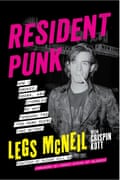
In a way, he still is. While the mission of this interview, which takes place at a diner in Brooklyn, is to delve into McNeil’s new memoir, titled Resident Punk: How I Smoked, Drank and Stumbled My Way Through the ’70s Punk Scene (and Beyond), the opinions he spews today, at 70, are just as gleefully free of nuance as they were when he was the 20-year-old brat he channels in his prose. In a wide-ranging conversation (ie a rambling one), McNeil has this to say about the Beatles’ crowing achievement, Sgt Pepper’s Lonely Hearts Club Band: “It’s a stupid record – except for that John Lennon song, A Day in the Life.”
About Tom Verlaine, leader of Television, one of the most vaunted bands to emerge from the club that launched punk, CBGB, he said, “He was full of shit, and he couldn’t sing.”
On artists and academics: “You can flush ’em both down the toilet as far as I’m concerned.”
On music criticism: “I hate it! Writing about music is not something that comes across on the page. I’d rather read about action and crime and war.”
On the iconic rock critic Lester Bangs: “He smelled bad. And he started the worst band [Birdland] in the history of the world.”
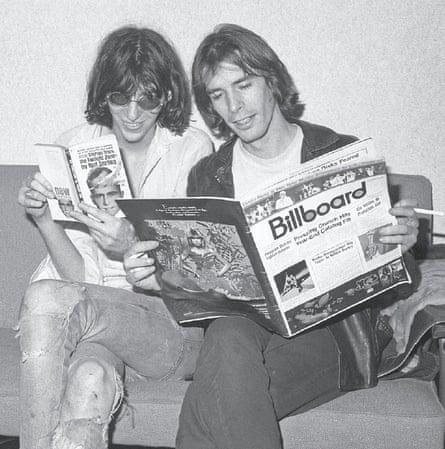
But if McNeil’s sensibility has barely budged in the last five decades, his lifestyle has by miles. He left New York in 1998 when it became a place where “you couldn’t smoke anywhere”, eventually settling down in a town of 1,500 in Pennsylvania where he lives with his wife and dogs in a three-story brick farmhouse from 1870. “I moved to a place where I knew no one would ever ask me, “what were the Ramones really like?” he said. Helping to finance the move was the smash success of the book he co-wrote with Gillian McCain, Please Kill Me, the hilarious and definitive oral history of punk that has sold more than 2.5m copies worldwide since it was published in 1996. Its success floored him. “None of the bands we were writing about sold. Why would a book about them sell?” he said.
His sole theory? “We put punk into a narrative that people could understand. Before that they really didn’t know what it was, or where it came from,” he said. “And we followed the story all the way through so that people thought, ‘Wow, this sounds like fun! We should have listened to this stuff the first time!”
Of course, as a self-identified fuck-up, McNeil was no stranger to having his feelings and experiences ignored. In his book, he describes a childhood scarred by death, small-mindedness and his own hapless character. When he talks about that time now he sounds like a cross between a lost Ramones lyric and a scuttled Rodney Dangerfield routine. He was just three months old when his father died of stomach cancer at age 33. “My mother was pregnant with me the whole time he was dying,” McNeil said. “And I could never talk about my father because my mother would just start crying.”
True to his contrary character, he considers not having a dad an advantage. “Everyone I knew kinda hated their father,” he said. “Every time I would cut through a Little League game there would be some father screaming at his kid, ‘pick up the goddam ball!” I thought, ‘thank God I don’t have that!’”
Money was also an issue. (“We were the brokest people in Cheshire, Connecticut,” he said). He spent most of his childhood playing in a swamp near his house where he became friends with the local snakes, a pastime he found far more pleasurable than any group activity. “I HATED sports,” he said. “And I was really skinny, so everybody called me ‘faggot’.”
Things didn’t go any better at home. “My mother and sister and brothers blamed me for everything,” he said. “And because most things actually were my fault, they were kinda right.”
He was also relentlessly clumsy. (“I couldn’t open a box of cereal without getting it all over the floor.”) Part of that may have had to do with the fact that he was born with one leg shorter than the other, a circumstance that wound up serving as a metaphor for his entire worldview. “I was an asymmetric person living in a lopsided world,” he writes in the new book. “Nothing made any sense to me.”
He was not able to get an operation to deal with his physical issues until he stopped growing in his mid-teens. “When I should have been out drinking and picking up chicks I was in a hospital,” he said. “I was in a full body cast and couldn’t walk for a year. I felt like I got hit by a train and I looked like a Picasso painting.”
The operation proved a nightmare. “That doctor was a sadist,” he said. “They wanted me to get up out of bed after two weeks and I said, ‘I can’t. I’m going to pass out.’ So they gave me grape juice and I stood up and threw up and passed out. No one ever listened to me! So I started smoking in my room right next to the oxygen tank. I could have blown the whole place up, which I thought was kinda funny.”
He found rare solace by checking out library books about history, folklore and war. But he would always lose them, along with seemingly everything else he came in contact with. “At the end of the school year I would go to the Lost and Found and every single thing in it was mine,” he said.
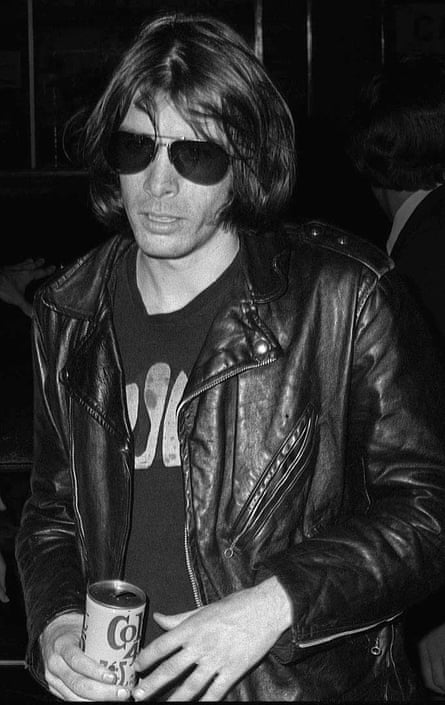
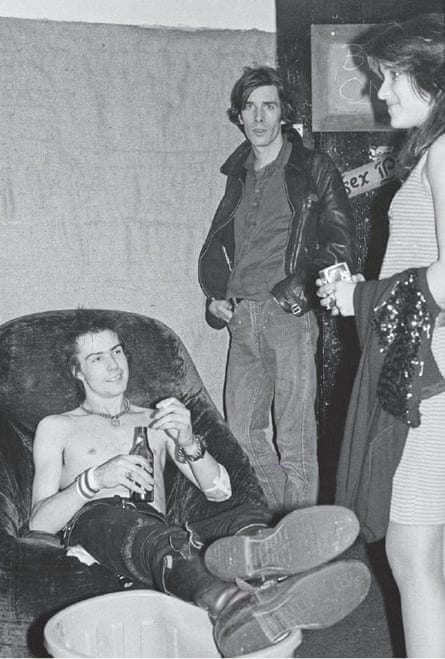
McNeil finally stumbled into a kind of salvation when he ventured into New York City in 1975 with friends like Holmstrom where they happened upon the untamed brilliance blasting out of CBGB on the Bowery, the sleaziest downtown thoroughfare of the day. A born primitivist, he became obsessed with the stripped-to-the-bone guitar music of the Ramones. “They played these perfect two-and-a-half-minute pop songs,” he said. “To me, they were like the 1910 Fruitgum Company. It was bubble gum, which I loved!”
Not only did he and the magazine champion the leading lights of CBGB, they also touted ones that never became famous, including the no wave outfit Steel Tips, whose frontman had a yen for exploding firecrackers under his armpits and an interest in playing venues like prisons and insane asylums. It was Holstrom’s idea to start a magazine to celebrate such folk. While the word punk had been used sporadically by various critics for at least five years, usually to describe garage rock, it hadn’t formalized into its own genre until the magazine came along. To underscore its ornery spirit, McNeil was given the nom-de-punk “Legs”. (Roderick is his real first name.) His primary motivation for going along was to get free beer and easy sex, which worked out great. “Girls recognized me from Holmstrom’s cartoons,” he said. “So, I could get laid every night of the week!”
Along the way, he also developed creatively, conceiving key concepts for the magazine like an entire issue devoted to a punk noir story imagined as Italian fumetti comic strips. Barely two years into the magazine, the UK launched its own punk revolution – a far more successful one – igniting such a media frenzy that people everywhere began to think it all started in London instead of New York, an untruth that infuriates McNeil to this day. “Even my own mother called me and said, ‘punk started in England!’” he said. “You couldn’t win.”
In retaliation, Punk Magazine continued to focus on the New York bands. In that pursuit, he became close with its emerging stars like Patti Smith – close enough, in fact, to question the stories they later sold to the public. When Smith published her universally admired book, Just Kids, McNeil found her dreamy presentation of her relationship with the gay photographer Robert Mapplethorpe a bit much. “While I don’t doubt that she loved him, to write all about the great romance they had was like, ‘oh, come on!’ And she won the National Book Award for that! Please Kill Me should have won the National Book Award!”
At the height of the magazine, McNeil achieved his own kind of fame, earning the curious attention of literary stars like Norman Mailer and gawking features that presented him as a cross between a classic screw-up and a teen seer. At the same time, the magazine was a financial disaster, leading to its demise by 1979. McNeil went on to work for Spin Magazine, where he found his writing chops by penning stories like a cover piece on Sinéad O’Connor at a time when she was barely known in America. In his book McNeil writes that, during the 80s, the super-hunky John F Kennedy Jr asked O’Connor for her phone number. She told him to “fuck off”, choosing instead to go out with McNeil. During their time together, he took her to a Harlem barbershop to fulfill her dream of getting a “tram line” haircut. “All the Black guys there were laughing at her,” he said. “No Irish bald woman had ever come in asking for that!”
After a spell at Spin, McNeil launched Nerve Magazine, serving as its editor-in-chief but the project died after six issues. “I was writing five- and ten-thousand-word stories right when the internet was starting up and making everything shorter and shorter,” he said.
McNeil rallied big time with the 1996 publication of Please Kill Me. Originally, the book was just supposed to be an oral history on Dee Dee Ramone, but the tome’s co-author McCain realized “this story is so much bigger than that.” Its success made McNeil more famous than ever, which he detested. “People began staring at me,” he said. “I’m too self-conscious to be famous.”
Leaving New York greatly eased that problem while doing no harm to his career. He went on to write an oral history of the porn industry and also co-authored, with McCain, a book called Dear Nobody: The True Diary of Mary Rose which captured the tortured words of a teenager who died at 17 after an epic struggle with cystic fibrosis, addiction and unraveling mental health. In the years since, McNeil had a total falling-out with Holmstrom. “He lies,” he said. “And when he did his book The Best of Punk, he cut out all my best stuff because he was so jealous that I became more famous than him!”
Despite such slights, McNeil remains happy to have retained his reputation as punk’s original avatar. “I owe my whole career to that!” he said. “For a guy who was a total fuck-up somehow I ended up with a pretty enjoyable life.”
-
Resident Punk: How I Smoke, Drank and Stumbled My Way Through the ’70s Punk Scene (and Beyond) by Legs McNeil with Crispin Kott is released on 15 September