.png) 1 month ago
53
1 month ago
53
In the past, my response to any given large-scale world crisis has generally been to do nothing, which, as well as aligning with my personality, has the advantage of being exactly what the experts recommend.
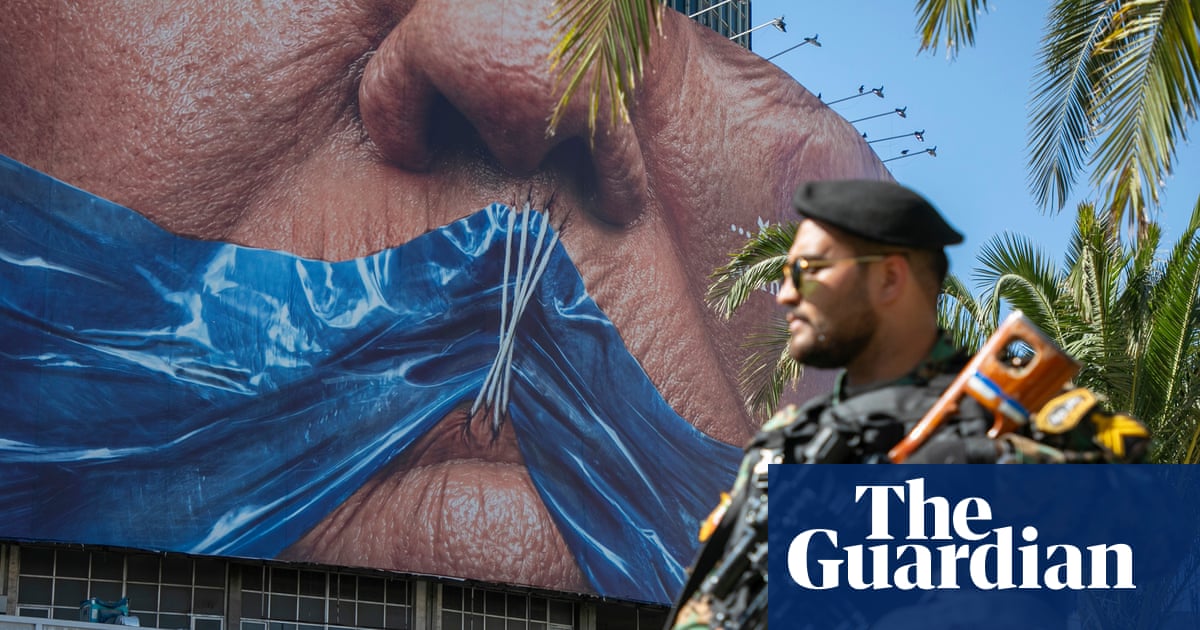
During periods of intense market volatility, we are advised not to look at our investments, let alone touch them. If we are rushed at by a bear, we are supposed to stand stock still (unless it’s one of those bears you have to bang pots and pans at, but let’s leave them aside). The result of this is an avoidant philosophy hingeing on the motto “it’ll probably be fine”, that, this week, as Tehran mocked the US for pretending peace talks were under way, was accompanied by a cold, rival notion: what if this time it’s different?
Two spirit-sinking thoughts followed in quick succession: as the war in Iran rumbles on and the energy crisis deepens, what if interest rates bounce up to what they were in the 1970s (impossible, surely?); and, does this mean I have to read Andrew Ross Sorkin’s book about the Wall Street crash? The headlines aren’t reassuring. In the Financial Times at the weekend, the banner headline warned: Borrowing costs soar to 18-year high. Columnists in the Telegraph shared plans to stockpile petrol and tinned food. “Could the Iran war lead to WWIII?” asked NPR, cheerfully, while over in the New York Times, a hedgefunder turned US Treasury official wrote: “I predicted the 2008 financial crisis. What is coming may be worse” – a dire warning at least partially offset by the cheesy, business-as-usual configuration of the headline. Beyond the media, city traders last week started pricing in four quarter-point base interest rate rises in 2026, a complete about-face from previous predictions of rates coming down this year.
It’s not just interest rates, obviously, but they are the canary in the coalmine of worse shocks to come. Meanwhile, the usual, default consolations are wearing thin. Yesterday, Ursula von der Leyen, the president of the European Commission, even put paid to that fantasy of last resort, universally reached for during hard times in this country – maybe-we’ll-move-to-Australia – by telling the Australian parliament that it faced a “new reality” in which distance wouldn’t save it.
And, so, what? What is the appropriate response here, other than to reverse ferret if you are on the brink of buying a house – as two friends did last week, considering possible 5.5% rates in two years’ time? Or pursue the kind of bad logic that one usually reserves for trying to justify the purchase of something you can’t really afford. For example, six years ago, the economist Nouriel Roubini predicted the likelihood during this decade of a “Greater Depression”, a prediction which resurfaced this week and to which I found myself thinking, irrelevantly: this is a man who, famously, had plaster casts of vaginas on the wall. He may not be reliable!
There are other voices out there. My dad reminds me that interest rates in the UK were 10% in the 1970s when my parents bought the house I grew up in, reaching 17% in 1979, and everyone survived. But the average loan in 1979 in this country was £11,000, with borrowers maxing out on average at two to two-and-a-half times their annual salary. These days, the average mortgage in London is pushing £300,000, and for first-time borrowers, nationwide, that figure is £210,000. Meanwhile, the median full-time salary in the UK in 2025 was £39,039.
We know all this. We also have the recent experience of Covid – surely a more brutal and shocking economic disaster than anything that might happen in the Gulf or be triggered by AI, and from which financial systems recovered. The US stock market returned to new highs five years after the 2008 crisis. It’s 1929 that you have to shield your eyes from – God, I am going to have to read Sorkin’s book – when it took, by many accounts, fully two decades for the stock market to recover from the loss of 90% of its value.
At the individual level, short of taking cash out of the bank and sticking it under the bed, there are two options: abruptly stop doing whatever you were doing – booking a holiday, buying a house, quitting your job to write poetry – and hold fire until the picture clarifies. Or, working on the assumption that the picture may never fully clarify and that paralysis never helps, go about doing what you were doing, only more anxiously. What’s the worst that can happen? It’ll probably be fine.
-
Emma Brockes is a Guardian columnist
-
Do you have an opinion on the issues raised in this article? If you would like to submit a response of up to 300 words by email to be considered for publication in our letters section, please click here.