.png) 2 months ago
61
2 months ago
61
The release of Michael has triggered what can only be described as mass hysteria in some quarters. I looked on in bewilderment as the reception to the film seemed to entirely erase child abuse allegations against the artist, as well as launder almost every aspect of his life beyond that.
This week, I look into what seems like a new generation’s discovery of Jackson, and his rehabilitation through a strange online obsession.
A tainted figure
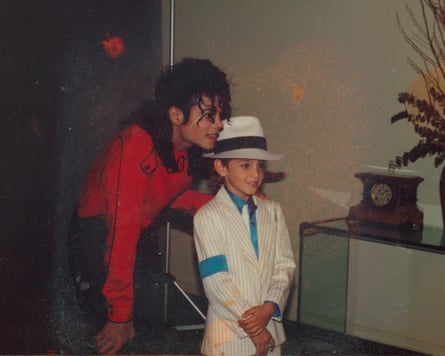
First, a disclaimer: I have not seen the movie, nor do I intend to. Reviews so far have been in almost universal agreement that the film is bad; a filmed playlist in search of a story, cliched, bland, and bowdlerised, an estate’s attempt to scrub clean the life story of a star who has been multiply accused ... of child sexual abuse.” But it’s not just the reviews that have put me off. Ever since watching Leaving Neverland, a two-part documentary from 2019 in which two men detail heart-wrenching allegations about their sexual abuse as children by Jackson, I have been unable to experience him or his music without summoning those stories.
It was the final graphic chapter in decades of allegations against Jackson. In 1993, Jackson paid millions of dollars in a settlement out of court to the family of a claimant who stated that he had inflicted “repeated sexual battery” on their son. Ten years later, he was arrested in 2003 on suspicion of child molestation and tried in 2005. He was acquitted of all charges. But there were now too many rumours, and although never indicted, Jackson spent four years in seclusion and public disgrace between the end of the trial and his death in 2009. It did not stop after death. In 2020, his estate agreed to a $16.5m settlement with five accusers who alleged that he sexually abused them.
A weird new ardour
Diehard Michael Jackson supporters have always framed the boys who made allegations against him as tools of financially motivated families. And his death opened up space for his music and story in ways that could treat him as a cultural and historical phenomenon. But Michael, the film, has unleashed a new wave of feverish ardour that not only scrubs this harrowing history from the record but also elevates him into an innocent, suffering martyr, savaged by critics. For two weeks, I have been immersed in social media glorification of Jackson triggered by the film. It is an extremely weird ecosystem where Jackson is rediscovered as an icon, but this time in a contemporary culture war tone, in which his defenders rewrite undeniable facts.
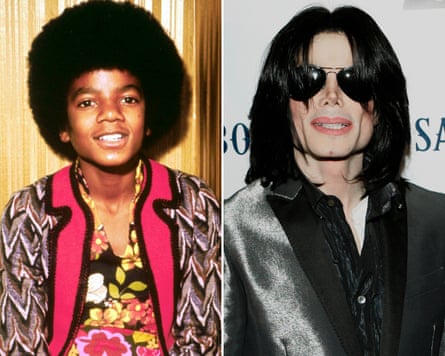
New fans have decided that Jackson’s extensive surgery is a smear, even though (and I can’t believe I actually have to say this), it is an indisputable reality that he entirely transformed his face. On X, posters upload side-by-side before-and-after pictures of Jackson (in which he not only looks like a different person but also a different race) and claim that, clearly, the cheekbones are the same and his eyes only look different because of eyeliner use in adulthood. For those who haven’t fallen down the rabbit hole of Jackson mania, this is apparently a defence of Jackson, who claimed he only had two nose jobs and a chin insert.
His own explanation of his skin getting lighter, that he had vitiligo – a skin condition that results in loss of pigment – is another battleground, with defenders posting pictures online of his uneven skin to demonstrate that it was not in fact, bleach.
Digital anarchy and racial discomfort
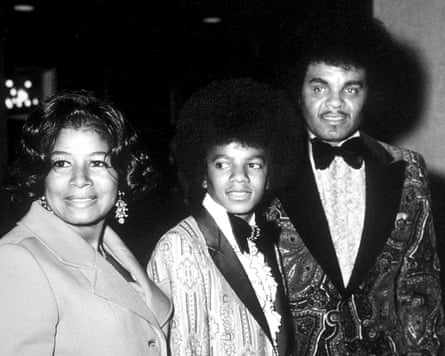
In the increasingly gamified digital world we live, posting for engagement is incentivised. Jackson has been reduced to an online commodity to be argued over, and AI has exacerbated this dynamic. The subtly manipulated images and audio that have taken over my timelines create a credible impression to the passing observer of a figure entirely created by social media activity – someone who was cheeky, kind, tortured and rejected by a world he was too good for.
But the big uncomfortable truth hovers over all the reimaginations of Jackson: that he was a Black man who changed his appearance and sanded away his features to erase his race. Jackson’s father was, by all reports, a monstrous figure, one who instilled in Jackson shame about his appearance, about which he was already self-conscious, giving him the name “Big Nose”. And in the abuse he suffered as a child, as well as his early fame, he appeared to his defenders a stunted man, stuck in childhood, incapable of adult malice. One innocently seeking the company of other children and refuge in his own theme park, his own Neverland, where you never need to grow up. But instead of reading Jackson as a figure profoundly damaged and damaging, he has been cast only as the former.
Time forgets all wounds
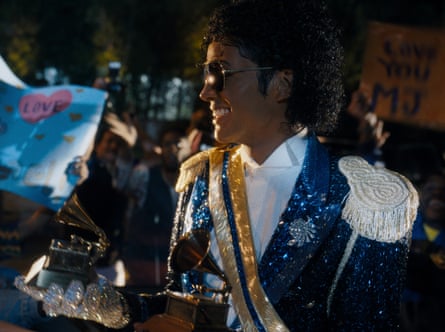
The biopic is already breaking box office records, and the musician himself has gained millions of new listeners. (For more on the billion-dollar business after Jackson’s death, read this long read by Owen Myers.) To a younger generation, Jackson is a historical figure who can be deified without complexity, and is no longer alive to continue being a ghoulish protagonist in the middle of child abuse allegations. But even to those who lived his arc alongside him, it is hard to reckon with all the ways this thrilling, electric Black boy, who gave us soundtracks to entire lives and formative experiences, turned into a grotesque racial self-mutilator and alleged child abuser.
Margo Jefferson, the Pulitzer prize-winning critic and author of the 2006 On Michael Jackson, a text of cultural analysis, put it best when she revisited her work to reckon with what Leaving Neverland demanded. “Am I chagrined and shamed that when I wrote my book I couldn’t push myself to acknowledge that this damaged man was almost certainly a sexual predator?” she wrote. “Of course I am.” But, she added: “What private needs and longings do we each bring to the work we love? When the dark materials of a life pervade, even taint the work, does that mean we must cast it off? It might mean that, but it might also mean that we fight for the parts of it that matter to us.”
Old and new fans alike have the right to make that decision, but it must come with an acknowledgment of what this “damaged man” was. For me, all I can think of as his face, performances and music saturate public culture once again, is how that must feel to his alleged victims.