.png) 1 month ago
58
1 month ago
58
As Formula One grapples with its new, controversial regulations, there is consensus at least that Mercedes are expected to be on top once more in the second race of the season on Sunday in Shanghai. The team have a fearsome car but most importantly in a formula dominated by the engine, appear to have also stolen a march in optimising the dark art of energy management.
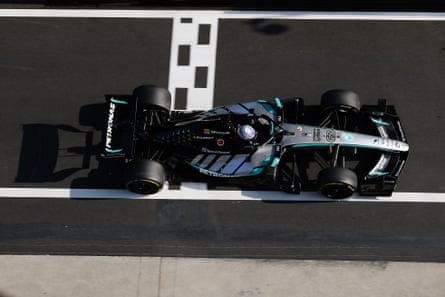
George Russell and Kimi Antonelli claimed a one-two at the opening round in Australia last weekend. In qualifying Russell was eight-tenths quicker than Mercedes’ nearest rival, the Red Bull of Isack Hadjar and in the grand prix itself finished 15 seconds in front of third-placed Charles Leclerc having eased up in the final third of the race.
They were once more comfortably the two quickest drivers in qualifying for Saturday’s sprint race in China. Performances which marked them out as the class of the field which was acknowledged by their rivals.
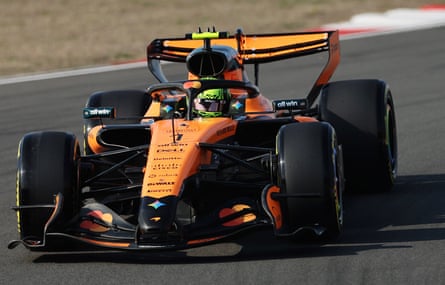
To put it in context, last year’s world champion Lando Norris was nearly a second off in qualifying in Australia and finished fifth for McLaren, more than 50 seconds down on Russell. That is an absolute chasm but what was most striking about the differential was that McLaren are using the same Mercedes engine. The rules stipulate that customer engines (with which Mercedes units McLaren won the last two constructors’ championships) must be identical to the ones used by the works team.
Yet even with a good car, given their pace, Mercedes are clearly extracting more from their engines and this is proving to be one of the major differentiators in the new season as they go into the China GP. At its heart lies the absolutely vital role, love it or loathe it – and popular opinion leans heavily toward the latter – that energy management now plays in the sport.
In an effort to entice new manufacturers, F1 opted for engines that would have an almost 50-50 split in the power delivered by internal combustion and electrical energy. With the amount of electrical energy limited, its deployment and recharging has become every bit as important, if not more than, how much grunt the internal combustion pushes out. Understanding and exploiting this is fundamental for speed. An unedifying differential that cannot be seen and profoundly unpopular among the drivers it may be, but it is nonetheless the reality of F1 in 2026.
Albert Park at Melbourne, a high-speed circuit with a paucity of braking areas, is therefore described in the new era as “energy-starved”, a phrase which will be used again this season. It meant the ability to recharge the battery was extremely limited and had to be carefully managed and that is where the Mercedes could sing.
It was clear that Mercedes, having spent so long developing their own engine, unsurprisingly understand best how to exploit the software that manages the energy use, to an extent that customer teams, McLaren and Williams for example, do not. As the McLaren team principal, Andrea Stella, noted: “In a way, this is a new language and also a new way of thinking.”
How the engine optimises a lap in terms of energy deployment and recharging is as vital now as any aerodynamic advantage under the last rule set. The tiny details in where and how the energy is recharged, echo across a lap as a whole. Timing hitting the peak battery charge allows full deployment on a following straight and in turn not being forced to lift and coast slightly earlier. They are small percentages but add up as was perfectly demonstrated in Australia when Russell, freed from a scrap with Leclerc, could then drive to allow optimised energy use and promptly opened a significant lead.
There is no suggestion Mercedes are withholding information from customers but rather that they have given over everything required by the rules and that their greater experience in working with the engine is something their rivals will have to learn. The new language, as Stella noted.
The same applies to Mercedes’s other main rivals Ferrari, who were closest to them in Australia, and Red Bull. As manufacturers they too should benefit from having developed their engines and if there are big gains to be found in the new formula it is here that they may begin to bridge the gap. The car, of course, remains a factor, with Mercedes having delivered an exemplary chassis, while Norris has admitted that the McLaren is far from where it needs to be aerodynamically, struggling through corners and with excessive front tyre wear.
However what was also demonstrated in Melbourne was that with energy management so vital, the drivers must adapt with alacrity and Russell was sharp in this area from the off. As Norris has repeatedly observed there is now a vastly increased focus on how they “drove” the engine. “You can still make a difference as a driver by driving the power unit in the correct way but not by necessarily driving the car in a much better way,” he said.
This was something Russell displayed in his advantage over Antonelli in Australia, even in identical machinery, and it is now potentially the most important weapon in the armoury. “The difference you can make by optimising the power unit is an order of magnitude bigger than anything you can do with the setup of the car,” was McLaren’s Oscar Piastri’s blunt assessment.
How all these factors play out in China on Sunday will be under intense scrutiny across the sport, not least given consideration to changing the rules regarding the prevalence of energy management are expected to take place in discussions after the race.
Shanghai is also more representative of an average circuit than Albert Park. Heavy braking zones and medium-speed corners, means it is “energy-rich” and recovery should not be an issue while its major deployment will centre on the long back straight to turn 14. A different but equally informative test to Melbourne. Mercedes have the whip hand, that much is clear, dominance in China will indicate quite how far up the road they really are.