.png) 1 month ago
72
1 month ago
72
In the pistachio green Toyota Land Cruiser rattling over the desert plain, Aboud Khater pressed his foot to the floor. Behind, the sun rose above El Fasher. Smoke belched from the stricken city. Khater was driving the last vehicle of the final evacuation convoy from El Fasher.
It was 5:45am on 27 October 2025. He couldn’t have waited any longer. The historic capital of Sudan’s sprawling region of Darfur would capitulate in the next two hours.
Thousands of civilians – children, women and men – were slaughtered. The city’s streets had seen the fastest and largest killing spree this century.
El Fasher’s fall marked the vicious finale of an 18-month starvation siege by the paramilitary Rapid Support Forces (RSF), the most brutal chapter of its ruinous war against Sudan’s government forces.
A depleted army garrison had defended the city alongside the joint forces, local self-protection groups who had come together to shield residents against genocide.
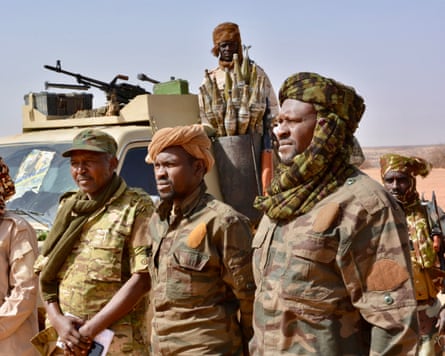
At 6am, the drones appeared, tracking the convoy, hunting Khater, the 53-year-old chief of El Fasher’s joint forces.
In the pickup in front of Khater’s was Gen Emam Doud, grievously wounded but conscious enough to accept he would probably die in the moments ahead.
“I was shocked how intensely the RSF was hitting us. They were throwing everything at us: kamikaze drones, bombs,” says Doud.
Khater willed his convoy of 40 vehicles faster. A column of armoured RSF vehicles was behind them. Beside him sat his bodyguard, “Boka”. In the back, four teenage fighters around a DShK machine gun.
In truth, it was a miracle all six had survived so long. But their greatest trial was ahead – the “pits of hell”, a series of manmade trenches culminating in a canyon five metres deep.
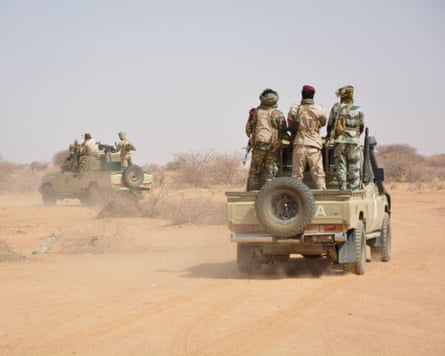
“No vehicle or human can get out. Everything trapped inside is killed by the RSF,” says Doud.
Doud had assumed it would end like this.
So too had western intelligence. The joint forces’ chaotic withdrawal from the city had been modelled by officials.
In such detail, in fact, that the killings at El Fasher were probably the most explicitly anticipated mass atrocity event ever.
A Guardian investigation reveals internal US and UK warnings were sidelined. US state department intelligence assessments that would have triggered obligations to save El Fasher were buried.
The UK seemingly abandoned El Fasher: reports predicting genocide apparently discarded; intelligence apparatus that should have prompted intervention were not updated throughout the 561-day siege.
As fighting had intensified, the UK removed Darfur’s original genocide – when 300,000 were slaughtered by the RSF’s Arab predecessors – from its list of recognised mass atrocities.
Fresh questions also emerge for the RSF’s principal backer, the United Arab Emirates, which made extraordinary attempts to conceal its alleged involvement in El Fasher’s bloody takeover. The UAE denies providing military support to the militia.
Over two days – 26 and 27 October 2025 – analysts believe up to 10,000 people in the city were massacred. At least 40,000 others remain unaccounted for, according to Darfur’s governor.
This is the story of those two days: 48 hours of killing, the speed and ferocity of which had not been seen since Rwanda’s 1994 genocide.
26 October
3am
Khater noted the panic among troops retreating towards the west of El Fasher. He knew what it meant. The headquarters of the 6th Infantry, the army’s last Darfur stronghold, had fallen.
But there was no official confirmation: communications were down. Commanders across Sudan were frantically trying to contact the city, senior Darfur rebel, Salah al-Wali, among them. “Eventually we accepted that El Fasher was alone.”
The RSF’s jamming technology meant that for the first time, the city’s defensive drones were grounded. The RSF controlled the sky.
From his position in Daraja Oula, Khater put down the Motorola walkie-talkie that had been clamped in his hand for as long anyone could remember. Beside him, Doud pointed east. They were coming.
7am
Inside the maternity ward of the last functioning hospital, Dr Mustafa Ibrahim was jumpy. Several women were in labour as rockets slammed into al-Saudi hospital, coating expectant mothers with dust.
Ibrahim heard the RSF approaching. They targeted doctors. He changed into his lucky cream sweater, a gift from his fiancee. In his backpack: two sets of underwear, water bottle and phone charger.
Outside was bedlam. Surgeon Ishmael Ahmed saw 70 civilians killed beside the nearby al-Haykal building; the first witnessed massacre of the day.
8am
Seeing they were vastly outnumbered, Khater withdrew his forces to the north-west corner of El Fasher’s university. He urged residents to follow. Stragglers were being shot at point-blank range, even disabled children, says Doud. “They were killing everyone.”
Ibrahim darted from house to house. Civilians were shot as they climbed walls; others as they cowered in shoulder-deep trenches. RSF fighters were everywhere. A T55 tank rumbled by.
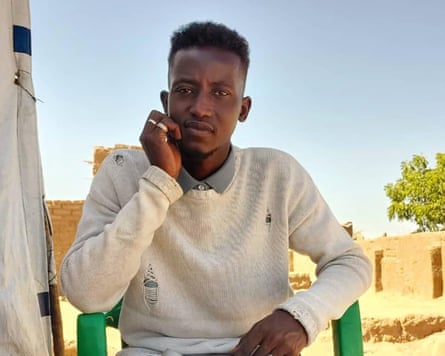
From a rooftop, Ibrahim watched RSF pickups chasing thousands of people streaming towards the university. Toyota Hiluxes mounted with 23mm anti-aircraft guns pulverised fleeing crowds.
A heavily pregnant woman, toddler clinging to her back, was attempting to outrun the RSF. “Both were killed in front of me,” says Ibrahim.
A bulldozer appeared, shovelling bodies into roadside trenches. Ibrahim continued west. “It took for ever, sneaking from one building to another.”
9am
Enormous crowds congregated at the university. Dormitories heaved, its western square was standing-room only.
Drones appeared, dropping bombs. There was nowhere to run.
Doud had never seen so many drones, so many civilians massacred. “We saw hundreds of children being killed,” says the 43-year-old.
Khater ordered an evacuation of the city. Children were taken to El Fasher’s western gate. “We were getting out civilians while clashing with the RSF,” says joint forces fighter Mohammed Harir.
RSF fighters stormed the university’s southern section. Inside al-Rashid dormitory 1,000 civilians were hiding; the militiamen entered, killing at least 500. Survivors played dead.
To the east, open ground lay between the university and Ibrahim. Once a picnic area, now it was a 100 metre-wide kill zone. RSF pickups rammed anybody attempting to cross.
Ibrahim kept hearing his name. Former patients, many badly wounded, were calling out to the 28-year-old for help.
“But I couldn’t, I was trying to survive myself. That moment I lost my soul,” he says. He ran, leaping over bodies, his white Puma trainers red with blood.
11am
Ibrahim was stunned by the crowd wedged within the university. “The whole city seemed inside, but it was terrible. Massacres were everywhere.” He noticed a woman disappear down a 50cm-wide trapdoor and followed her into an underground water tank. Of the dozens of mostly women and children there, many were injured. Some cradled bodies. “It was catastrophic. Some had carried their dead inside.” No one spoke.
At 5ft 8in tall, the fetid water reached Ibrahim’s chest. Rodents floated on its surface.
A soundtrack of screaming came from above. Shouts of “Falangayat [slaves]”.
Halima Nahar heard RSF fighters shouting “kill all the falangayat” through a public address system. Others saw RSF gang-raping women in university rooms piled with bodies.
“I heard people begging [them] not to kill them. It was very close,” says Ibrahim.
Just 200 metres north, Khater wondered how long El Fasher could hold out.
1pm
Doud is shot in the head. For 20 years Khater and his general had fought side by side. Joint forces fighter Khalid Mohamed saw Khater treating Doud as the RSF approached. “He wanted to help his friend, but the enemy kept coming.”
Khater’s band of fighters was dwindling. Outnumbered 20 to one, their weapons and archaic munitions were hopelessly inferior. Soviet era v state of the art. “Our bullets were extremely low,” says Doud.
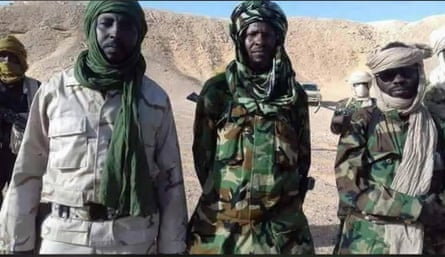
Compounding their predicament was that most of El Fasher’s military leadership had fled in an 80-vehicle convoy the previous day. Khater had refused to go.
Now – El Fasher’s fall inevitable – a second convoy prepared to exit. Again, Khater was offered the chance to leave and reunite with his wife, Hadiya Ibrahim, and their four-year-old son, Abu. “He missed his family,” says childhood friend Mahamoud Ahmed.
2pm
Khater gathered his fighters. Mohamed had never seen his typically composed leader so emotional. Gesticulating towards the thousands trapped, Khater told his fighters he would not flee until every civilian had left.
“He kept saying: ‘I won’t leave. I won’t leave,’” Mohamed recalls.
Ahmed adds: “He said there were many wounded civilians. He would not abandon them.”
Meanwhile, Ibrahim, an acute asthmatic, was fighting for breath. Above, the fighting was even louder. “People were being killed on top of us.” He heard tanks rumble overhead. The roof sagged.
Ibrahim thought of his friends at al-Saudi hospital. His room-mate, Adam Ibrahim, had stayed with the pregnant women.
Witnesses later described how RSF fighters ran from ward to ward asking occupants if they were “falangayat”. Patients were killed in their beds. More than 460 were massacred inside the hospital. Adam Ibrahim was among them.
The carnage continued. Fatima Idriss was among 6,000 trapped within the university’s western square.
She recalls a calamitous breakout attempt. “They opened fire. More than 400 fell dead.” Pickups were driven over survivors. Eventually the trucks could not move: there were too many bodies.
4pm
Khater and his fighters clung on in a corner of the university. Doud – heavily bandaged – prepared to die. “All my fellow commanders had the mindset we will not exit alive.” As dusk approached, they burst out of the western gate and headed south, escorting a large group of children, elderly and injured people.
They were just in time. About 5pm, others inside the university made another bid for freedom. But the sprawling campus was now surrounded. Hundreds were mown down.
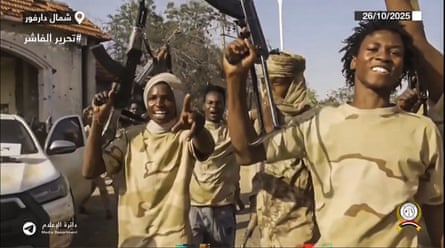
Khater reached a complex of warehouses near the airport where his 40 pickups were.
Ibrahim, meanwhile, left the water tank. Crawling across roofs he arrived at the army’s 157th Artillery Brigade base about 5pm. El Fasher’s westernmost location was teeming with civilians.
8pm
The night was moonlit, clear and cold. Ibrahim was shivering when he left the base with about 200 others. The aim was to reach Tawila, 45km (28 miles) away.
Fighters on camels and in RSF pickups patrolled the terrain between. Capture meant execution. Ibrahim doubted he would see his fiancee again.
Khater felt similar uncertainties. But his immediate concern was the trenches encircling the city, dug by the RSF to prevent escape.
About 10pm Khater dispatched a unit to surreptitiously fill a section of trench with earth so his convoy could drive across. It was painstaking, dangerous work.
The massacres continued. Doud watched as RSF fighters killed exhausted children sleeping near the airport fence.
“You could see the RSF going around, killing them.” A mother clutching her child was among those shot.
Almost midnight
Ibrahim reached the third, final trench. It required three people, two standing on shoulders, to reach the bottom. “It was difficult for the children.” Several families turned back.
Pitch black, the trench was filled with bodies. Some were small: children.
The third trench was a trap. As Ibrahim’s group reached, RSF gunmen opened fire. “They were waiting for us.”
Ibrahim lay in the trench among the bleeding. Bodies tumbled on top of him. The firing stopped. Then came the chants: “Falangayat, falangayat.” The chanting grew louder. Above, he saw heads peering down, scanning for movement. Gunfire strafed the trench. From the group of 200, 15 survived.
Warnings
To frame El Fasher within the timeworn narrative of collective international failure avoids the darker truth.
Decisions were taken that ensured help never came. Both the US and UK suppressed or sidelined warnings that would have helped avoid the slaughter.
Central to the UK’s approach was the Joint Analysis of Conflict and Stability (Jacs), conceived to assess whether genocide was likely and, if so, intervene suitably.
The UK’s own intelligence, sources confirm, said the RSF wanted to “eliminate” the city’s non-Arab population.
Yet no attempt was made to update Jacs throughout the 18-month siege. The most recent Jacs assessment for Sudan is dated 2019: four years before the current war began.
It typified an attitude, said experts, that cost lives. “The UK’s approach was a death sentence to the people of El Fasher. Their lives were not seen as important as others,” said a parliamentarian.
Were El Fasher’s residents viewed as expendable? In July 2023, after an ethnic slaughter in nearby Geneina, western intelligence agencies suggested El Fasher would face worse.
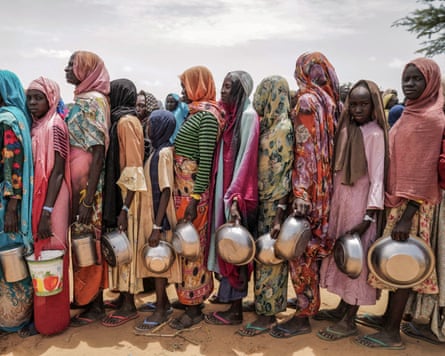
The UK mission to the UN security council asked Nathaniel Raymond, executive director of the Yale Humanitarian Research Lab, what could be done.
Raymond advocated urgently deploying a UN monitoring force around El Fasher. “If we don’t, these people will die. I begged them.”
Nothing happened. The US similarly seemed in no rush to help. Requests for “kinetic intervention” to protect El Fasher were rejected.
The US state department blocked intelligence assessments relating to El Fasher that would have triggered an intervention to prevent genocide.
Investigators assembled compelling publicly unavailable evidence that the attack on Geneina was an ethnic rampage: El Fasher was next.
State department officials blocked the assessment. Sections of the report were requested to be deleted.
“There was an intelligence assessment that would have triggered a mass atrocity and genocide determination. That effort was stopped,” said the source. They believe the warning was stifled to protect a US mutual defence agreement with the UAE.
A US state department spokesperson said they do not comment on “alleged intelligence reports”.
The UK was similarly downplaying Darfur as a concern. Weeks after US officials blocked its assessment, the UK government revised its view of the 2003-05 Darfur genocide.
A confidential briefing for MPs, circulated last December, stated that when Sudan’s war began, Darfur was formally classed as genocide.
But when the Islamic State’s targeting of Iraq’s Yazidi minority was added to the UK’s official list in August 2023, Darfur was removed.
“It silently – inexplicably – removed the Darfur genocide,” stated the briefing.
It wasn’t the first sign Darfur had been deprioritised. As fighting spread across the region in 2023, a parliamentary report warned of genocide. Submitted to Downing Street it received no formal response. “We were indignant, outraged,” said one of the authors.
Yet the UK was El Fasher’s great hope. Not only Sudan’s penholder at the UN security council, it had international responsibility for civilian protection.
By summer 2024 – with El Fasher’s siege eight weeks old – London was suitably anxious about the deteriorating situation. An expert panel met government officials, warning El Fasher’s fall would mean genocide.
London appeared queasy over intervention. “They kept saying: ‘You have to be absolutely sure,’” said Raymond.
It felt like gaslighting. “I expressed my frustration with the UK government. They made it seem that we were crying wolf,” he added.
Also present was prominent analyst Kholood Khair. She told ministers that calling out the UAE could avert genocide.
They refused. “They were effectively saying: ‘We believe that saving lives is an imperative, but do we believe it enough?’”
In June 2024, a meeting of the UK’s Cobra emergency committee was secretly convened on El Fasher.
Raymond briefed those attending beforehand. “Cobra was told there would be a genocidal massacre: the RSF’s intent was to complete the liquidation of El Fasher.”
Soon after, the UN security council adopted a resolution demanding the RSF halt its siege.
But nothing changed. “Consequences? Zero,” said a diplomat. The resolution did not reference the UAE.
“The silence sent a signal to the killers. For the RSF and UAE, it offered consent for what would follow,” said Khair.
The security council never delivered another resolution on El Fasher. Sanctions were not proposed against the UAE despite a UN arms embargo on Darfur.
Yet sources say US internal weapons assessments – shared with the UK – confirm El Fasher was routinely attacked with UAE-supplied weaponry.
Weeks before the siege began, the UK’s then Africa minister, Andrew Mitchell, met the president of Chad and discreetly urged him to stop the UAE smuggling weapons into neighbouring Darfur.
Mitchell confirmed that even then – March 2024 – he possessed “incontrovertible proof” that the Emiratis were arming the RSF.
Yet his government, likewise the current, seemingly chose not to act. “It was quickly clear the Starmer government did not want to piss off the Emiratis,” said a US source.
A UAE official “categorically rejected allegations” that they supplied weaponry to the RSF “whether directly or indirectly”.
The Foreign, Commonwealth and Development Office said it was “absolutely clear” that external support to Sudan’s warring parties “must stop immediately”.
Atrocities meanwhile, mounted. Ibrahim’s hospital was repeatedly shelled: one drone strike killed more than 70.
As increasingly heavy weaponry was tracked to El Fasher, the UAE denied involvement.
In April 2025, UN member states urged Raymond to publicly present evidence of RSF atrocities and weapons systems around El Fasher to the security council.
“But Emirati pressure prevented me. Member state missions told me the Emiratis would not allow me to brief the security council.”
Darfur’s governor, Minni Minnawi, had similar frustrations. On at least 30 occasions Minnawi warned UK, US or UN officials that without intervention tens of thousands would die inside El Fasher. “I was asking them to press the Emirates to stop.”
Minnawi particularly targeted the UK, arguing its approach “encouraged” the RSF.
The US had issues – its entire Darfur team, sources said, was wiped out by the USAID cuts while senior state department officials were briefed to stop US president Donald Trump meddling in Sudan.
“Keep Darfur off the president’s desk,” said a diplomatic source, adding that keeping the UAE on side over Gaza was a priority.
As El Fasher’s demise approached, Minnawi engaged in frantic, futile diplomacy. Trump’s Africa envoy, Massad Boulous, never picked up the phone.
Two days before El Fasher’s fall, hope emerged. Boulous met UAE, Saudi and Egyptian officials in Washington.
Attempts, however, to discuss El Fasher were vetoed – the UAE, sources said, threatened to storm out if the city was mentioned.
“They expressly said: ‘We will not talk about this. We will leave,’” they said.
Within hours, El Fasher trembled beneath a bombardment from AH4 howitzers, allegedly provided by the UAE.
At 1:44pm on 25 October 2025 – less than 12 hours before the El Fasher massacres began – Boulous tweeted his gratitude for the UAE’s “commitment to ending the suffering of the Sudanese people”.
27 October
3am
After playing dead, Ibrahim and the 14 other survivors moved from the site of the massacre. For three hours they walked south, stumbling over bodies; freezing whenever they heard RSF voices.
“The RSF believed anyone who stayed in the trench would die eventually,” says Ibrahim.
Inside El Fasher, rare positive news. The unit Khater sent to bridge the “pits of hell” was successful. The last evacuation convoy would leave before dawn. Khater started rounding up orphans, the injured and elderly along with his 80 remaining fighters. Priority was given to disabled children, who the RSF viciously targeted.
5:45am
Headlights off, the convoy sped out of El Fasher, towards the Hillat al-Sheikh road. Destination: the rebel area of the Wana mountains.
Hopes of a clandestine getaway were quickly dashed as the RSF drones appeared from the north. Ahead, the trenches. Over the first, then the second.
Approaching the third, Khater’s convoy came under ferocious attack. The second vehicle from the front was hit, it crashed, blocking the exit.
Trapped, the convoy was struck repeatedly from above. Machine-gun fire raked the static pickups.
“Everything exploded. It was very difficult, a lot of cars were hit,” says Doud. His vehicle burst into flames. Dragged out, he quickly realised there was nowhere to hide.
“Civilians ran from one car to another, terrified. Drones were killing many,” says Doud.
Units of the RSF, attracted by the commotion, arrived from the rear. Hemmed in on all sides, the convoy’s occupants could either hide or fight.
Khater took a position by the trench. Others attempted to move the vehicle obstructing the exit. Wali says: “They were surrounded. It was a fight to the death.”
9am
Even by Khater’s standards as an accomplished driver, the feat was impressive. Swerving through the burning wreckage of vehicles, he navigated over the trench.
Others crossed on foot. Doud was carried. At least 80 of the convoy’s occupants were dead; more than 30 of its vehicles ablaze.
Accounts collated by Wali indicate the convoy fought for up to three hours before some escaped.
Within El Fasher, hopes faded. RSF house-to-house clearance operations were launched throughout Daraja Oula. Most remaining occupants were women. A witness reported women hanged from trees. Others were roped to vehicles and dragged to their deaths.
10am
Khater reached the foothills of the Wana mountains. As he did, reports emerged that a large group of children were being chased across the grasslands below.
“He actually turned around,” says Mohamed. Doud watched in disbelief as his commander and other joint forces pickups raced back towards El Fasher, towards numerous RSF vehicles and a huge wave of drones. Doud watched as Khater exchanged gunfire, keeping the enemy at bay as the children escaped.
“The smoke, the dust. It was intense,” says Doud. RSF reinforcements arrived from the nearby Garni checkpoint.
Khater’s vehicle was struck by a drone. Boka was badly injured. Khater was unconscious, peppered with shrapnel wounds. The four teenagers were dead.
Attempts to rescue Khater were fraught. Up to 40 fighters died, says Wali, attempting to retrieve their legendary leader.
Midday
Ibrahim’s luck had run out. Near Shagra village, his group were caught. Chained by the wrist to a motorcycle, Ibrahim was dragged across scrubland before being forced into a truck with other captives.
At an RSF-controlled village, Ibrahim was tied to a tree and beaten with rifle butts.
The RSF suspected six of Ibrahim’s group had army links. Led behind a building, Ibrahim heard gunfire. “None returned.”
Doud had arrived at the Wana Mountains and waited for Khater. “Always I imagined he’d survive.” But Khater had lost too much blood. At the base of the slopes, he died.
Inside El Fasher, the airport and artillery base were overrun. Survivors hiding in trenches were caught and killed.
5pm
Khater was buried on a mountain plateau, battle-worn boots beside his grave.
Farther south, Ibrahim received grim news. The captives were being taken to meet the “Butcher of El Fasher”, Abu Lulu, the RSF’s most notorious commander, involved in a series of atrocities, including the university massacres.
Bound in chains, Ibrahim was close to Golo, Lulu’s location, when they came under gunfire. A joint forces unit was attempting to flee. “I was almost killed by my own side.”
Ibrahim’s captors retreated with their prisoners. Hundreds of other civilians taken to Golo were killed. A trader, Omar, described Lulu asking captives if they were soldiers or civilians then shooting them regardless. “He immediately executed them.” Omar counted more than 450 bodies on the ground surrounding Lulu.
7pm
Back at the original village, RSF fighters told Ibrahim to pay a ransom or die.
One man in his 40s was asked to go first and negotiate a sum. Ibrahim thought the bargaining went well. Until, without warning, the man was shot in the chest.
Ibrahim was ordered to pay 50m Sudanese pounds (£60,000), an astronomical amount. His refusal brought a ferocious beating and he collapsed with an asthma attack.
Later, the RSF lowered their price to 15m pounds (£18,000). A fighter handed him a phone taken from a dead captive. Ibrahim called his father in the city of Omdurman, who agreed to pay.
It was a transaction repeated across Darfur. Families identified as wealthier were charged more. Women and girls were forced to pay exorbitant sums but still raped.
Near El Fasher’s western gate, a witness counted about 800 dead and the “pits of hell” filled with fresh bodies. Corpses lined the road to Garni, some with their hands tied.
Aftermath
The once vibrant El Fasher is today a ghost town. Grass grows in its deserted markets. The bodies that clogged its streets have vanished; mostly burned or buried.
On 19 February, UN investigators concluded the attack carried the “hallmarks of genocide”. Responding, the UK’s foreign secretary, Yvette Cooper, avoided using the word genocide.
Already El Fasher is a footnote. Atrocities that once would have stunned the world, forgotten, although not by everyone.
“El Fasher represents a moral and political failure of the international system designed to prevent genocide,” said Abdallah Abu Garda, chair of the UK-based Darfur Diaspora Association.
For its part, the Foreign Office says it is leading international efforts to ensure perpetrators of war crimes faced consequences, adding that Cooper has prioritised Sudan and is “driving efforts to halt the fighting, protect civilians and get aid to those who need it”.
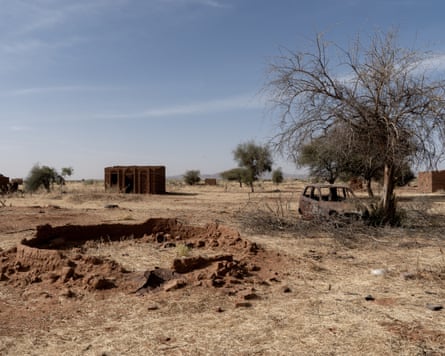
A US state department spokesperson also said they were “committed to ending the horrific conflict,” working to introduce a humanitarian truce and “end external military support” to the warring sides.
Pressing questions remain. Not least about El Fasher’s death toll. Another UN investigation concluded a minimum 6,000 were killed during those first three days of the RSF takeover.
Raymond’s analysis indicates at least 10,000 died during the opening two days. Overall, he says a “reasonable starting point” is 60,000 killed or detained.
One death – Khater’s – was kept secret for months. “We had to keep it silent for the morale of our people,” said Wali.
Survivors required extraordinary fortune. Doud was flown to India for surgery. Boka has made a good recovery.
Ibrahim, too, lived. “You needed a miracle, not luck,” he said, speaking from Tawila, which he reached on 29 October after being dumped in the desert.
From a displacement camp surrounded by RSF, Ibrahim now offers psychological support to 400 El Fasher orphans. Mostly, he dreams of seeing his fiancee again.
Others dream of loved ones who vanished in a wave of violence the world saw coming, but turned away from.