.png) 2 months ago
59
2 months ago
59
There’s a touch of old magic about toads, those shapeshifters of myth, superstition and folklore. Charismatic creatures with the pleasing Latin binomial bufo bufo, common toads have astonishing copper- or gold-coloured eyes and rugged, textured skin. “People say they look warty, which I’ve always thought is a bit unfair,” says Dr Silviu Petrovan, a conservationist and toad population researcher.
More prosaically, toads are great for your garden. “We say toads are a gardener’s best friend, because they eat all the pests,” says Jenny Tse-Leon, the head of conservation and impact at the British amphibian charity Froglife. Their spring migration is a dramatic event, during which hundreds of thousands of animals travel back to their ancestral breeding ponds. “Like the wildebeest of the Serengeti,” says Tse-Leon. “They’re just a lot smaller than wildebeest.” The males “piggyback” on potential partners: “You see them riding on the female’s back to get a lift to the pond.”
Why do they need to be saved?
A study published by Petrovan and others last year found that, between 1985 and 2021, the population of common toads in the UK (as counted by toad patrols, of which more later) had fallen by 41%. “Because these are an abundant species, that represents vast numbers of individuals that have just disappeared,” says Petrovan.
Road mortality is a huge factor. The annual migration almost inevitably brings toads in contact with the UK’s dense road network – and they start moving at dusk, coinciding with rush hour. But our landscape is increasingly inhospitable to amphibians in other ways. Half of the UK’s ponds – approximately 400,000 – have been lost since 1900 and many of those that remain may be “heavily polluted”, Petrovan says.
Toads are also vulnerable to construction work, which can destroy the patches of woodland that serve as their terrestrial habitat, while conservationists believe it’s it’s likely that the invertebrates toads eat are in shorter supply, adversely affecting toad populations. “There is some evidence that, for instance, earthworm abundance has been declining,” says Petrovan.
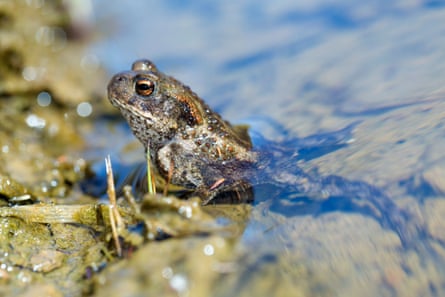
Then there’s the climate crisis. Some studies suggest that warmer winters are problematic, Petrovan explains: “Toads will continue to expend energy during those mild winters, but, at the same time, they will not necessarily feed. Therefore, their body condition reduces and females end up producing fewer offspring.”
How can you help?
Join a toad patrol
Across the country, groups of volunteers spend spring evenings helping toads cross the road. It’s pretty simple: “You go along, look for the toads, pick them up, put them in the bucket and move them to the other side so that they can carry on with their migration,” Tse-Leon explains. More than 2 million toads have been helped by patrols since Froglife began recording in 1974; it also gathers data on toad numbers to assist research and inform planning decisions.
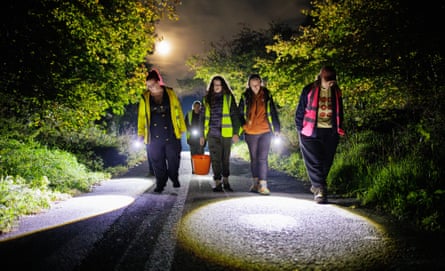
Mike Collins has been patrolling Charlcombe Lane in Bath for five years. Since the patrol began in 2003, half a mile of the road has been closed each year for six weeks in February and March to aid the migration. Collins finds great fulfilment in “being part of a community wanting to stand up for nature and make a difference”. One night last month, the patrol recorded 822 amphibians and helped 75 toads to cross; in 2025, they celebrated having saved a total of 50,000 toads. They also encounter other wildlife: deer, shrews, even great crested newts.
Since the patrol started, the toad casualty rate in the area has dropped from about 60% to 3%. “There’s that real sense of collective endeavour,” says Collins. “You’re part citizen scientist, collecting the data that is important for the scientists, but you’re also part conservationist, helping them on their way.”
Now is the time to get involved: toads are on the move during the wet, milder days of spring. If you live in Great Britain, you can find your nearest patrol on the Froglife website and register to volunteer, or even to start a patrol.
Build a pond
“Having a bit of water makes a huge difference. They say the first inch of water that you add to your garden is the most biodiverse,” says Tse-Leon. “Even if you don’t have your own garden, there might be a green space where you can still do it – if you’ve got an allotment, a community garden, a school, you can do a pond.”
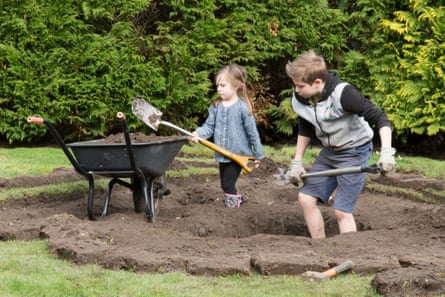
Unless it’s very large and deep, it’s unlikely toads will breed in your pond, but it will encourage the insects they eat and may attract other amphibians. The ideal pond for amphibians is free of fish and has gently sloping edges with a deeper middle. (Froglife’s downloadable leaflet, Just Add Water, provides full instructions.)
Leave spawn alone
Although it’s something people have done traditionally to stock their ponds, it’s not a good idea to collect wild frog and toad spawn to hatch at home, says Tse-Leon. “There’s evidence that disease has been spread around the country by movements of spawn.”
Create a winter Toad Hall
In winter, toads go into brumation – a dormant period similar to hibernation – and need safe places to do it. “One of the best things people can do in their gardens is to have overwintering sheltering space,” says Tse-Leon. “It might be leaving an area overgrown and not cutting back all the vegetation, leaving leaf litter on the ground.”
If you’re extra-keen, you can build a hibernaculum: a log pile covered with soil with gaps for amphibian access. “It helps to keep the temperature stable, for them to overwinter,” says Tse-Leon. More information is available on Froglife’s website.
Make green spaces toad-friendly
Toads are ambush predators. “They will sit in a good position and pretty much try to eat whatever crosses in front of them – earthworms, slugs, ants,” Petrovan says. Avoiding pesticides and planting thoughtfully can support them. “Areas of your garden that are planted up well and have a lot of insect diversity will benefit toads,” says Tse-Leon.
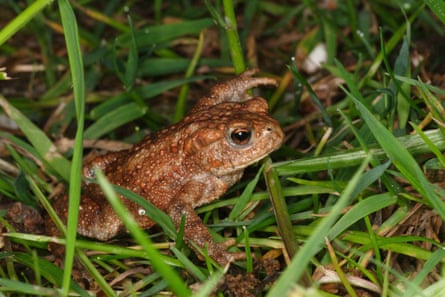
Consider including areas of longer grass – they stay cooler and are good spots for toads to forage – as well as wildflowers and other insect-friendly plants. This goes for common spaces, too. In Bath, Collins’ community has created a nature reserve: “We have a whole load of amphibians in there.”
Lobby your MP
Wildlife and Countryside Link, the largest environment and wildlife coalition in England, of which Froglife is a member, has six “asks” for the water reform bill, which will be introduced during this parliament. These include tougher regulation and the creation and protection of corridors of wetland and water habitat. Make your MP aware.