.png) 3 months ago
67
3 months ago
67
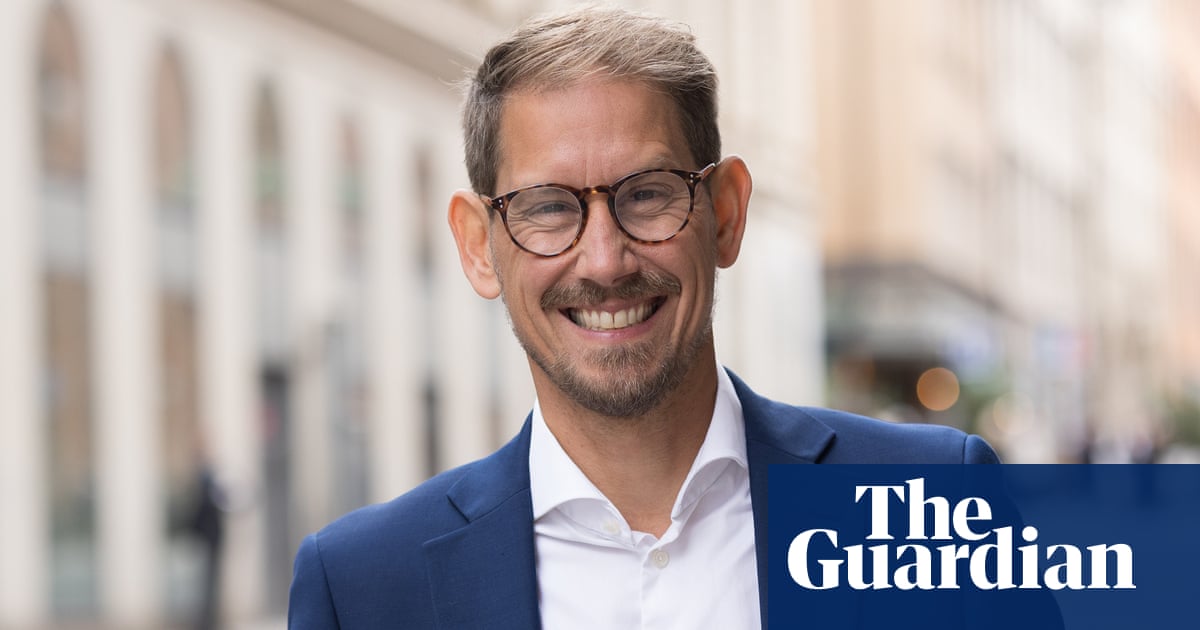
G Robert Blakey, who has died aged 90, was one of America’s leading legal scholars, and his speciality was organised crime. He is best remembered for writing the part of the 1970 Organized Crime Control Act aimed at “racketeer influenced criminal organisations”. Its provisions became popularly known as the Rico statutes, recalling the Edward G Robinson character Rico, an Italian mobster in the 1931 gangster film Little Caesar.
Blakey had previously drafted the wiretapping section of the 1968 Omnibus Crime Control and Safe Streets Act, and he became the primary resource for state and local governments when they moved to legislate in those areas. Blakey’s son John, an attorney and then district judge in Chicago, said his father’s determination came from a conversation outside the courtroom with a defendant he was once prosecuting, who told him: “You’re doing a great job, but don’t worry, you’re not going to win. The rules won’t let you.”
This background thrust Blakey into the public eye when, in 1977, he was hired as the second chief counsel for the House Select Committee on Assassinations (HSCA), charged with investigating the shootings of President John F Kennedy and the Rev Martin Luther King.
His report, which included an audio tape recorded from the open microphone of one of the motorcycles escorting Kennedy’s motorcade through Dallas, came to the conclusion that JFK’s death was “probably” the result of a conspiracy, in which Lee Harvey Oswald had indeed fired three shots, one of which missed, from behind the Kennedy limo – as the earlier Warren Commission investigation had concluded in 1964 – but that there was also another gunman involved, who fired a single shot that missed from the “grassy knoll” in front of the car. Blakey pinned the conspiracy on the mafia, specifically two dons, Carlos Marcello from New Orleans and Santo Trafficante Jnr from Florida.
His 1981 book, The Plot to Kill the President, became a bestseller. It was co-written with Richard Billings, who, as an editor at Life magazine in 1963, had been instrumental in buying the rights to the “Zapruder film” (home-movie footage shot by a bystander, Abraham Zapruder) of the assassination, which Life printed with two frames reversed and then kept hidden from public view for years.
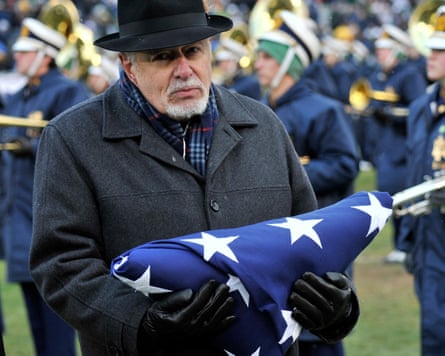
Born in Burlington, North Carolina, Robert was the son of Lewis, president of the First National Bank, and Myrtle (Malatia, nee Horrigan), who became the manager of a local department store after her husband’s death. Robert studied philosophy at the University of Notre Dame, in South Bend, Indiana, graduating in 1957. He entered Notre Dame’s law school and in 1958 married Elaine Menard, who had studied at St Mary’s, the women’s university associated with Notre Dame.
He qualified to practice law in 1960, and joined the Justice Department’s organised crime division; in 1961 Robert Kennedy became his boss as attorney general, but after JFK’s assassination, Blakey returned to Notre Dame as a professor.
The new attorney general, Nicholas Katzenbach, made him a consultant in 1967 to President Lyndon B Johnson’s commission on law enforcement, and he worked closely with the Arkansas senator John McClellan, whose committee was taking testimony from the mafia hitman Joe Valachi. In 1973 Blakey became director of the Institute on Organized Crime at Cornell University, from which he was hired by the HSCA.
When the HSCA’s first chief counsel, Richard Sprague, complained about a lack of cooperation from intelligence agencies, the committee chairman, Henry Gonzalez, demanded his resignation, only to have the committee members overrule him. Instead Gonzalez quit, and his replacement, Louis Stokes, wanted his own counsel. Sprague resigned and Blakey was appointed.
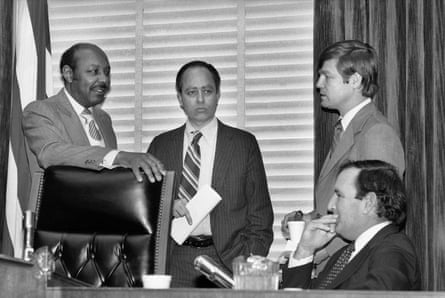
He discovered that the HSCA had thus far received no classified material from either the FBI or CIA, and demanded a CIA liaison to facilitate relations. But little changed, and according to The Last Investigation, a 1993 book by Gaeton Fonzi, a journalist and former HSCA researcher, the committee was stonewalled on any investigations of intelligence connections to the Kennedy assassination.
When the HSCA reported its findings, the former Warren Commission counsel David Belin claimed it “would not stand the test of time”. It did not. In 1992, in the wake of Oliver Stone’s movie JFK, Blakey helped write the JFK Assassination Records Collection Act, which created a third investigation, by the Assassination Records Review Board (ARRB). That year, he and Billings issued a revised version of their 1981 book, this time titled Fatal Hour.
In 2003, declassified documents revealed that Blakey’s CIA “liaison” while working for the HSCA, George Joannides, had in 1963 been the CIA’s man in charge of Cuban exile groups who had interacted with Oswald before the assassination.
Blakey returned to Notre Dame in 1980, where he remained until retiring as professor of law in 2012. He argued on behalf of Joseph Scheidler in the US supreme court case Schedler v National Organization for Women, which accused Scheidler’s anti-abortion network of violating the Rico act by conspiring to violently stop women’s access to healthcare. In 2006 the court upheld Blakey’s argument that because the actions did not involve robbery or extortion, Rico laws did not apply.
Elaine died in 2002, and a son, Matthew, in 2014. He is survived by two sons, Michael and John, and five daughters, Elizabeth, Marie, Katherine, Christine and Margaret.