.png) 2 months ago
83
2 months ago
83
1
Vertigo-suffering ski jumper hits heights
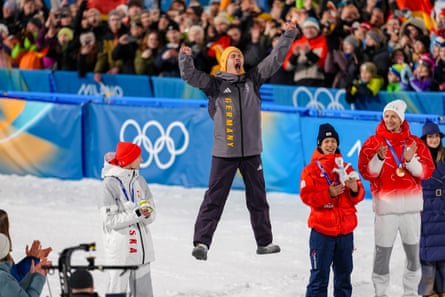
Domen Prevc set a men’s ski jump world record of 254.5m on the Planica flying hill in Slovenia last March, known for its steepness and long jumps. Germany’s Philipp Raimund sat it out – he suffers from vertigo. “From time to time, I have the issue that my body is reacting without me controlling it,” he said. “It’s like I am just observing myself while something has a tight grip on me.”
Still without a World Cup win on his CV heading to these Games, the 25-year-old Raimund stunned the field, including sixth-placed Prevc, and himself to win gold in Monday’s normal hill individual event with jumps of 135.6m and 138.5m. “I don’t know how I did it but I’m so, so proud that I managed to do it,” he said. Raimund goes again in the long hill event on Saturday looking to do an extraordinary double.
2
Costume changes at the ‘kiss-and-cry’
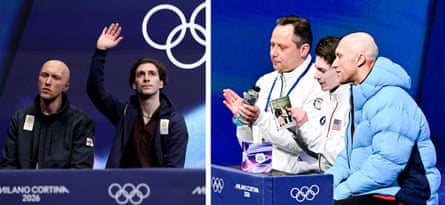
Figure skating viewers may have thought they were seeing double as the French coach and choreographer Benoît Richaud appeared rinkside in multiple national team jackets within minutes. The 38-year-old is working with 16 skaters from 13 countries at Milano Cortina, seven of whom competed in one night during the men’s short programme – sometimes in immediate succession, requiring rapid changes of allegiance and attire. His costume swaps are coordinated behind the scenes, with jackets stored in dressing rooms or held by team staff to ensure he reaches each skater in time and is ready in the proper team colours at the “kiss-and-cry”, which is well equipped with conveniently placed Puffs tissues, a sponsor for US figure skating, for happy or sad tears.
Richaud has choreographed routines inspired by Vincent van Gogh and Henri Matisse, and sees his role as a form of storytelling. “I will not be satisfied if my work as a choreographer will be only to do choreography,” he said. “I always try to bring stories. I always try to make people feel an emotion.” Coaching multiple Olympic hopefuls is, perhaps, as demanding as competing – only multiplied 16-fold.
3
The moonwalker of Milan
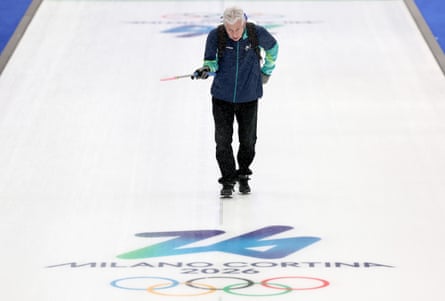
One of curling’s latest viral stars is not an athlete, but the man behind the making of the ice. Mark Callan, the head ice technician at Milano Cortina, has captured global attention with the moonwalk-like step he performs while “pebbling” the surface, earning the Glaswegian the nickname “the Michael Jackson of curling”. “The viral thing has been a bit of a surprise,” Callan said.
“Everybody has a different style of pebbling, bit like driving a car. I find that doing the moonwalk – or the shuffle, if you like – it keeps me stable.” Beyond the internet fame lies meticulous craftsmanship. Using purified Dolomite water, Callan and his team layer and texture each sheet to create the tiny frozen bumps that allow stones to curl, monitoring temperature, humidity and frost with scientific precision. The work is relentless, stretching to 17-hour days throughout the Games.
4
Banned wax stops Korean skiers
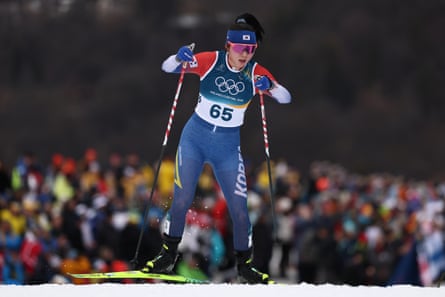
The Korea Ski Association was left “perplexed” after two of its cross-country skiers were disqualified from the women’s sprint classic. Han Dasom and Lee Eui-jin had their qualifying times voided when their skis tested positive for fluorinated wax, a substance banned by the International Ski and Snowboard Federation since 2019. The Japanese snowboarder Shiba Masaki was also removed from the men’s parallel giant slalom for the same reason.
The non-biodegradable wax, commonly known as fluor, had been used in skiing since the 1980s to help with glide but was banned by the FIS because of the damage it does to the environment and the potential risk to technicians applying the substance in unventilated areas.
“The athletes’ products are not fluorine wax,” said a representative from the Korean association. “They tested negative in all previous international competitions with no prior issues. We are also perplexed.” In any case, neither Han nor Lee posted a time quick enough to qualify for the final.
5
The well-trodden rollerblading path
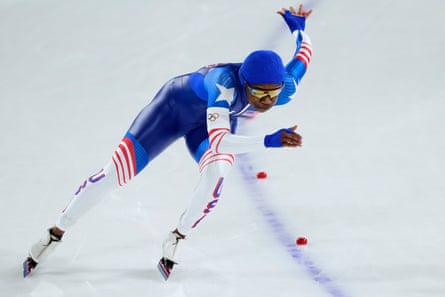
Erin Jackson of the USA wowed followers of the 2018 Winter Games in Pyeongchang after she qualified for the 500m in the speed skating after only four months of gaining experience on ice. Her transition into the sport was made easy by her experience of inline skating and roller derby. She finished sixth in the 1,000m final on Monday and sets out to defend her 2022 Olympic title in the 500m on Sunday.
Others to follow in her footsteps in these Games include Singapore’s giant slalom skier Faiz Basha, who grew up in Switzerland but had to mimic skiing on rollerblades when he could not train on snow during his mandatory military service in the country of his parents, and Daniel Milagros, who has become Spain’s first Olympic speed skater and finished second in the one-lap sprint at the world inline skating championships in 2023. Milagros came last in the men’s 1,000m in Milan but his compatriot and fellow rollerblader Nil Llop, a Winter Olympic medallist at youth level, goes in the 500m on Saturday.
6
Fans scramble for pins and toy stoats
There is one sport in Italy that is not handing out medals but that does not mean competitors go home empty handed. Throughout the Games, residents and visitors in Milan have been setting off each morning on a race to grab limited edition Olympic pins. An Instagram post at 8am every day tells people – “walk, don’t run” – which of the city’s seven neighbourhoods or five landmarks to head to, where the tourism promoter YesMilano gives out 250 pins. Once they’re gone, they’re gone.
Official Olympic merchandise, a lot of which has sold out already, is hot property despite its often extortionate pricing. Perhaps the best chance of nabbing a soft toy of the stoat mascot Tina (selling for €18 to €58; £15-£50) is to actually win a medal – the athletes are given one on the podium. Tommaso, the two-year-old son of Italy’s speed-skating star Francesca Lollobrigida, was more interested in Tina than his mother’s gold medal.

7
Like mother, like son
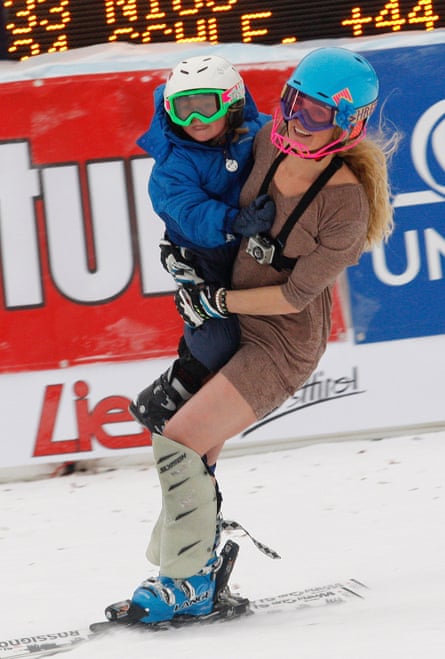
Few Olympic stories capture the generational spirit of sport quite like that of the Mexican alpine skier Sarah Schleper and her son, Lasse Gaxiola. Days before her 47th birthday, Schleper became the oldest woman to compete in Olympic alpine skiing when she raced in the super-G in her seventh Winter Games appearance. Across the Alps in Bormio, the 18-year-old Gaxiola is preparing for his Olympic debut in the men’s slalom, making them the first mother-son duo to compete at the same Winter Olympics.
“For him, everything’s new,” Schleper said. “And for me, I know it.” Their shared presence is the culmination of a lifetime in the sport: Schleper debuted in 1998 and competed for the United States, briefly retired, then switched allegiances to Mexico, while Gaxiola grew up on skis and earned his place through junior competition success. “For me, success is simply the fact that we are both here,” Schleper said.
8
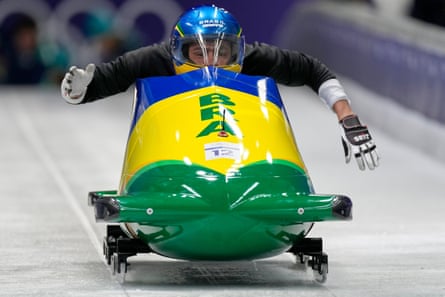
Brazil bobsleigher’s big book bid
Brazil’s Edson Bindilatti embodies perseverance in a sport far removed from his nation’s tropical roots. A veteran of six Winter Olympics, spanning Salt Lake 2002 to Milano Cortina 2026, the 46-year-old has competed as a push athlete, brakeman and pilot, achieving Brazil’s best Olympic bobsleigh finish with 20th place in the four-man event in Beijing and a historic 13th at the world championships in 2025.
Inspired by Cool Runnings, the film loosely based on the debut of the Jamaican national bobsleigh team, Bindilatti endured financial hardship, long journeys, personal loss and pandemic-era training improvisations to sustain a career now stretching beyond two decades. “It would make a big book, 500 pages or more, if I were to tell all the stories,” he said in 2014. Catch him competing in the two-man and four-man events.
9
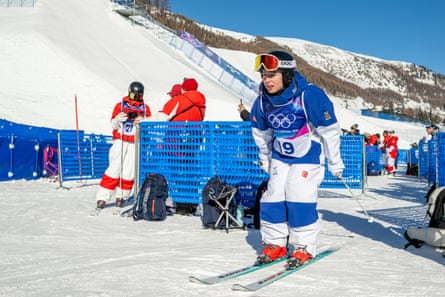
Transgender athlete makes history
Sweden’s Elis Lundholm became the first openly transgender athlete to compete at the Winter Olympics when he took part in qualifying for the women’s moguls, finishing 25th and missing out on the final. Last November, the International Olympic Committee edged closer to implementing a ban on transgender women competing in the female category in time for the 2028 Summer Games in Los Angeles.
The 23-year-old Lundholm was born female and now identifies as a man but has not undergone any gender-affirming treatment or surgery. While this proposed ban will affect other transgender athletes, Lundholm would still be able to compete in the women’s category because it is the same gender he was assigned at birth. “I want everyone to be able to compete fairly against each other,” he said after finishing his run down the Livigno course.
10
The end of snow?
While the action on snow continues to enthral, a pressing question lingers in the background: will there come a point when there is no snow left to compete on? Climate change is increasingly reshaping the Winter Olympics, as declining snowfall and rising temperatures cast doubt over how and where the Games can be staged in decades to come. Before the Games several athletes signed a petition urging the IOC to end sponsorships with fossil fuel companies. The Italian oil company Eni is one of this year’s sponsors.
“I’m not that old but I’m old enough to see changes in where I’ve skied in my life,” said the American Alex Hall after winning silver in freeski slopestyle. “We’ve had events cancelled because of a lack of snow. I’ve seen first-hand the effects. I know it’s not easy for an athlete to say, because we travel a lot and do things that don’t help the situation, so it’s a mixed emotion. If we can trend towards a better future, that’s the plan, that’s the hope.”